
Filler with lidocaine has become an important consideration for aesthetic clinics looking to improve patient comfort during injectable treatments while maintaining treatment efficiency. Although dermal fillers are minimally invasive, injection-related discomfort remains one of the most common concerns patients discuss before treatment. For clinics, managing pain effectively is not only about improving the patient experience but also about building trust, increasing satisfaction, and supporting repeat treatments.
Modern dermal filler formulations increasingly incorporate lidocaine, a well-established local anesthetic, to help reduce discomfort during injection procedures. However, choosing the right formulation requires understanding how lidocaine works, when it provides advantages, and how it fits into professional treatment protocols.
For clinics, distributors, and aesthetic brands evaluating filler solutions, understanding the role of filler with lidocaine can help optimize patient care strategies while selecting reliable OEM manufacturing partners.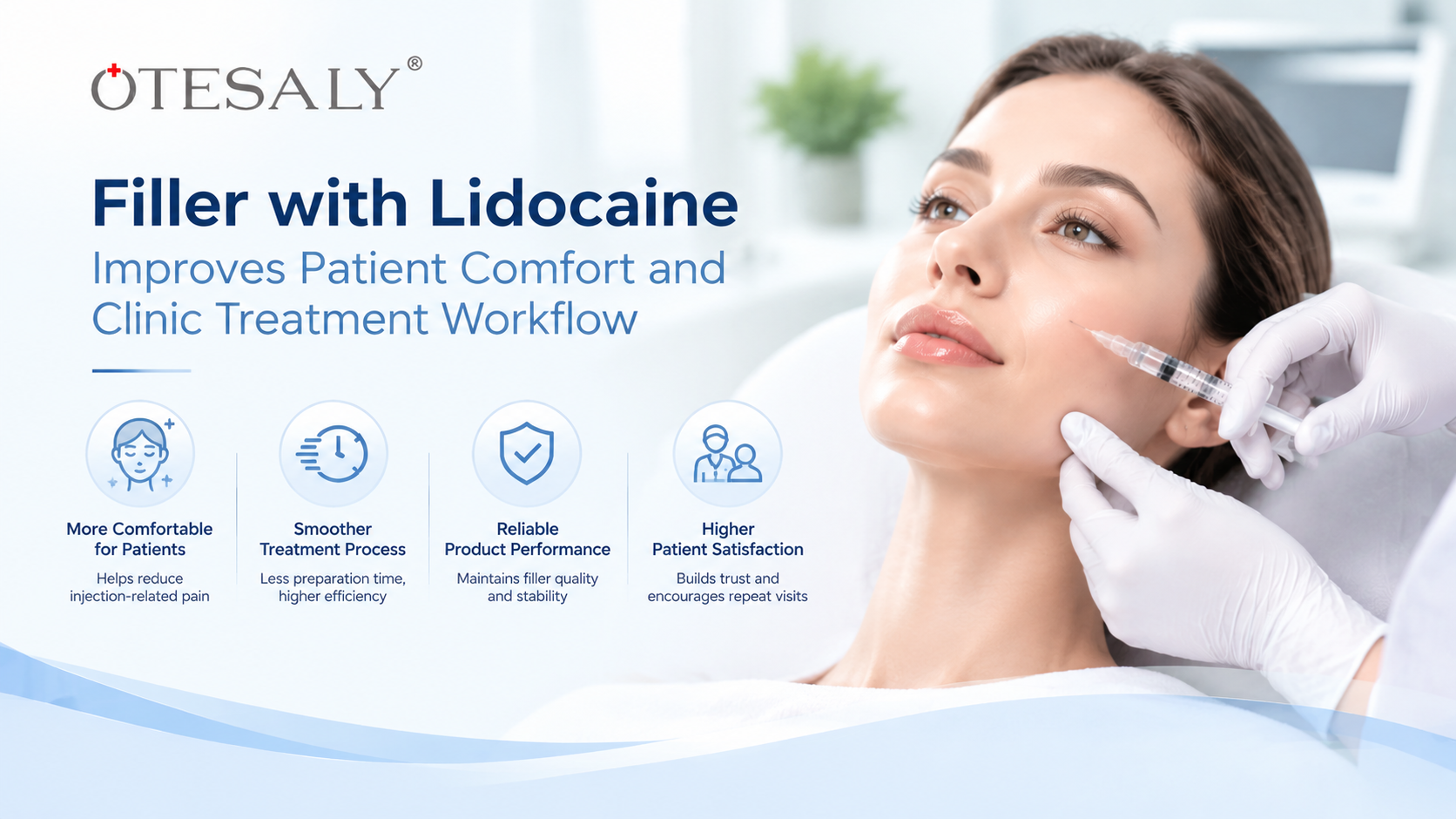
What Is Filler with Lidocaine and Why It Happens
Understanding Injection Pain During Dermal Filler Treatments
Dermal filler injections involve introducing a gel-based material, commonly hyaluronic acid (HA), into targeted areas beneath the skin. Although needles and cannulas used in aesthetic procedures are designed for precision, mechanical stimulation of the skin tissue can still cause discomfort.
Injection-related pain usually comes from several factors:
-
Needle or cannula penetration through the skin
-
Pressure created when filler material is deposited
-
Tissue expansion during product placement
-
Sensitivity of specific treatment areas, such as lips or nasolabial folds
-
Individual differences in pain perception
For aesthetic clinics, pain management is an important part of the overall treatment experience. Patients who experience excessive discomfort may become hesitant about future procedures, even if the clinical results are satisfactory.
How Lidocaine Works in Hyaluronic Acid Fillers
Lidocaine is a local anesthetic that temporarily blocks nerve signal transmission in the treated area. When incorporated into hyaluronic acid filler formulations, lidocaine works directly during injection to reduce discomfort.
The concept of adding anesthetic agents into dermal filler products has been studied extensively. Research regarding has explored its role in improving patient comfort without significantly affecting filler performance when properly formulated.
Unlike separate topical anesthetics that require preparation time before treatment, fillers containing lidocaine deliver the anesthetic effect as part of the injection process itself.
How Dermal Fillers Address It: Benefits of Filler with Lidocaine for Clinics
For aesthetic professionals, the main advantage of filler with lidocaine is creating a more comfortable and efficient treatment process. While pain perception varies between patients, integrated lidocaine formulations provide an additional option for clinics developing comprehensive filler pain management protocols.
1. Improved Patient Comfort During Injection
One of the primary benefits of lidocaine-containing fillers is reduced injection discomfort. When the anesthetic component spreads within the treated area, patients often report a more comfortable injection experience.
This can be particularly valuable for:
-
Lip augmentation procedures
-
Deep wrinkle correction
-
Nasolabial fold treatments
-
Multiple-area facial rejuvenation protocols
A more comfortable procedure may allow practitioners to focus more effectively on product placement and treatment precision.
2. Streamlined Clinical Workflow
Traditional pain management approaches may involve additional steps, such as applying topical anesthetic cream or performing separate local anesthesia procedures. These steps can increase preparation time.
Using a filler formulation that already contains lidocaine can simplify workflow by combining augmentation and comfort management into one treatment process.
For example, products such as OTESALY deep lines with lidocaine are designed for professional applications where practitioners need reliable filler performance together with patient comfort considerations.
3. Supporting Better Patient Retention
Patient experience plays an important role in the competitive aesthetic market. Clinics are not only evaluated by treatment outcomes but also by the overall procedure journey.
A comfortable injection experience may contribute to:
-
Higher patient confidence
-
Better treatment acceptance
-
Increased likelihood of follow-up appointments
-
Stronger clinic reputation
For distributors and brand owners, offering patient-focused solutions such as patient comfort filler OEM products can support clinics seeking differentiated treatment options.
4. Suitable Options for Different Treatment Requirements
Different facial areas require different filler characteristics, including viscosity, elasticity, and lifting capacity. Lidocaine-containing fillers are available across multiple product categories.
For example, clinics may consider:
-
Fine-line correction fillers
-
Deep wrinkle fillers
-
Volume restoration fillers
Options such as SOMED lidocaine filler provide another choice for clinics and distributors looking for HA filler solutions with integrated pain management features.
Treatment Approach / What to Expect
Step 1: Patient Consultation and Treatment Planning
Before injection, practitioners should evaluate:
-
Treatment area
-
Patient sensitivity
-
Previous injection experience
-
Desired aesthetic goals
During consultation, clinics should explain that lidocaine-containing fillers can help reduce discomfort but do not completely eliminate all sensations during treatment.
Step 2: Selecting the Appropriate Filler Formulation
The filler choice depends on the treatment purpose. Different areas require different gel characteristics.
For example:
-
Fine lines may require softer formulations
-
Deep folds may require stronger structural support
-
Volume restoration may require higher lifting capacity
For clinics purchasing in larger quantities, options such as lidocaine HA filler wholesale can provide flexible supply solutions for different treatment needs.
Step 3: Injection Procedure
During treatment, practitioners typically:
-
Clean and prepare the treatment area
-
Mark injection points according to the treatment plan
-
Inject filler using appropriate techniques
-
Assess symmetry and product placement
-
Provide aftercare instructions
The lidocaine component begins working during injection, helping improve comfort throughout the procedure.
Step 4: Post-Treatment Follow-Up
After treatment, clinics should provide guidance regarding:
-
Temporary swelling
-
Mild redness
-
Avoiding excessive pressure on treated areas
-
Follow-up appointments when necessary
Proper communication helps patients understand normal recovery processes and improves overall satisfaction.
Conclusion
Filler with lidocaine has become an increasingly practical option for clinics seeking to improve patient comfort while maintaining efficient aesthetic treatment workflows. By combining hyaluronic acid filler technology with local anesthetic properties, these formulations provide another tool for professional practitioners managing injection discomfort.
For clinics, distributors, and aesthetic brands, selecting a reliable manufacturer is essential to ensure consistent quality, documentation support, and supply stability. OTESALY provides professional HA filler solutions, including OEM and wholesale options designed for global aesthetic markets. Contact OTESALY today to discuss customized filler with lidocaine solutions and OEM partnership opportunities.

Frequently Asked Questions
Is filler with lidocaine better for reducing injection pain in aesthetic clinics?
Filler with lidocaine can provide improved comfort compared with fillers without anesthetic components because lidocaine works locally during injection. However, pain reduction depends on the treatment area, injection technique, individual sensitivity, and practitioner experience. Clinics should evaluate product quality, formulation stability, and patient needs when selecting filler solutions.
How does lidocaine in hyaluronic acid fillers affect treatment safety and performance?
Lidocaine in hyaluronic acid fillers is designed to provide local anesthetic benefits while maintaining the intended properties of the HA gel. Professional formulations undergo quality evaluation to ensure compatibility between lidocaine and hyaluronic acid. Clinics should select products from experienced manufacturers that follow appropriate production standards and quality control procedures.
What should clinics consider when choosing a painless filler injection solution?
When selecting a painless filler injection approach, clinics should consider more than anesthetic content. Important factors include filler rheology, product consistency, treatment indication, manufacturer reliability, and regulatory documentation. A balanced approach helps clinics provide comfortable procedures while maintaining predictable treatment outcomes.
Is SOMED 2ml lidocaine filler suitable for professional aesthetic treatments?
SOMED 2ml lidocaine filler is designed as an HA filler option for professional applications requiring both volume correction and patient comfort considerations. Clinics and distributors should select filler volumes and formulations according to treatment protocols, target markets, and practitioner preferences.
How can clinics improve filler pain management without affecting treatment quality?
Effective filler pain management clinic strategies usually combine appropriate product selection, skilled injection techniques, patient communication, and proper preparation. Lidocaine-containing fillers are one component of a broader approach to improving the treatment experience.

