
For clinics evaluating an OTESALY vital 2ml filler, one of the most important questions is not simply whether a product contains hyaluronic acid, but whether its formulation, volume, treatment positioning, and supplier support fit the clinic’s actual treatment needs. Patients increasingly ask for lifting and firming without aggressive volumization, while clinics need injectable solutions that can be integrated into structured treatment plans. OTESALY Vital Lifting 2ml is positioned as a hyaluronic-acid-based injectable designed for lifting and firming, improving elasticity, moisturizing the skin, and addressing visible signs associated with skin aging. The product is listed with a 2 ml volume, cross-linked sodium hyaluronate gel, and a stated treatment duration of approximately 6–9 months.
For professional buyers, understanding where a 2 ml lifting-oriented filler fits within a broader facial treatment strategy is essential before purchasing or recommending it.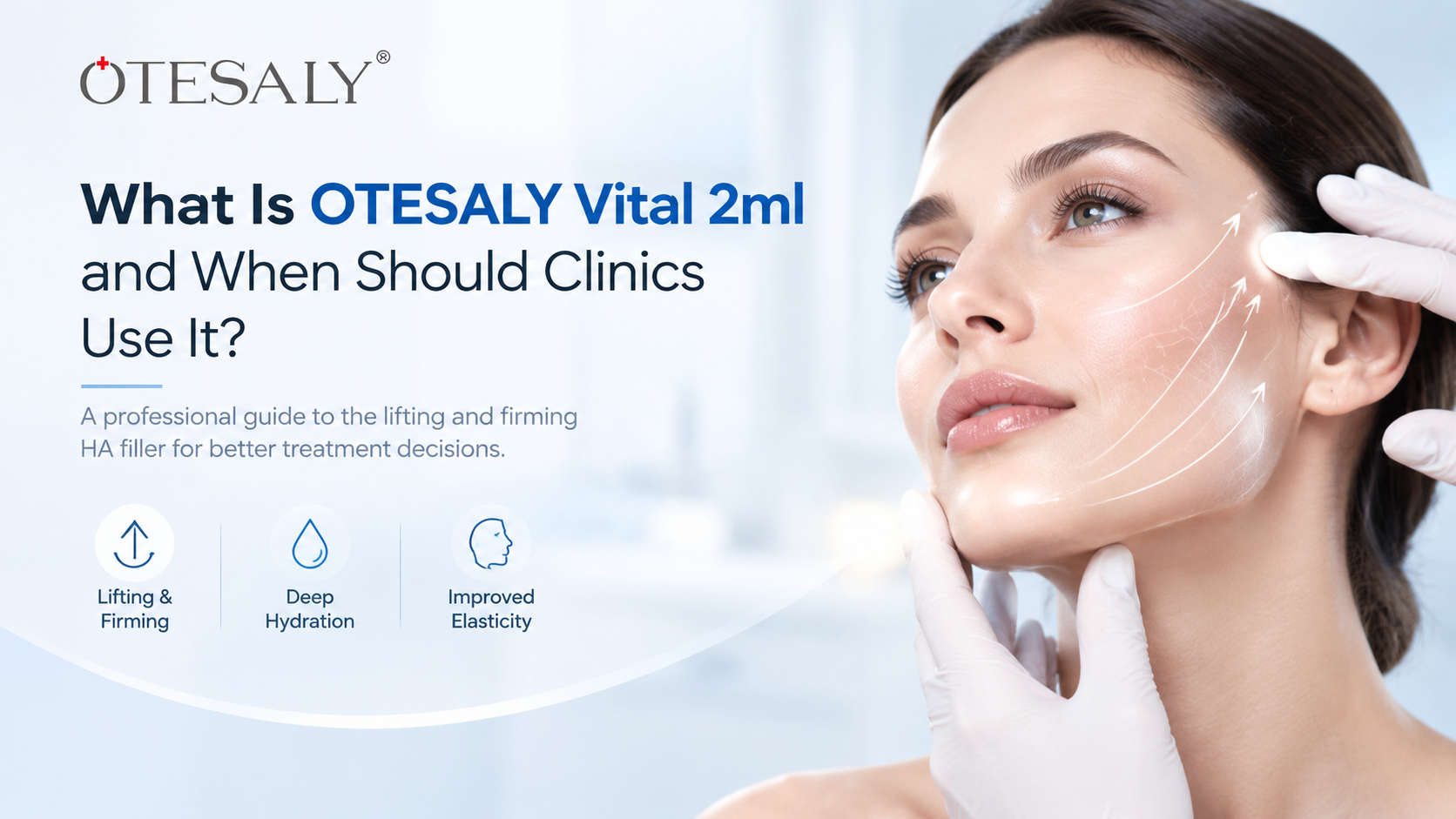
What Is OTESALY Vital 2ml and Why It Happens?
Skin laxity develops through several interconnected biological processes. As skin ages, collagen and elastin production gradually changes, extracellular matrix support decreases, and the skin loses some of its ability to maintain firmness and structural integrity. At the same time, changes in subcutaneous fat compartments, bone structure, and soft-tissue positioning can contribute to an aged or less-supported facial appearance.
Hyaluronic acid (HA) plays an important role in the skin because it is naturally present in the extracellular matrix and has a strong capacity to bind water. In injectable aesthetics, HA gels can be formulated with different concentrations, particle structures, cross-linking characteristics, and rheological properties depending on their intended application.
OTESALY Vital Lifting 2ml is described by OTESALY as a lifting and firming HA filler. Its product information specifies 20 mg/ml cross-linked sodium hyaluronate gel, a biphasic structure, and a recommended usage depth of the mid to deep dermis. The listed functions include lifting and firming, enhancing elasticity, moisturizing, and improving the appearance of wrinkles and scars.
This positioning is different from thinking of every HA injectable as a simple “volume filler.” Product selection should instead consider the treatment objective, anatomical area, injection plane, desired degree of volumization, and the clinician’s technique.
For clinics considering a vital lifting dermal filler, the 2 ml format can be relevant when the treatment plan involves more than a very small localized correction. The actual amount used, injection sites, and treatment protocol should always be determined by a qualified medical professional according to the product's approved indications in the relevant market.
Why Does Skin Laxity Matter in Treatment Planning?
A patient may present with mild-to-moderate loss of firmness rather than a clearly defined volume deficiency. In such cases, adding substantial volume to a single area may not be the most appropriate aesthetic strategy.
Instead, practitioners may evaluate the overall facial structure and identify areas where improved tissue support, hydration, or controlled correction could contribute to a more balanced appearance.
This is why clinics searching for a skin lifting filler injection should assess the product based on its intended positioning rather than treating “lifting” as a guarantee of a surgical facelift effect.
The American Academy of Dermatology notes that dermal fillers can restore lost fullness, soften lines and folds, and improve certain facial contours. It also emphasizes that filler injections are medical procedures and should be performed by appropriately trained medical professionals.
How Dermal Fillers Address It
The core value of HA fillers is their ability to provide localized support and hydration within treated tissue. Depending on formulation and placement, an HA gel can occupy space, bind water, and modify the contour or support of a treated area.
For a lifting-oriented product, treatment planning is particularly important because the goal is not necessarily to maximize volume. A clinician may instead use a controlled amount of material to address selected areas where tissue support or contour refinement is required.
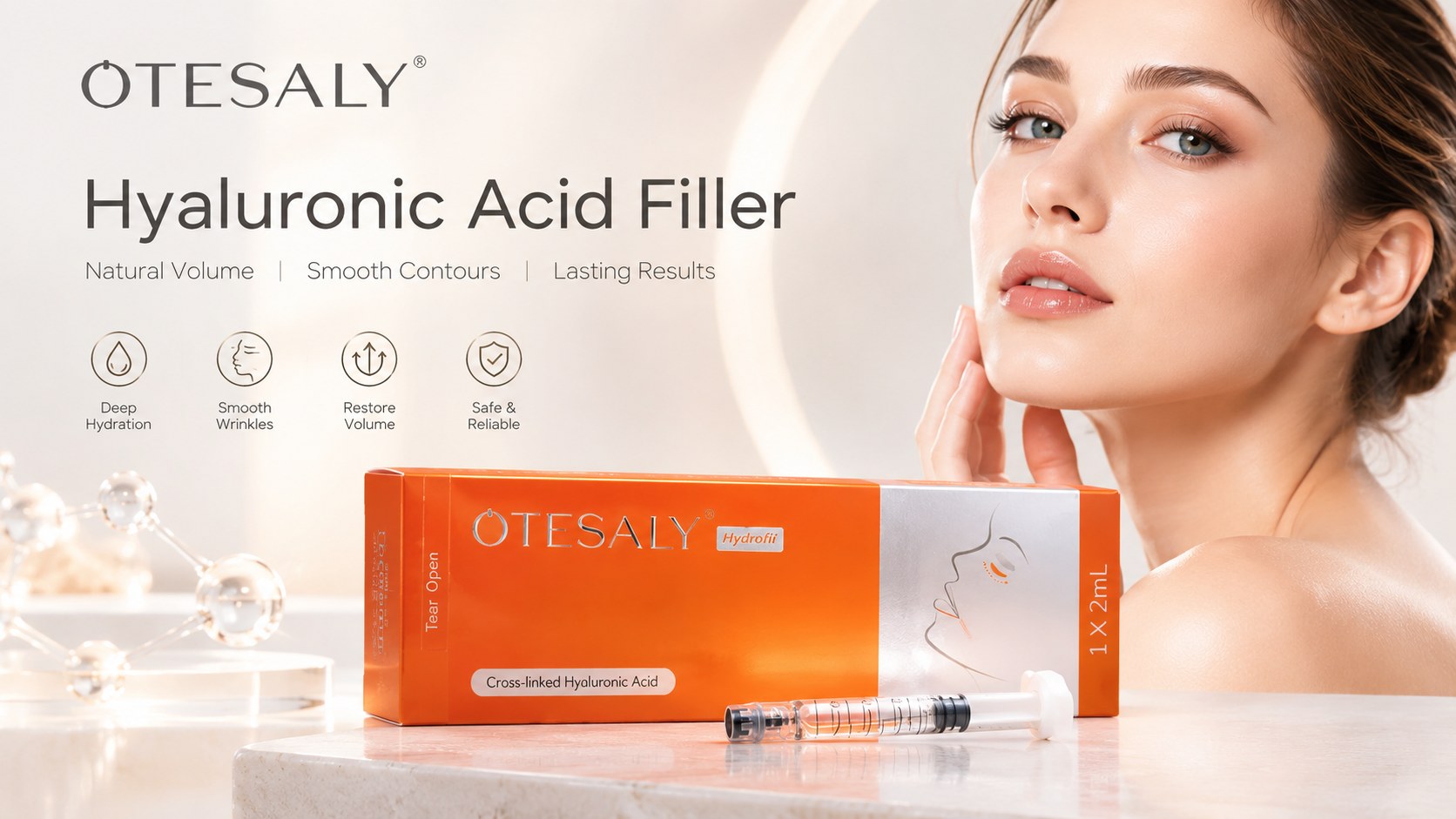
OTESALY Vital Lifting 2ml is listed with a 2 ml fill volume and 20 mg/ml cross-linked sodium hyaluronate gel, with a stated duration of approximately 6–9 months. The manufacturer's listed application areas include facial areas such as tear troughs, nasolabial folds, marionette lines, forehead lines, and crow’s feet, as well as selected body areas including neck lines, the backs of the hands, décolletage, and certain skin-fold areas.
However, these listed areas should not be interpreted as universal indications. Regulatory authorization and approved indications can differ by country, so distributors and clinics should verify the documentation applicable to their market before procurement or clinical use.
2ml Format: Why Does It Matter for Clinics?
The 2 ml format is particularly relevant from an operational perspective.
Compared with a 1 ml syringe, a 2 ml format provides a larger volume in a single product unit. This can be useful when a clinician's treatment plan involves multiple anatomical points or broader treatment areas. It may also simplify inventory planning for clinics that routinely perform comprehensive facial treatments.
That does not mean that every patient requires 2 ml. The appropriate quantity depends on anatomy, treatment goals, injection technique, and the individual clinical assessment.
For distributors, the 2 ml configuration can also be useful when building product portfolios around lifting and contour-focused HA treatments. Clinics looking for facial lifting filler wholesale should consider not only unit price but also documentation, consistency, packaging, production standards, shelf life, logistics, and after-sales support.
When May Clinics Consider a Lifting-Oriented HA Filler?
A lifting-oriented HA product may be considered when a qualified practitioner identifies concerns such as:
-
Reduced skin firmness or mild laxity
-
Loss of soft-tissue support
-
Fine lines and folds associated with volume or structural changes
-
Areas where controlled contour refinement is appropriate
-
A preference for an injectable rather than a surgical approach
A skin laxity filler treatment should therefore be viewed as one possible component of a broader aesthetic treatment plan rather than a universal solution for all degrees of facial aging.
For significant tissue laxity, patients may require other procedures or combinations of treatments. The AAD also notes that the appropriate filler and treatment approach depend on the area being treated, the patient's medical history, and the desired outcome.
Treatment Approach / What to Expect
For clinics introducing or expanding a Vital Lifting treatment option, a structured workflow helps maintain consistent patient assessment and product selection.
Step 1: Conduct a Clinical Consultation
The first step is a medical and aesthetic assessment. The practitioner should evaluate skin quality, facial anatomy, degree of laxity, volume distribution, previous injectable treatments, allergies, medications, and relevant medical history.
The AAD recommends discussing previous cosmetic procedures, medications, potential side effects, expected duration, and whether the filler is approved for the intended use before treatment.
Step 2: Define the Treatment Objective
The clinician should distinguish between:
-
Volume restoration
-
Wrinkle or fold correction
-
Contour refinement
-
Skin hydration
-
Firmness and support
This distinction helps determine whether an HA filler is appropriate and which product characteristics are most relevant.
For example, a non-surgical face lift filler should not be marketed as equivalent to surgical facial lifting. Instead, it is better positioned as an injectable option that may contribute to facial contour and soft-tissue support when appropriately selected and administered.
Step 3: Select the Product and Treatment Volume
Once the treatment objective is established, the practitioner determines the appropriate product and quantity.
OTESALY Vital Lifting is supplied in a 2 ml configuration and is listed for mid-to-deep dermal use. Its product information also specifies two 29G/30G needles.
The exact amount injected should be determined clinically rather than using the full syringe simply because it is available.
Step 4: Perform the Injection Under Appropriate Medical Conditions
Dermal filler injection requires appropriate medical training, sterile technique, anatomical knowledge, and patient monitoring. Injection depth, placement, product quantity, and technique should follow the product's approved instructions and the practitioner's professional training.
The AAD emphasizes that filler injection is a medical procedure and that complications are more likely when fillers are administered by inexperienced or inadequately trained providers.
For additional professional background on dermal fillers, clinics can review the American Academy of Dermatology's dermal filler overview.
Step 5: Monitor and Schedule Follow-Up
Following treatment, patients may experience temporary redness, swelling, tenderness, or bruising. The AAD reports that these minor effects commonly resolve within approximately 7–14 days, although individual recovery varies.
Clinics should provide appropriate post-treatment instructions and establish a follow-up process to assess the treatment result and determine whether any additional intervention is clinically appropriate.
Step 6: Build the Product Into the Clinic Portfolio
From a procurement perspective, Vital 2ml can be positioned alongside other HA filler formats according to treatment depth, indication, viscosity/rheology, volume, and target anatomical areas.
For distributors and clinic groups, an OEM lifting HA filler program may also be worth evaluating when private-label branding, customized packaging, or a dedicated product portfolio is part of the business strategy.
OTESALY states that its manufacturing system includes a GMP biopharmaceutical production workshop and that its product portfolio includes OEM support. Its Vital Lifting product page also lists ISO 13485, GMP, and MSDS under product documentation. Buyers should request current certificates and market-specific regulatory documentation during supplier evaluation.
Conclusion
For clinics and distributors, OTESALY Vital 2ml is best understood as a 2 ml hyaluronic-acid-based lifting and firming filler that can be considered for selected treatment plans involving skin firmness, soft-tissue support, hydration, contour, and wrinkles. Its listed composition, 2 ml format, mid-to-deep dermal positioning, and stated 6–9 month duration make it a product worth evaluating within a broader HA filler portfolio.
The right product should always be selected according to clinical assessment, local regulatory requirements, approved indications, and practitioner expertise. For clinics, distributors, and brand owners looking for lifting filler clinic supply or OEM solutions, contact OTESALY to discuss wholesale pricing, product documentation, private-label options, and international supply requirements.
Frequently Asked Questions
What is OTESALY vital 2ml filler used for?
OTESALY Vital 2ml is positioned as a hyaluronic-acid-based lifting and firming injectable. The product information lists functions including lifting and firming, improving elasticity, moisturizing, and addressing the appearance of wrinkles and scars. It is supplied as a 2 ml formulation and is listed for mid-to-deep dermal use. Actual clinical use must follow the product's approved indications and the practitioner's professional judgment.
When should clinics consider a vital lifting dermal filler?
Clinics may consider a vital lifting dermal filler when qualified practitioners identify mild-to-moderate concerns involving firmness, soft-tissue support, contour, or selected wrinkles and folds. It may be considered when an injectable approach is appropriate and when the product's regulatory indication matches the intended treatment. It should not be presented as a replacement for surgical lifting or as suitable for every patient.
Is a skin lifting filler injection the same as a surgical facelift?
No. A skin lifting filler injection is an injectable aesthetic procedure, while a surgical facelift involves surgical repositioning and removal of tissue. HA fillers may provide localized volume, support, hydration, and contour modification, but they should not be marketed as producing the same anatomical changes as surgery. Treatment suitability depends on the patient's anatomy, treatment goals, medical history, and the practitioner's assessment.
How long can a 2ml HA filler treatment last?
Duration depends on the specific formulation, treatment area, injection technique, metabolism, and individual patient factors. OTESALY's product information states an expected duration of approximately 6–9 months for Vital Lifting 2ml. The AAD notes more generally that HA fillers can commonly last around 4–12 months, depending on the product and treatment area.
What should clinics consider when buying facial lifting filler wholesale?
Clinics and distributors should evaluate more than price. Key factors include product composition, intended indication, regulatory documentation, manufacturing standards, packaging, lot traceability, shelf life, delivery reliability, technical documentation, OEM capabilities, and after-sales communication. For international purchasing, buyers should also confirm that the supplier can provide documentation appropriate for the destination market and that the product can legally be supplied and used there.
Can Vital 2ml be used as part of a non-surgical skin lifting treatment?
It may be incorporated into a non-surgical skin lifting treatment when a qualified practitioner determines that an HA filler is clinically appropriate and the intended use complies with local regulations and product indications. The treatment should be based on individual anatomical assessment rather than a fixed injection protocol. A conservative, individualized approach is important because filler results depend significantly on product selection and injector expertise.

