
Choosing between a collagen peptide injection and PDRN mesotherapy is an important consideration for aesthetic clinics seeking to expand their skin rejuvenation offerings. Although both approaches are associated with skin quality improvement, they differ in their active ingredients, biological mechanisms, product formulations, and intended treatment objectives. For clinic owners, medical aesthetic practitioners, and distributors, understanding these differences is essential for evaluating product portfolios and communicating accurately with professional clients.
Collagen peptides are associated with collagen-related skin research and rejuvenation strategies, while PDRN (polydeoxyribonucleotide) is a DNA-derived ingredient studied for its potential role in tissue repair and regenerative processes. However, these ingredients should not be considered interchangeable, and evidence for one formulation cannot automatically be applied to another. This guide compares their underlying science, practical considerations, and procurement implications to help B2B buyers make more informed product selection decisions.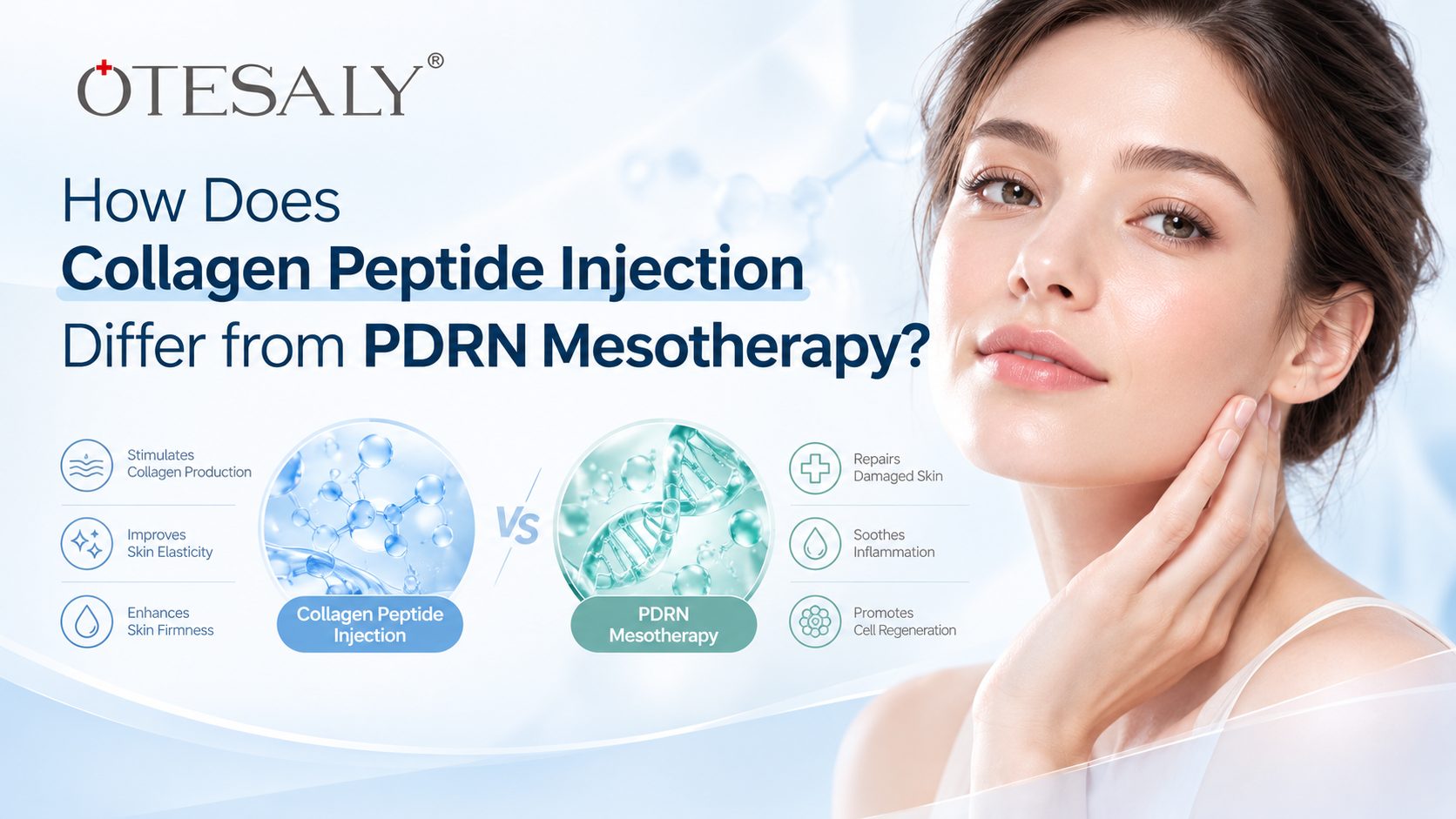
What Is Collagen Peptide Injection and Why Does It Matter?
Understanding collagen peptides and skin aging
Collagen is a major structural protein in the extracellular matrix, helping provide skin with tensile strength and structural support. Its production and organization change with age, ultraviolet exposure, and other environmental factors. Over time, these changes can contribute to visible wrinkles, reduced elasticity, and alterations in skin texture.
Collagen peptides are short chains of amino acids derived from collagen or produced through specific manufacturing processes. Their biological effects depend on their composition, molecular characteristics, formulation, and route of administration. Research into collagen peptides includes studies of oral supplementation and laboratory investigations, but findings from these areas should not be interpreted as proof that every injectable peptide formulation produces the same results.
A collagen peptide injection is a broad product description rather than a single standardized treatment category. Different injectable products may contain collagen-derived peptides, other collagen-related ingredients, or additional formulation components. Their intended uses, regulatory status, and supporting evidence must therefore be evaluated individually.
For clinics considering collagen-based aesthetic products, it is important to distinguish between products marketed for skin conditioning, formulations intended to support collagen-related processes, and established dermal fillers designed primarily to provide volume or structural support.
What is PDRN mesotherapy?
PDRN stands for polydeoxyribonucleotide, a mixture of DNA fragments generally obtained from biological sources and processed for specific applications. It has been investigated for potential effects on tissue repair and cellular signaling, including mechanisms associated with adenosine A2A receptor activity and nucleotide salvage pathways.
PDRN mesotherapy refers to a category of aesthetic formulations containing PDRN or related ingredients, depending on the specific product. These formulations may be marketed for skin quality or skin recovery applications, but their composition, approved indications, and clinical evidence vary.
PDRN is not collagen, and it does not function as a conventional volumizing filler simply because it is used in aesthetic practice. Likewise, the presence of PDRN in a product does not guarantee a particular regenerative outcome.
When evaluating PDRN vs collagen peptide, clinics should focus on the actual active ingredients, formulation-specific evidence, intended use, and applicable regulatory requirements rather than relying on broad marketing descriptions.
How Dermal Fillers and Injectable Skin Rejuvenation Products Address Skin Concerns
Collagen peptide products and PDRN formulations are often discussed alongside dermal fillers, but these categories can serve different purposes. Understanding the distinction helps aesthetic businesses build product portfolios that align with clinical needs without making unsupported claims.
Comparing the mechanisms of action
Collagen-related products are developed with different objectives. Some contain collagen-derived peptides investigated for their biological activity, while others contain collagen or collagen-related materials intended to provide a specific physical or aesthetic effect. A collagen biostimulator, for example, should not automatically be assumed to work in the same way as a peptide-based skin-conditioning formulation.
PDRN formulations, meanwhile, are studied for their potential involvement in tissue repair pathways and cellular responses. The clinical relevance of these mechanisms depends on the product, concentration, delivery method, treatment protocol, and quality of available evidence.
The following comparison summarizes the principal differences.
|
Consideration |
Collagen peptide-based products |
PDRN mesotherapy products |
|
Active ingredient |
Collagen-derived peptides or other specified collagen-related ingredients |
Polydeoxyribonucleotide or a related specified ingredient |
|
Research focus |
Collagen-related biology, skin characteristics, and formulation-specific effects |
Tissue repair pathways, cellular signaling, and potential skin quality effects |
|
Product categories |
May include peptide formulations, collagen-related injectables, or other distinct product types |
May include topical products and professional formulations intended for specific routes of administration |
|
Primary evaluation criteria |
Peptide composition, formulation, mechanism, and product-specific evidence |
PDRN source, composition, purity, concentration, and product-specific evidence |
|
Evidence considerations |
Research on oral peptides cannot automatically substantiate injectable claims |
Laboratory or preclinical findings do not independently establish clinical efficacy |
|
Procurement priorities |
Ingredient specifications, intended use, safety documentation, and regulatory status |
Ingredient specifications, manufacturing controls, safety documentation, and regulatory status |
This comparison is intended as a general ingredient-level overview. It does not establish that every product in either category is injectable, equivalent in performance, or authorized for the same indications.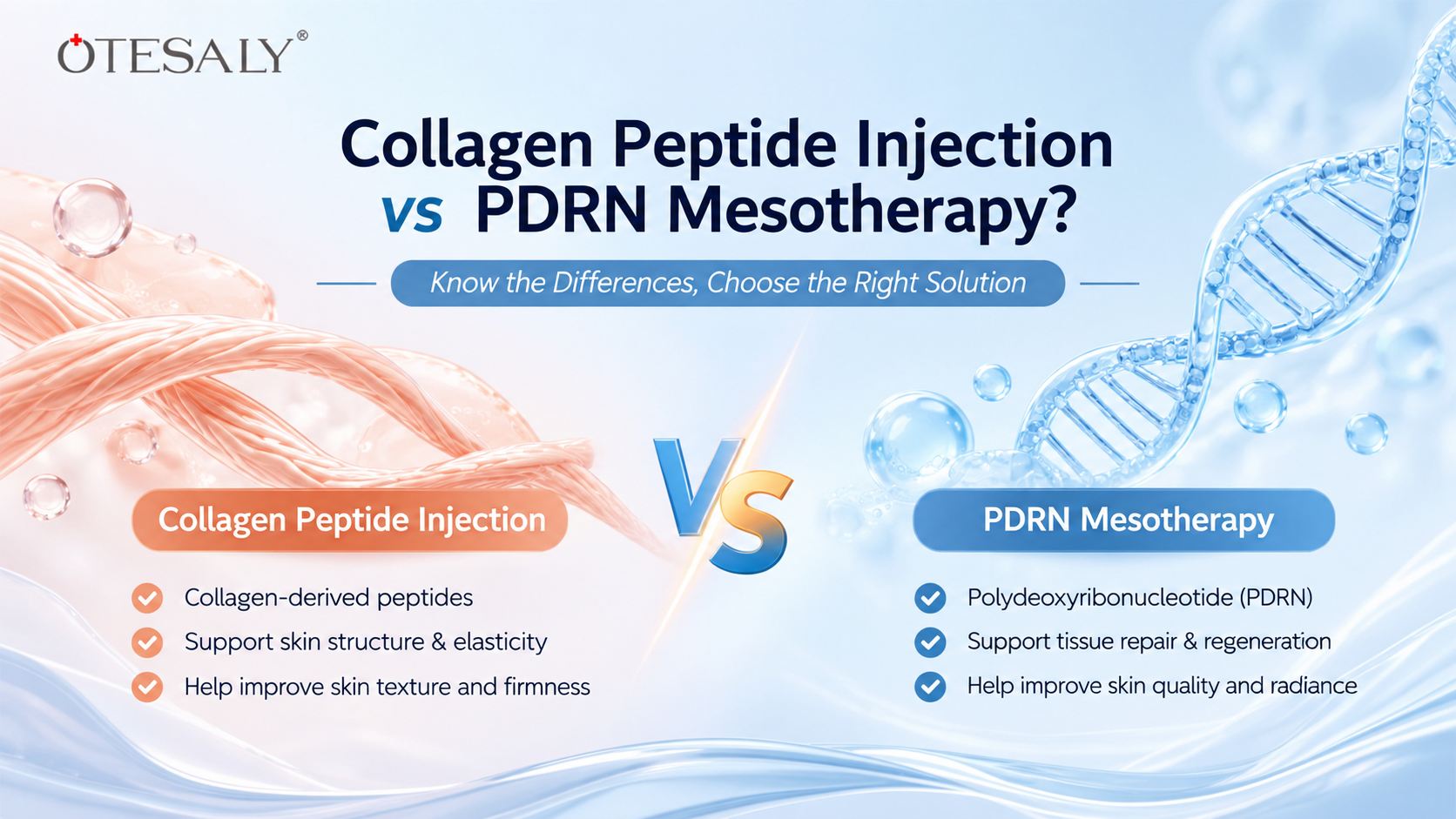
What does the clinical evidence tell us?
Research on collagen peptides includes investigations into skin hydration, elasticity, and visible signs of aging. A review of studies on oral collagen supplementation provides background on this research area, but it should not be treated as direct evidence for an injectable product. Buyers can consult this review of collagen peptide skin research while distinguishing its findings from evidence for a specific formulation.
PDRN has also been investigated in preclinical and clinical settings, particularly in relation to tissue repair. Nevertheless, the strength and relevance of the evidence depend on the indication, route of administration, study design, and formulation examined.
For clinic owners, the practical question is not simply which ingredient sounds more advanced. It is whether a specific product has reliable evidence supporting its intended use, a clear safety profile, and documentation consistent with local regulatory requirements.
The American Academy of Dermatology provides general information about dermal fillers and their safety considerations. Clinics should also distinguish products intended to add volume from those intended for other skin quality applications.
Where does a collagen stimulator injectable fit?
A collagen stimulator injectable is a separate category that may be designed to encourage biological processes associated with collagen production. Depending on the active material, these products can differ substantially from collagen peptide formulations.
For example, OTESALY Type III Collagen is a separate product offering that B2B buyers can evaluate alongside other collagen-related solutions. Its composition, intended application, evidence, and regulatory status should be reviewed using the product's current technical documentation.
Similarly, the OTESALY collagen lift injection can be assessed as part of a broader product evaluation. Product names alone should not be used to infer the presence of a particular mechanism, a guaranteed outcome, or equivalence to another injectable category.
For distributors, clear product classification is especially important. It supports accurate catalog descriptions, responsible sales training, and more transparent discussions with professional customers.
Treatment Approach / What to Expect: A Step-by-Step Evaluation
For clinics and distributors, comparing collagen peptide injections with PDRN mesotherapy requires more than reviewing ingredient names. A structured evaluation process can help determine whether a product is appropriate for the intended professional setting.
Step 1: Define the intended treatment objective
Start by identifying the concern the product is intended to address. Is the objective skin hydration, texture improvement, support for a particular skin quality protocol, or structural volume correction?
These objectives are not interchangeable. A product developed for skin conditioning should not be positioned as a direct substitute for a volumizing filler unless its documented indications support that use.
Step 2: Review the complete formulation
Examine the ingredient list, concentration, excipients, manufacturing specifications, and intended route of administration. For collagen-related products, establish whether the formulation contains collagen peptides, collagen itself, or another active material. For PDRN products, verify the specified ingredient and its concentration.
Clinics should not assume that products sharing a marketing term have equivalent compositions or performance.
Step 3: Examine safety and regulatory documentation
Request the relevant product instructions, contraindications, storage requirements, traceability information, and applicable conformity or authorization documents. Confirm that the product is legally marketed for the intended use in the destination country.
Injectable products require particular scrutiny because inappropriate use, contamination, hypersensitivity, and incorrect administration can lead to serious complications. Only appropriately qualified professionals should administer products that are authorized for injection, following the applicable instructions and local requirements.
Step 4: Assess the supporting evidence
Review studies involving the exact formulation wherever available. Consider the study population, sample size, endpoints, follow-up period, adverse events, and potential conflicts of interest.
Evidence for an ingredient in a laboratory setting, an oral supplement, or a different injectable formulation cannot automatically establish the safety or effectiveness of the product under consideration.
Step 5: Establish a responsible clinical protocol
Qualified practitioners should determine patient suitability, treatment planning, administration technique, follow-up, and management of adverse events according to the product's authorized instructions and applicable professional standards.
Clinics should communicate realistic expectations and explain that outcomes vary with the product, individual characteristics, and treatment context. There is no universal protocol that applies to every collagen peptide injection or PDRN formulation.
Step 6: Evaluate supplier reliability
For B2B buyers, supplier assessment should include manufacturing quality systems, batch traceability, documentation, packaging integrity, storage and shipping controls, and after-sales support.
Businesses exploring an anti-aging collagen meso treatment should verify that each product matches their market's requirements. Buyers seeking a collagen injectable wholesale supply should also clarify minimum order quantities, lead times, shelf life, export documentation, and product-specific regulatory limitations.
For private-label projects, an OEM collagen peptide meso inquiry should cover formulation availability, customization scope, packaging options, quality documentation, and the responsibilities of each party in the target market.
Conclusion
Collagen peptide injections and PDRN mesotherapy should be evaluated as distinct product categories rather than interchangeable skin rejuvenation solutions. Their ingredients, proposed mechanisms, supporting evidence, and regulatory requirements can differ significantly, making product-specific assessment essential for clinics and distributors.
For professional buyers, the best approach is to verify formulation details, review reliable clinical evidence, confirm safety documentation, and select products that align with the intended application and destination-market requirements. A well-structured portfolio should prioritize transparency, responsible product positioning, and dependable supplier support.
OTESALY supports B2B customers exploring collagen-related injectables and mesotherapy solutions. Contact OTESALY to discuss collagen injectable wholesale supply, available product specifications, or OEM opportunities for your target market.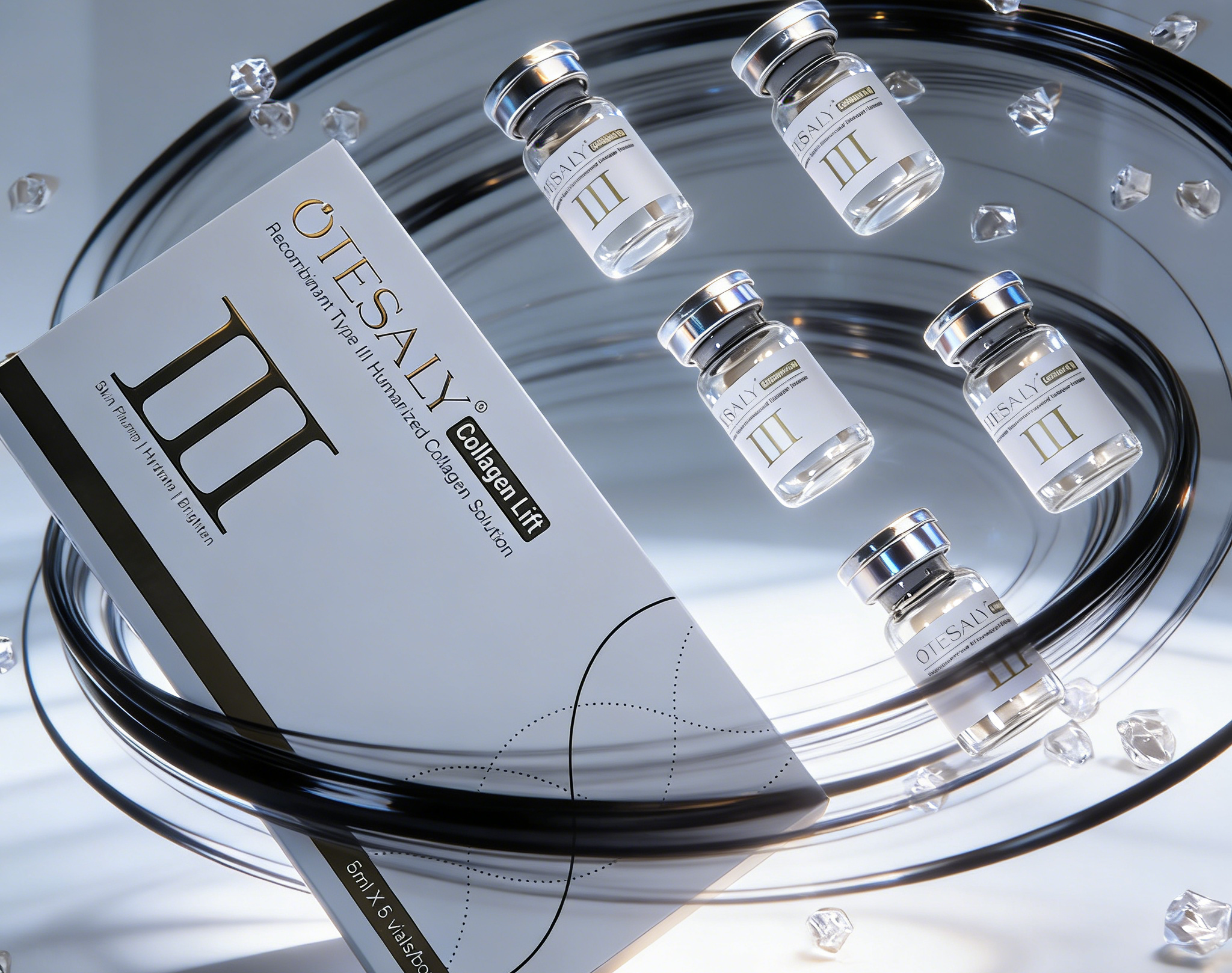
Frequently Asked Questions
1. What is the difference between PDRN vs collagen peptide injections?
PDRN and collagen peptides are different ingredient categories with distinct research backgrounds. Collagen peptides are short amino acid chains derived from collagen, whereas PDRN consists of DNA fragments investigated for potential tissue repair-related activity. Neither term alone establishes a product's clinical performance. Clinics should compare exact formulations, intended uses, supporting evidence, and regulatory status before selecting either category.
2. Is a collagen peptide injection the same as a collagen stimulator injectable?
No. A collagen peptide injection may contain collagen-derived peptides, while a collagen stimulator injectable is generally designed to influence biological processes associated with collagen production. The categories may overlap in marketing discussions but are not automatically equivalent in composition or mechanism. Buyers should verify the active ingredients, product instructions, and evidence before deciding whether a particular injectable fits their treatment offering.
3. Can PDRN mesotherapy replace a collagen peptide skin rejuvenation treatment?
Not automatically. PDRN mesotherapy and collagen peptide formulations may have different ingredients, proposed mechanisms, and intended applications. Research on should be interpreted according to the routes and formulations studied. A qualified practitioner should choose products based on their documented indications, evidence, patient suitability, and applicable regulatory requirements rather than assuming that one can replace the other.
4. How should clinics select a skin repair collagen injection supplier?
Clinics should verify the supplier's manufacturing standards, ingredient specifications, batch traceability, safety documentation, storage conditions, and destination-market compliance. They should also examine evidence for the exact product and confirm whether it is authorized for the intended application. For wholesale purchases, additional considerations include minimum order quantities, shipping arrangements, shelf life, technical support, and the supplier's ability to provide complete, consistent documentation.
5. What should distributors ask about OEM collagen peptide meso products?
Distributors should ask whether the supplier offers an established formulation or genuine customization, which packaging and labeling options are available, and what quality and regulatory documents can be provided. They should clarify development timelines, minimum order quantities, stability data, manufacturing controls, and export requirements. Any private-label agreement should clearly allocate responsibility for product claims, market authorization, labeling compliance, and post-market obligations.

