
As demand for regenerative aesthetics grows, vegan PDRN vs salmon PDRN has become an important consideration for clinics, aesthetic brands, and distributors evaluating their next-generation skincare and mesotherapy portfolios. Traditional PDRN is commonly associated with salmon-derived DNA fragments, while emerging plant-based approaches are attracting attention from businesses seeking alternative sourcing options. However, choosing between these ingredients requires more than comparing their origins. Buyers must consider molecular composition, manufacturing processes, evidence of biological activity, purity, safety documentation, and the intended application of the finished product.
For clinic owners and distributors, the central question is whether plant-derived alternatives can offer comparable performance and reliable product quality. Understanding the scientific distinctions can help businesses evaluate supplier claims, communicate accurately with practitioners, and make informed purchasing decisions without overlooking regulatory requirements or the limitations of current research.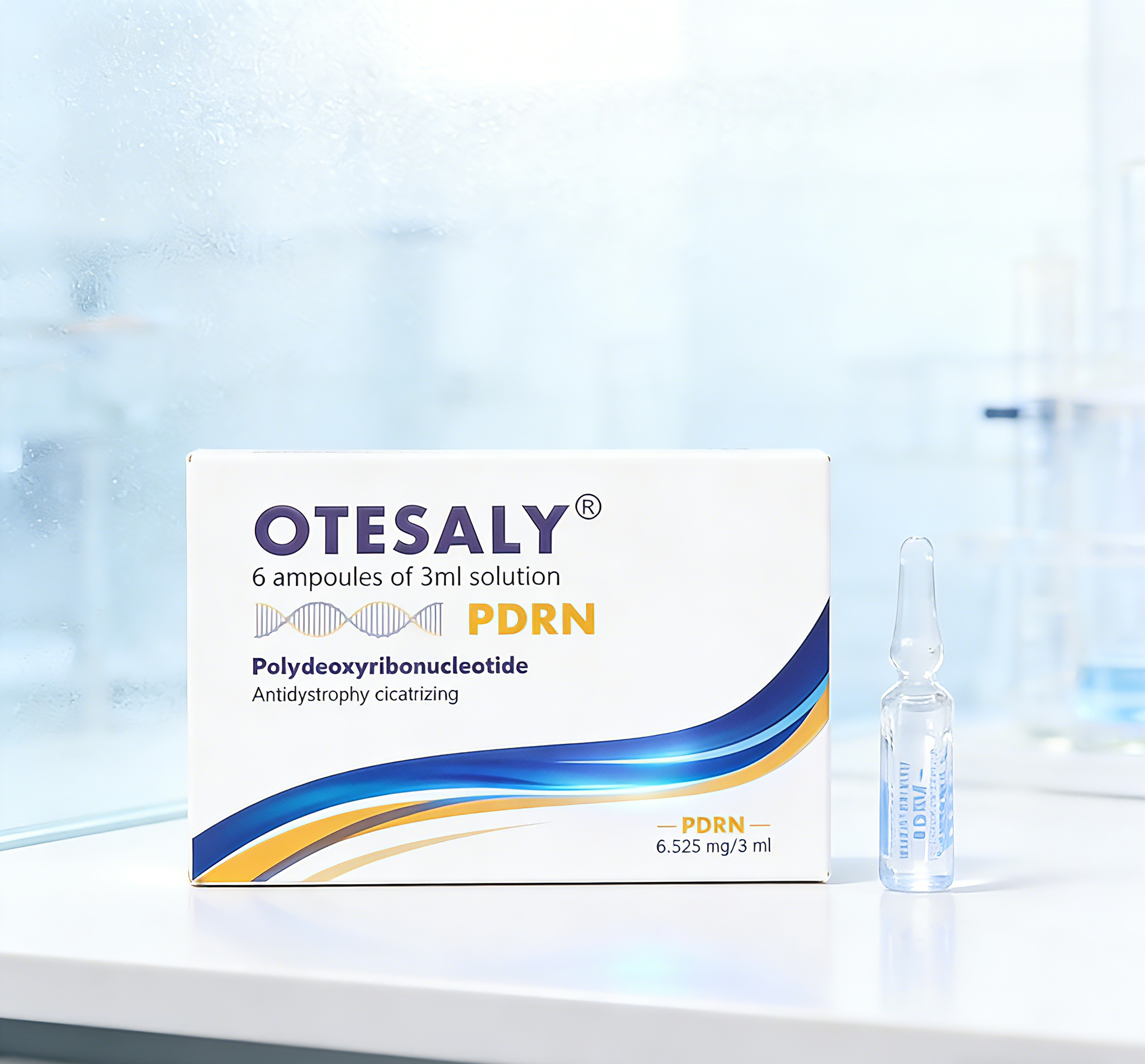
What Is Vegan PDRN vs Salmon PDRN, and Why Does It Matter?
Polydeoxyribonucleotide (PDRN) is a mixture of DNA fragments investigated for its potential role in tissue repair, cellular activity, and skin-barrier support. To understand what is PDRN, clinics should distinguish the ingredient's biological properties from its source, processing method, and final formulation.
Salmon-derived PDRN
Traditional salmon-derived PDRN is obtained from salmon-derived biological material and processed to isolate and purify DNA fragments. It has an established research history in tissue repair and regenerative applications, although the strength of evidence varies by indication, administration route, and formulation.
PDRN has been studied in relation to adenosine A2A receptor signaling and nucleotide salvage pathways. These mechanisms may contribute to cellular repair and inflammatory modulation. However, evidence for one PDRN formulation should not automatically be applied to every commercial product.
Vegan or plant-derived PDRN
Vegan PDRN generally refers to DNA fragments obtained from non-animal sources, including plant tissues or plant cell cultures. Researchers are investigating whether these materials can provide relevant biological activities while offering an alternative for consumers and businesses that prefer to avoid animal-derived ingredients.
A 2025 study of PDRN derived from Gynostemma pentaphyllum callus reported antioxidant activity, improved keratinocyte viability, and changes in skin-barrier-related proteins in laboratory experiments. The findings are encouraging, but they do not establish clinical equivalence across all plant-derived ingredients or commercial formulations.
Another important distinction is that vegan PDRN is not a single standardized ingredient. The plant species, extraction process, DNA fragment distribution, purification method, and formulation can all influence the material's characteristics.
Key differences at a glance
|
Evaluation factor |
Salmon-derived PDRN |
Vegan PDRN |
|
Source |
Salmon-derived biological material |
Plant-derived material or plant cell cultures |
|
Research background |
More established in several biomedical applications |
Emerging, with source-specific evidence |
|
Potential advantages |
Existing research and supplier experience |
Animal-free sourcing and potential sustainability benefits |
|
Main quality considerations |
DNA purity, residual proteins, source traceability |
DNA purity, residual plant components, source traceability |
|
Evidence limitations |
Results vary by product and application |
Direct clinical comparisons remain limited |
|
Procurement priority |
Verify product-specific quality and documentation |
Verify quality, evidence, and animal-free sourcing claims |
For buyers, the critical point is that source alone does not determine product performance. A well-characterized plant-derived ingredient may be promising, but its quality and suitability must be demonstrated for the specific application.
How PDRN May Support Skin Repair: What the Evidence Shows
Although PDRN is not a dermal filler in the conventional sense, it is relevant to clinics building skin-quality and regenerative aesthetics portfolios. Its proposed biological actions differ from the volume replacement and structural support associated with traditional fillers.
1. Cellular activity and skin-barrier support
PDRN research has examined cell viability, migration, and the expression of proteins associated with skin-barrier function. These outcomes are relevant to understanding how different DNA-derived materials might support skin recovery.
In the 2025 Gynostemma pentaphyllum study, researchers compared plant-derived PDRN with salmon-derived PDRN in laboratory models. They reported comparable effects in selected assays, including antioxidant and wound-healing-related outcomes. However, laboratory findings cannot independently establish equivalent clinical results in patients.
2. Collagen-related pathways and tissue repair
Salmon-derived PDRN has been investigated for its potential effects on tissue repair and cellular signaling. Plant-derived preparations are also being studied for possible effects on extracellular-matrix-related gene expression.
These findings may help guide future research, but changes in gene expression or cultured-cell behavior should not be interpreted as proof of visible wrinkle reduction, long-term skin rejuvenation, or equivalent performance between products.
A separate study of peony-derived PDRN reported changes in genes associated with the extracellular matrix and skin-barrier function, alongside preliminary human data from a small topical-application study. These results concern a specific ingredient and application, rather than plant-derived PDRN as a whole.
3. What does the evidence say about equivalence?
The central limitation in comparing vegan PDRN vs salmon PDRN is the lack of sufficiently broad, standardized clinical evidence demonstrating that different sources perform equally across applications.
A useful review of plant-based PDRN research should therefore consider the exact source and study design rather than relying on a general claim that plant DNA works like salmon DNA.
When assessing scientific claims, clinics should distinguish among:
-
Laboratory evidence: Results from cultured cells or experimental models.
-
Human clinical evidence: Outcomes measured in people using a specific formulation and application.
-
Product-specific evidence: Data that directly support the product being purchased.
-
Comparative evidence: Studies that test the relevant formulations under sufficiently similar conditions.
The American Academy of Dermatology also provides guidance on evaluating evidence for aesthetic procedures and their claimed benefits. Its patient guidance on platelet-rich plasma and skin rejuvenation is a useful reminder that interest in regenerative treatments should not replace careful
evaluation of the available evidence. PRP is a different treatment from PDRN, so the guidance should not be interpreted as direct evidence for either PDRN source.
4. Why formulation and purity matter
For distributors and clinic procurement teams, the ingredient name is only the starting point. DNA fragment size and distribution, concentration, purity, stability, residual proteins or other biological materials, and finished-product quality can influence the characteristics of a preparation.
When evaluating PDRN raw material purity, buyers should request appropriate specifications and supporting documentation, including batch-level quality information where available. For products intended for injection, sterility, endotoxin control, manufacturing controls, and jurisdiction-specific regulatory status are particularly important.
A supplier's general ingredient description is not a substitute for evidence that the finished product meets the requirements of its intended use.
Treatment Approach and What Clinics Should Expect
For clinics and distributors, choosing between vegan and salmon-derived PDRN is best approached as a structured product-evaluation process. The goal is to match the ingredient's evidence, quality profile, and intended use with the needs of the business.
Step 1: Define the intended application
First, determine whether the product is intended for topical skincare, professional cosmetic use, or another regulated application. Ingredients with similar names may be incorporated into very different formulations, and evidence for one delivery route does not automatically apply to another.
For example, clinics evaluating OTESALY PDRN mesotherapy should review the specific product documentation and intended-use information rather than assuming that all PDRN products have interchangeable properties.
Step 2: Review the scientific evidence
Ask suppliers for relevant studies, technical specifications, and evidence supporting the finished formulation. Where comparative performance is claimed, check whether the research actually compares the same source, concentration, delivery method, and outcome measures.
For plant-derived products, determine whether the evidence relates to the exact plant species and extraction process used in the ingredient supplied.
Step 3: Assess quality and manufacturing controls
Before placing a wholesale order, request documentation appropriate to the product category, such as:
-
Ingredient identity and source traceability.
-
DNA content, purity specifications, and molecular-weight distribution where applicable.
-
Batch-specific certificates of analysis.
-
Microbiological and, where relevant, sterility and endotoxin testing.
-
Stability data, storage requirements, and shelf-life information.
-
Manufacturing quality documentation and applicable market-specific regulatory records.
These checks help procurement teams distinguish between marketing claims and verifiable product characteristics.
Step 4: Evaluate market positioning and customer requirements
Vegan PDRN may be relevant for brands seeking animal-free sourcing or sustainability-focused positioning. Salmon-derived PDRN may appeal to buyers who prioritize established ingredient research and familiarity with conventional PDRN formulations.
Neither option should be selected on source alone. Clinics and distributors should also consider customer demand, target-market regulations, price, supply consistency, packaging, and the evidence available to support product claims.
For businesses developing a private-label range, an experienced OEM PDRN manufacturer can help clarify formulation options, product specifications, packaging requirements, and documentation needs. Confirm that the proposed manufacturing arrangement is suitable for the intended product category and destination market.
Step 5: Build a portfolio around distinct product needs
Instead of treating every PDRN product as interchangeable, buyers can evaluate complementary options according to their intended applications and documented characteristics.
For example, OTESALY offers an R-PDRN skin rejuvenating serum and a W-PDRN skin brightening serum. These products provide examples of how a PDRN-related range can be organized around different skincare positioning.
Their names and intended positioning should not be taken as proof of comparative efficacy. Buyers should review each product's ingredient information, formulation details, substantiated claims, and regulatory suitability before deciding how to present it to customers.
Conclusion
The comparison of vegan PDRN vs salmon PDRN reflects a broader shift toward evidence-based product selection and alternative ingredient sourcing in medical aesthetics. Salmon-derived PDRN has a more established research background, while plant-derived PDRN represents an emerging area with promising but still source-specific evidence. Neither origin alone guarantees superior results.
For clinics and distributors, the best purchasing decision depends on product-specific evidence, purity, manufacturing controls, intended application, and regulatory suitability. OTESALY supports B2B buyers evaluating PDRN-related skincare and mesotherapy products for their business needs. Contact OTESALY through our PDRN wholesale inquiry page to discuss wholesale orders, OEM options, product specifications, and sourcing requirements.
Frequently Asked Questions
1. Is vegan PDRN as effective as salmon-derived PDRN?
Current evidence does not establish that all vegan PDRN products are clinically equivalent to salmon-derived PDRN. Some plant-derived preparations have demonstrated promising results in laboratory research, but findings vary by source and formulation. Clinics should request evidence relevant to the specific ingredient and finished product rather than relying on broad claims of equivalence.
2. What are the main benefits of plant-based PDRN for aesthetic clinics?
Plant-based PDRN may appeal to clinics and brands seeking animal-free ingredients or alternative sourcing strategies. Research into selected plant-derived DNA fragments has reported potential skin-barrier and cellular benefits. However, these findings should be assessed individually, and clinics should verify the ingredient's quality, safety documentation, formulation, and applicable regulatory status before adding it to their portfolio.
3. How should buyers evaluate salmon-derived PDRN versus vegan PDRN quality?
Buyers should compare DNA identity, purity, molecular-weight distribution, concentration, source traceability, stability, and manufacturing controls. For injectable products, sterility and endotoxin documentation are also critical. Request batch-specific certificates of analysis and product-specific evidence. A supplier's description of an ingredient as premium, natural, or highly purified does not independently establish its quality or clinical performance.
4. Can clinics use vegan PDRN and salmon PDRN interchangeably?
No. Similar ingredient names do not guarantee equivalent composition, performance, safety, or approved use. Different sources and manufacturing processes can produce materials with different characteristics, and evidence for one preparation cannot automatically support another. Clinics should follow the finished product's instructions and applicable regulations, and qualified practitioners should determine suitability for the intended application.
5. What should distributors ask an OEM PDRN supplier before ordering?
Distributors should ask about ingredient sourcing, quality specifications, batch testing, manufacturing standards, stability, packaging options, minimum order quantities, lead times, and available technical documents. They should also clarify the regulatory pathway for each target market and whether the proposed claims are supported by evidence. These checks can help reduce supply-chain uncertainty and support more responsible product positioning.

