Stop whitening injections? Your skin won't darken beyond its natural tone. This intro covers the science, benefits, risks, and OTESALY's safe solutions.
In the aesthetic industry, one question puzzles practitioners and clients alike more than any other: What actually happens when you stop taking a whitening injection? For aesthetic clinics, medical spas, and distributors serving discerning clients, understanding the long-term effects of skin whitening is not just about managing patient expectations—it is the foundation for building a sustainable business around scientifically sound protocols.
This article provides a comprehensive answer to the "rebound" myth. We will explore the balance between whitening injection benefits and potential whitening injection side effects, while diving deep into professional-grade mesotherapy. Understanding why the right product choice—such as a CE Certified whitening injection—leads to safe, stable, and reproducible clinical results is key to long-term success.
How Does a whitening injection Actually Work?
To understand the skin’s transition after treatment, we must first look at the cellular mechanism of a glutathione whitening injection.
Glutathione is a tripeptide composed of three amino acids: glutamate, cysteine, and glycine. Often referred to as the body’s "master antioxidant," it shields cells from oxidative stress and free radical damage. When administered via intravenous or mesotherapy routes, the bioavailability of glutathione far exceeds that of oral supplements, bypassing the digestive tract for a more direct and potent systemic effect.
The brightening mechanism of glutathione operates through two primary pathways:
-
Source Inhibition: It directly inhibits tyrosinase—the rate-limiting enzyme that catalyzes melanin synthesis (specifically the conversion of tyrosine to dopaquinone).
-
Pigment Switching: Through the sulfhydryl-dopaquinone interaction, it shifts melanogenesis from eumelanin (the dark brown-black pigment) toward pheomelanin (the lighter reddish-yellow pigment). Together, these mechanisms reduce overall melanin production while gradually fading existing hyperpigmentation.
The critical takeaway for any whitening injection before and after transformation is this: these treatments do not "bleach" or destroy existing melanin cells. Instead, they provide a temporary suppression of melanin production, allowing the skin’s natural turnover cycle (typically 28 to 45 days) to reveal a brighter, more radiant complexion over time. This transient nature explains why discontinuing treatment does not cause permanent structural changes to the skin’s pigmentary system.
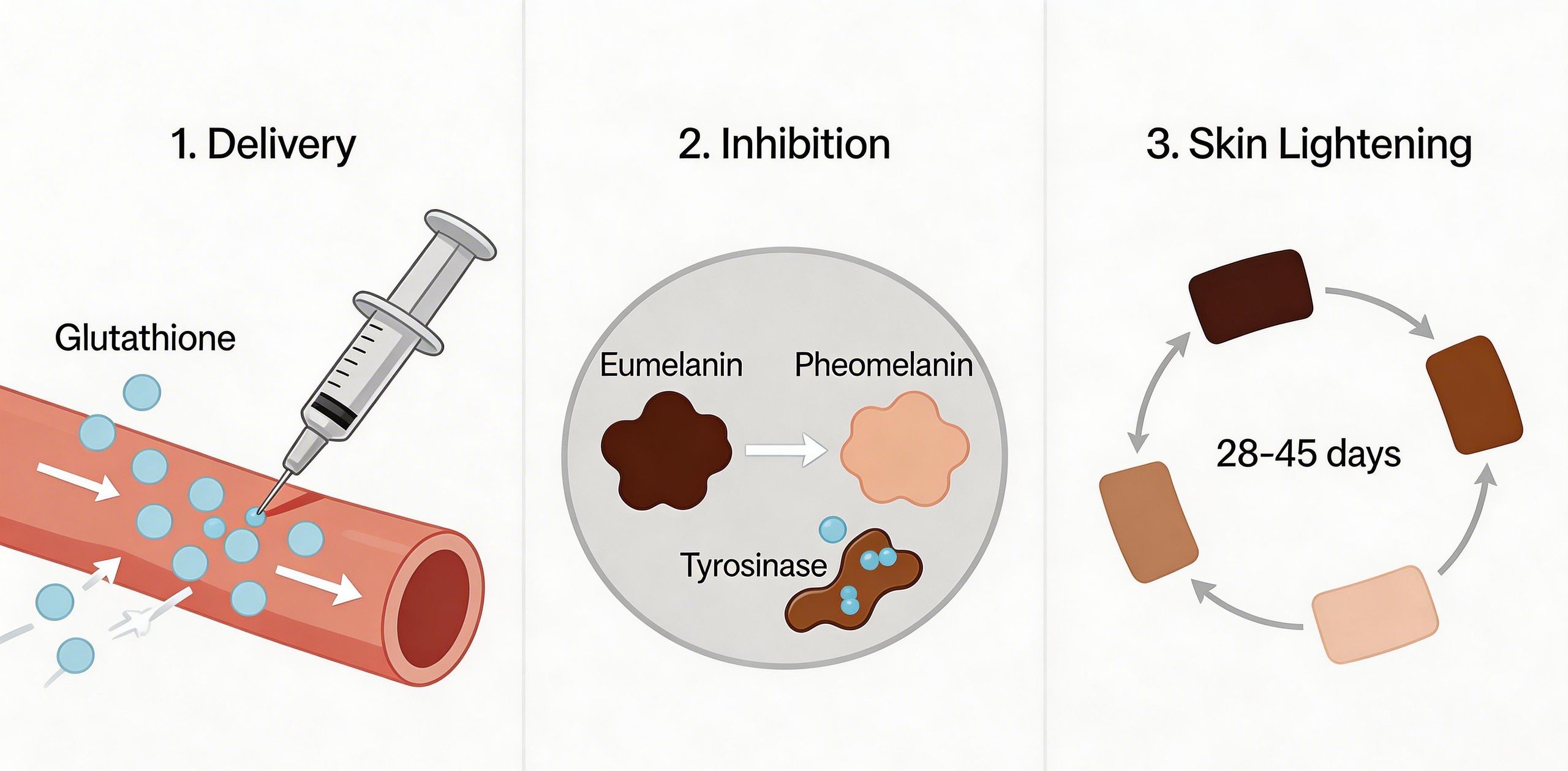
This transition is not instantaneous. Because melanin synthesis recovers gradually and newly formed melanocytes take weeks to reach the surface, the return to baseline typically unfolds over several weeks to months, depending on individual metabolic rates and sun exposure.
2.The "Contrast Effect" (Perceived Darkening)
Some patients report that their skin looks "darker" after stopping their whitening injection. This is often a psychological and visual phenomenon known as a contrast effect. Having grown accustomed to a visibly brighter and more radiant complexion, the return to one’s original skin tone can feel like "darkening" by comparison. Biologically, the skin is not darker than its pre-treatment state; it has simply lost the enhanced luminosity provided by the therapy.
3.True Darkening Due to Inadequate Aftercare
The only circumstance where skin truly becomes darker than its baseline is due to UV exposure during or after treatment. While providing significant whitening injection Benefits, these treatments temporarily reduce melanin, which is the skin’s natural defense against UV radiation. Without rigorous sun protection, UV rays can trigger a compensatory surge in melanin production. This is not caused by the cessation of the injection itself, but by insufficient photoprotection during the recovery phase.
Research Shows: The Benefits and Risks of Skin Whitening Injections
1.Whitening injection Benefits
Both clinical experience and various studies confirm that, when administered correctly, whitening injections offer tangible benefits. According to a 2017 placebo-controlled study, 37.5% of participants who received intravenous glutathione injections demonstrated significant skin-whitening effects after 12 sessions—compared to just 18.7% in the placebo group—thereby demonstrating a genuine, albeit moderate, therapeutic effect. Patients typically observe a gradual improvement in skin brightness, a reduction in hyperpigmentation and uneven skin tone, enhanced overall radiance, and a lightening of the appearance of age spots and sun spots.
2.Whitening injection side effects
Responsible clinics must maintain transparency regarding the potential side effects of whitening injections. Reported adverse reactions include mild, transient symptoms occurring during infusion—such as nausea, dizziness, and gastrointestinal discomfort—as well as more serious risks, including thyroid dysfunction, renal impairment, and severe cutaneous adverse reactions (such as Stevens-Johnson syndrome).
The scientific community has expressed concern regarding the lack of adequate long-term safety data. Multiple reviews have noted that there are currently no rigorous studies evaluating the long-term safety of intravenous glutathione for skin whitening. Furthermore, because glutathione shifts melanin production toward pheomelanin, there is a theoretical risk of increased susceptibility to UV-induced skin cancer—as pheomelanin possesses lower photoprotective capabilities than eumelanin.
For clinics and distributors, these findings underscore the importance of sourcing CE-certified whitening injection products from reputable manufacturers with reliable quality control and safety standards.
Whitening injection before and after:Managing Expectations
Clinical experience reveals a predictable progression in the results observed before and after whitening injections. Many patients notice an improvement in skin radiance immediately following their first treatment; however, the full effect typically requires several weeks of multiple treatment sessions. A complete course of treatment—consisting of 6 to 10 injections administered weekly or bi-weekly—yields the optimal visible whitening results. Maintaining these effects necessitates ongoing maintenance therapy (typically once a month), as the results are reversible once supplementation is discontinued.
Professional clinics should document "before-and-after" cases of whitening injections to build patient trust and demonstrate authentic results. High-quality outcomes depend on proper patient screening, appropriate dosage regimens, and comprehensive post-treatment care instructions.
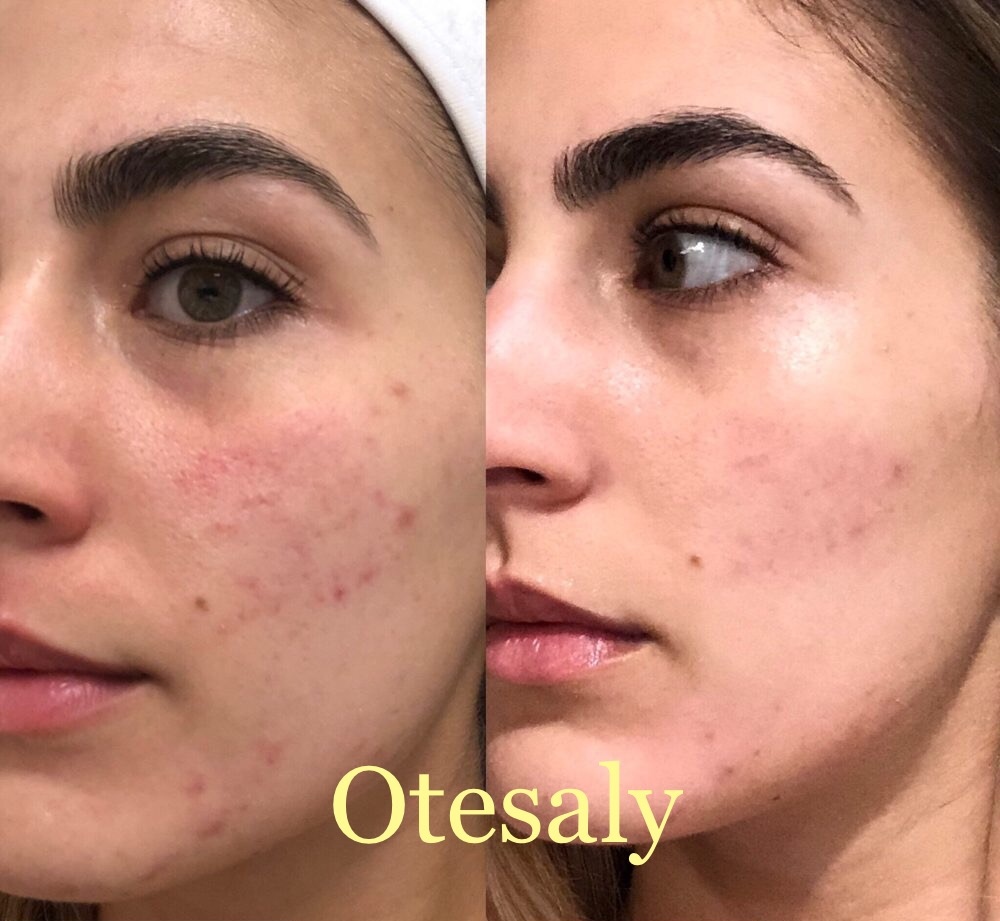
OTESALY®: Professional Mesotherapy Solutions for Skin Whitening
With over 20 years of expertise in medical aesthetics, OTESALY® is a trusted partner for global clinics and distributors. Our formulas are rooted in science, ensuring that 80% of the clinical outcome is driven by the purity and synergy of the ingredients.
Produced under strict quality control and compliant with CE Certified whitening injection standards, our two flagship solutions provide safe, stable, and reproducible results.
Clinical Success:
A Kuala Lumpur clinic reported that 87% of patients saw a 20%+ drop in melanin index after a 6-session protocol. As a top-tier wholesale skin whitening injection, it boosted their repeat client rate by 40% with zero "rebound" cases when paired with proper suncare.
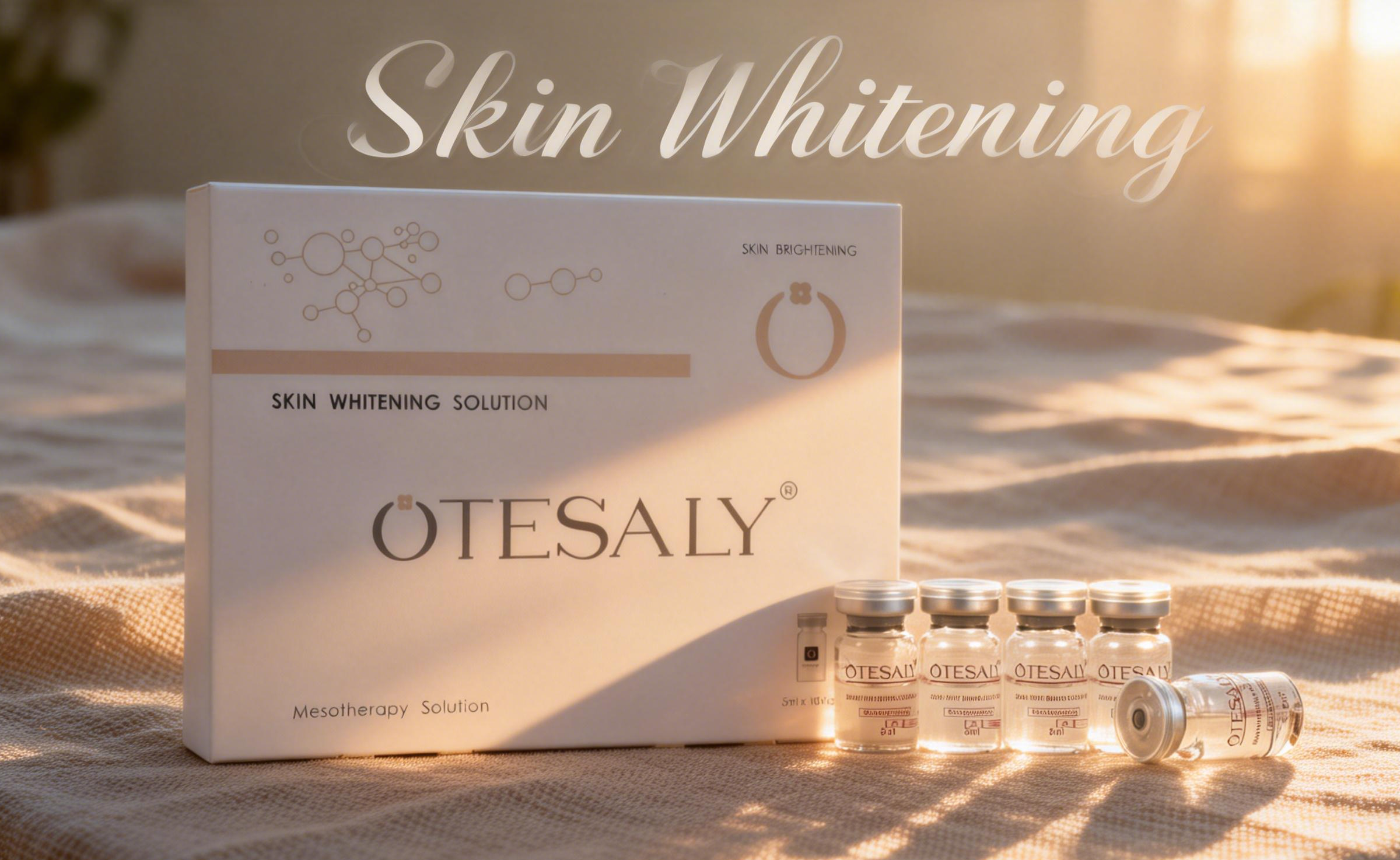
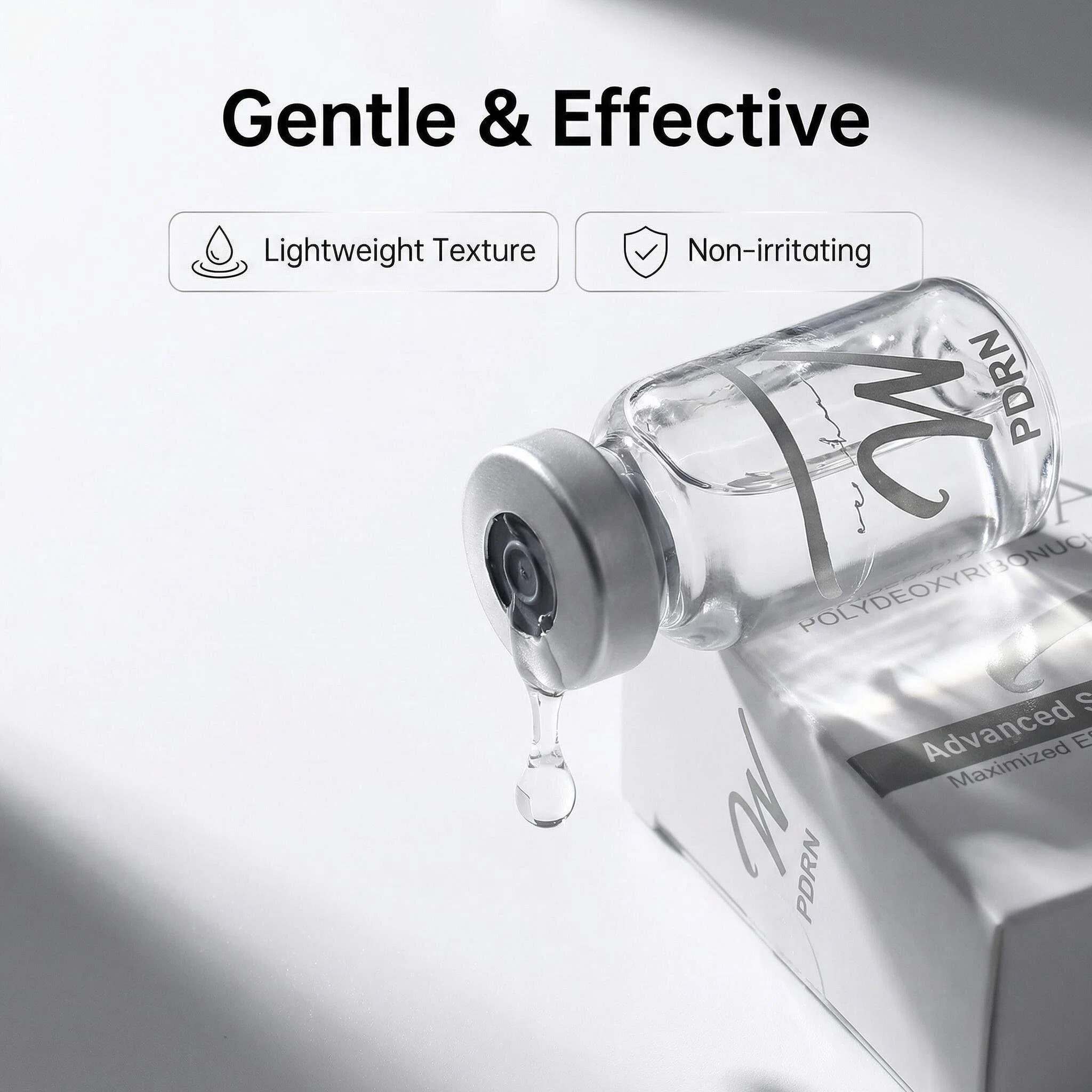
2. OTESALY® PDRN Advanced Skin Whitening Serum (5 vials x 5ml)
An elite "Brightening + Regeneration" serum featuring PDRN (Salmon DNA) to prevent post-treatment darkening.
Comprehensive Multi-Action Formula:
-
PDRN: Rebuilds the skin’s basement membrane, preventing melanin from sinking into the dermis—the key to long-lasting results.
-
Tranexamic Acid & Kojic Acid: Blocks melanin activation triggered by inflammation or hormones, making it highly effective for melasma.
-
Glutathione 600 & Vit C: Powerful antioxidants that neutralize free radicals and lighten existing pigment.
-
Glycolic & Citric Acid: Gently accelerates keratin metabolism to shed dull, pigmented cells faster.
Mechanism of Action:
When administered into the dermis via mesotherapy, PDRN initiates skin repair and reconstructs the damaged basement membrane. Meanwhile, Tranexamic Acid, Kojic Acid, and Glutathione work from various angles to block melanin synthesis, while Glycolic Acid and Citric Acid accelerate the metabolic elimination of existing pigmentation. This comprehensive formula addresses three critical stages—"Repair, Inhibition, and Metabolism"—delivering results that are more holistic and long-lasting than those achieved by single-ingredient whitening products.
Clinical Success:
A Thai plastic surgery chain utilized this serum to treat Post-Inflammatory Hyperpigmentation (PIH). 85% of patients experienced a 50% reduction in pigmentation area within 6 weeks, making it their "gold standard" for post-laser recovery.
Conclusion
Returning to the core question: Will your skin darken after discontinuing whitening injections?
The evidence-based truth is that stopping a glutathione whitening injection will not make your skin darker than its natural baseline; it simply returns to its original tone as melanin production normalizes, provided you use a CE Certified whitening injection and maintain strict sun protection.
For clinics, the key to managing the long-term effects of skin whitening and ensuring a superior whitening injection before and after experience lies in choosing high-quality wholesale skin whitening injection sources like OTESALY®, whose advanced formulas minimize whitening injection side effects and maximize whitening injection Benefits through professional, science-backed protocols.
FAQ:
Q1: Does skin get darker after stopping glutathione?
No, it won't. After you stop using it, your skin will simply and gradually revert to your original complexion; it will not become darker than it was initially. If you feel that your skin has darkened, it is most likely because you have grown accustomed to seeing yourself with a lighter complexion, or because your sun protection measures were insufficient.
Q2: Do I need to take glutathione forever?
It is not necessary. After completing a full course of treatment (approximately 6 to 10 sessions), the results can be maintained for several months. Subsequently, a single maintenance injection every 1 to 3 months is sufficient; you do not need to continue receiving injections for the rest of your life.
Q3: How often should you get whitening injections?
Initially, it is recommended to undergo treatment once every 1–2 weeks, for a total of 6–10 consecutive sessions. Subsequently, during the maintenance phase, treatments can be administered once every 1–3 months.
Q4: How many years does glutathione injection last?
It is not permanent. The results of a full course of treatment typically last for about 3 to 6 months, after which your skin tone will gradually revert to its original state. However, if you consistently undergo maintenance treatments (once every 1 to 3 months), the results can be sustained indefinitely.
Q5: How many shades lighter is glutathione?
It varies from person to person. For most people, completing a full course of treatment can lighten their skin tone by 1 to 3 shades. The exact degree of lightening depends on your original skin tone, your body's response, and whether you diligently practice sun protection.
Q6: How can you tell if glutathione is working?
You can look out for the following points: whether your face and neck have become more even-toned and radiant; whether dark spots and acne marks have faded or diminished in size; and whether your overall complexion appears more luminous. For more precise data, you can visit a clinic to have your melanin levels measured using professional equipment.


