In the last two years, the global medical aesthetics industry has changed its core values in a way that has never happened before. The 《Global Aesthetic Trends White Paper》, which was released in the first quarter of 2026 by the International Society of Aesthetic Plastic Surgery (ISAPS) and several regional market research firms, says that more than 70% of consumers now clearly want a "natural look" when they choose a treatment. These customers are very clear when they say, "We don't want other people to know that we have had medical aesthetic treatments." This number is very different from the old way of thinking that "the more visible the filler, the more valuable it is." It shows that the aesthetic competition between a natural look vs overfilled look has come to a clear end.
Industry analysts identify this shift as the core manifestation of the "Natural Beauty Trend 2026"—a return from "transformation" to "optimization." Three immediate factors are driving this trend: first, the circulation on social media of cautionary tales involving "overfilled faces" (excessive dermal filler use), which has heightened public vigilance; second, advancements in minimally invasive treatment technologies, which have made precise, subtle adjustments possible; and third, a growing focus among consumers on long-term health outcomes.
According to relevant data, the global market for minimally invasive treatments reached approximately $11.8 billion in 2025, accounting for over 60% of the overall medical aesthetics market. Hyaluronic acid fillers are still very popular, but the market has changed a lot.
From 2025 to 2026, the fastest-growing sub-categories will no longer be highly cross-linked contouring products, which aim for extreme definition. Instead, they will be "natural-looking dermal fillers" and biostimulators, which are meant to give results that are smooth and natural. This change shows that consumers have made the right choice in the ongoing battle between a "natural look" and a "overfilled" look
The American Academy of Aesthetic Medicine said at its March 2026 symposium that consumer demands for aesthetic medicine have changed. People are no longer obsessed with drastically changing the shape of their faces to look "completely transformed." Instead, they are now more interested in natural enhancements that give them a healthy glow, a full and vibrant look, and the look of being well-rested.
As aesthetic sensibilities return to rationality, the clinical community has begun a systematic re-evaluation of the residual issues associated with "radical filling." At the 2025 European Congress on Aesthetic Medicine, numerous experts called for the inclusion of "Facial Overfilling Syndrome" (FOS) in routine clinical assessments.
The risks associated with dermal filler overfilling have been extensively documented in clinical literature; among the most intractable issues are:
Filler migration is not an uncommon occurrence. When a specific area is overfilled, the dermal filler may shift under the pressure exerted by the surrounding tissues. Typical migration pathways include moving from the cheekbones toward the mid-face, or from the lips toward the lip borders. This phenomenon—filler migration in an overfilled face—not only alters facial contours but also leads to facial stiffness, serving as the primary cause of that artificial, "plastic" look.
In an interview with industry media, a British aesthetic physician noted: "Every month, I see at least one or two patients seeking corrective treatment due to filler migration. Most of them underwent high-volume filler injections two or three years ago—procedures that seemed like a 'great deal' at the time—but now they are forced to spend even more money to dissolve the filler and undergo adjustments."
The long-term effects of excessive dermal filling are insidious. Clinical observations indicate that some patients do not develop delayed-onset nodules or chronic inflammation until several years after undergoing continuous injections. The long-term complications associated with these "overfilled" faces are closely correlated with both product quality and the cumulative dosage administered. Of particular concern is "Filler Fatigue Syndrome"—a condition in which the face, overburdened by excessive volume, takes on a heavy and puffy appearance. Patients often describe their faces as feeling "as if they are carrying a heavy weight"—a direct manifestation of the negative impact that chronic overfilling exerts on tissue elasticity.

In clinical practice, distinguishing between a "natural look" and an "overfilled" appearance is no longer based solely on subjective perception. The Journal of Cosmetic Dermatology suggested 3 main areas to look at for this evaluation in January 2026:
1. Dynamic Consistency: For a natural look, the tissues on the face should move and undulate naturally with muscle contractions, like when you smile or talk, instead of moving in a stiff, monolithic way.
2. Light Reflection Distribution: A face that is too full tends to look "plastic" or "balloon-like" when lit from the side, while a face that looks natural keeps its normal highlights and smooth transitions between light and shadow.
3. No Hard Lumps: High-quality, natural-looking dermal fillers should blend in with the surrounding tissues so that there are no hard lumps or nodules that can be felt.
This guideline says that the practitioner's technique is very important, but the physicochemical properties of the product itself set the highest possible result. To reduce long-term risks, it is important to go back to the basic idea of carefully checking product quality at the source.
Because customers are very concerned about safety and natural-looking results, beauty salons, aesthetic clinics, and distributors have started to look again at their upstream suppliers. Relevant credentials—specifically ISO 13485 filler manufacturer —have emerged as a core prerequisite for market entry among major global aesthetic medicine chains and distributors.
Informal market research conducted among our distributors in Europe and Southeast Asia reveals that, during the period spanning Q4 2025 to Q1 2026, the frequency with which prospective clients proactively raised "certification-related" requirements during inquiries increased by nearly 40% compared to the same period last year. Notably, ISO 13485 certification for filler manufacturers has emerged as a core prerequisite—and a key screening criterion—for numerous large-scale medical aesthetics chains and distributors when selecting their collaborative suppliers.
The ISO 13485 system not only ensures the stability of manufacturing processes but also integrates the mitigation of "risks associated with overfilled dermal fillers" (such as minimizing cross-linker residues and optimizing rheological parameters) into the product's lifecycle management right from the R&D stage.
In early 2023, one of our Southeast Asian distribution partners changed their product line in a big way, switching to working with a group of ISO 13485-certified, natural-looking dermal fillers. A look back at the data from March 2026 showed the following:
● Repurchase Rate: Soared from 62% to 89%.
● Customer Complaint Rate: Down 76% (with a big drop in complaints about allergic reactions or filler migration).
● Change in Reputation: In the past, people often said that the results looked "too artificial." Now, the most common thing people say is, "My face looks better, but no one can tell I've had fillers."
A beauty clinic that had long relied on a high-dosage filler strategy saw remarkable results after switching to our products and simultaneously adjusting its injection protocols (reducing the volume per treatment area from two syringes to between 0.8 and 1.2). Not only did client satisfaction rise, but the cost of consumables per client actually decreased, as the number of cases requiring touch-ups or filler dissolution dropped significantly.
"It’s not that consumers are unwilling to spend money; they simply refuse to waste it on results that look obviously artificial," he summarized during our conversation.
Opting for compliant, high-quality products is the trump card that enables clinics and distributors to remain competitive amidst the "Natural Beauty Trend 2026" wave.

The "Natural Beauty" trend of 2026 “is not just a passing fad; it marks a major shift in the way we think about beauty. It is currently changing the field of medical aesthetics in three main ways: consumers are making more rational decisions; institutions are changing the way they think; and the supply chain is being carefully curated for quality.
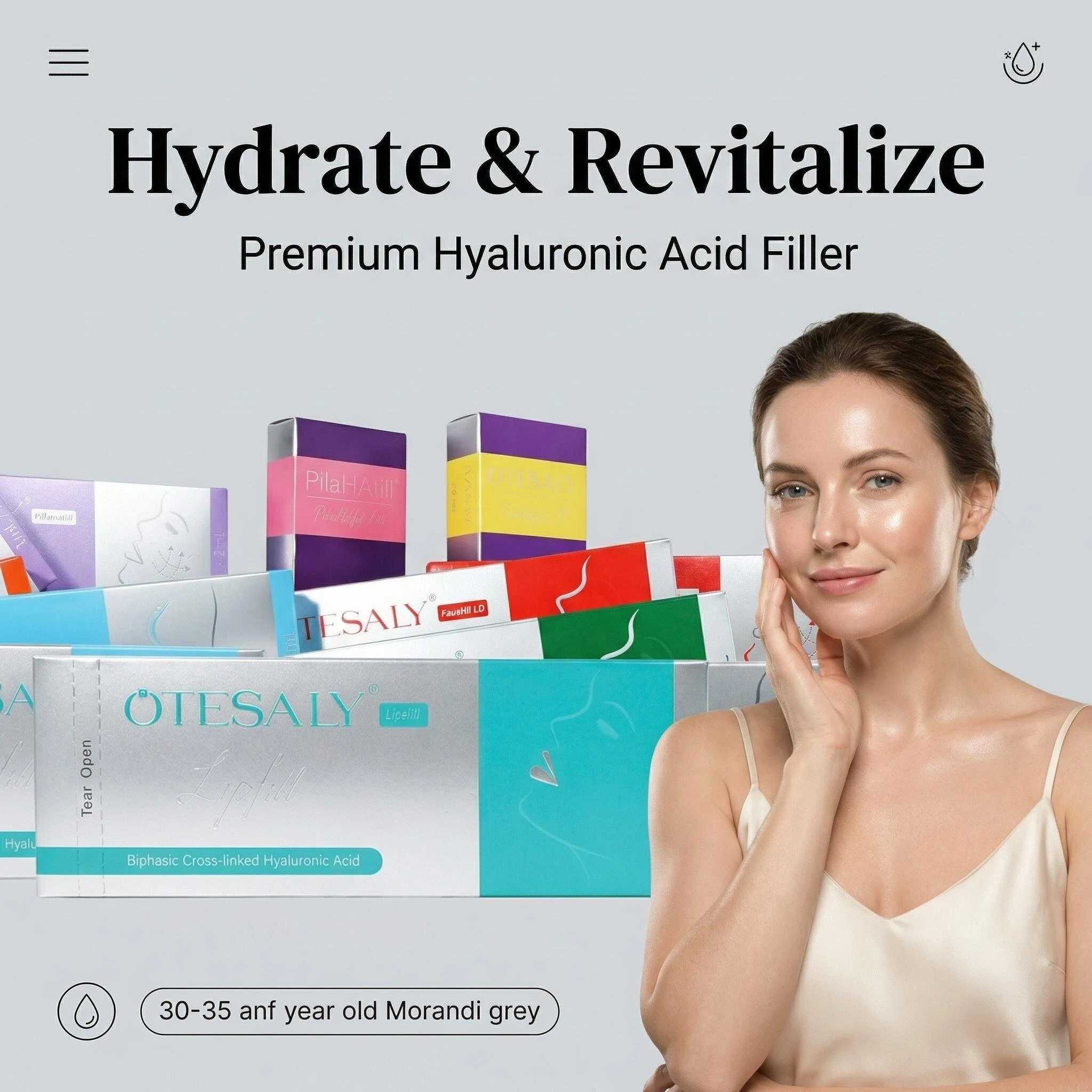
OTESALY is a specialized service provider with more than 20 years of experience exporting medical aesthetic products around the world. They have been deeply involved in—and have seen—the industry's shift from a "addition" approach to a "subtraction" one.
All of the dermal fillers we sell come from manufacturers that have been certified by ISO 13485. Every product goes through strict quality checks, whether you want structural contouring products to reshape your face or a refined series to get natural-looking results. We strongly believe that the difference between "natural results" and "overfilling" is not just a matter of taste; it is a key competitive advantage that helps our partners build lasting trust in their end markets.
If you want a line of products that meets high standards and fits with the trend toward minimally invasive treatments while giving your clients natural-looking results, please visit our official website to learn more about the products and see case studies.https://www.otesaly.com/collections/otesaly-hyaluronic-acid-filler
Q1: What is Facial Overfilled Syndrome (FOS)? How does it impact facial aesthetics?
A: FOS is a condition that happens when you get a lot of filler injections over a long period of time. It makes your natural facial contours disappear and makes tissue boundaries less clear.
From an anatomical point of view, too much filler material puts pressure on the lymphatic drainage system in the face, which makes the face feel "puffy" all the time.
Q2: If my face already appears "overfilled," what remedial measures are available?
A: First, a doctor will usually use dissolving enzymes (specifically for hyaluronic acid fillers) to carefully remove the extra material.
After this recovery period, the best way to go is to use "subtractive aesthetics." Instead of just filling in empty spaces, the focus is now on repairing and tightening stretched tissue ligaments. This brings back the face's natural "firmness" instead of just adding "bulk."
Q3: Why is choosing products from an ISO 13485 certified manufacturer?
A: ISO 13485 quality control determines the rheological parameters of the product.
Non-compliant products often suffer from uneven particle distribution or excessive cross-linking agent residue, which can lead to unexpected swelling (excessive water absorption) after the product is injected into the skin. Choosing high-standard (ISO 13485) products can help avoid an overfilled face.
Q4: In today's climate, how can individuals guard against aesthetic distortions caused by "filler addiction"?
A: You need to develop a "dynamic aesthetic perspective." Instead of just looking at your still reflection in the mirror or in pictures, pay attention to how your face looks when you talk, laugh, and move around.
Choose a professional doctor with good aesthetic sense and listen to their advice. A good doctor will usually tell you to stop treatment once you have reached about 80% of your desired result. This gives the facial tissues enough space and time to naturally break down the filler and blend it in with the surrounding tissue structure.


