
Inhibiting melanin production is the first thing that comes to many people’s mind when it comes to skin whitening. But as scientists delve deeper into skin biology, it turns out that pigmentation is not just a matter of “extra melanin.” The complexion can become darker again and again, because of things like sun exposure, inflammation, a weakened skin barrier and decreased ability to repair tissue, all of which can cause continuous stimulation of melanocytes.
Hence the reason why some people notice the pigmentation coming back even though they have improved their skin tone in the short term with whitening treatment as a result of sun exposure, acne breakout or the recovery process after aesthetic procedures. The thinking of medical professionals is changing: it is more effective to improve the environment in the skin where melanin is formed simultaneously, instead of focusing only on reducing melanin.
Against such a background, PDRN skin-whitening mesotherapy has gradually attracted attention. PDRN doesn’t work directly on melanin like traditional whitening agents, but instead provides an alternative approach to pigmentation management through the promotion of skin repair and modulation of inflammatory responses. In recent years, products have started to combine PDRN with classic brightening ingredients such as tranexamic acid and glutathione to improve skin tone and repair the skin at the same time, and the W-PDRN whitening injection is a prime example of a formulation based on this concept.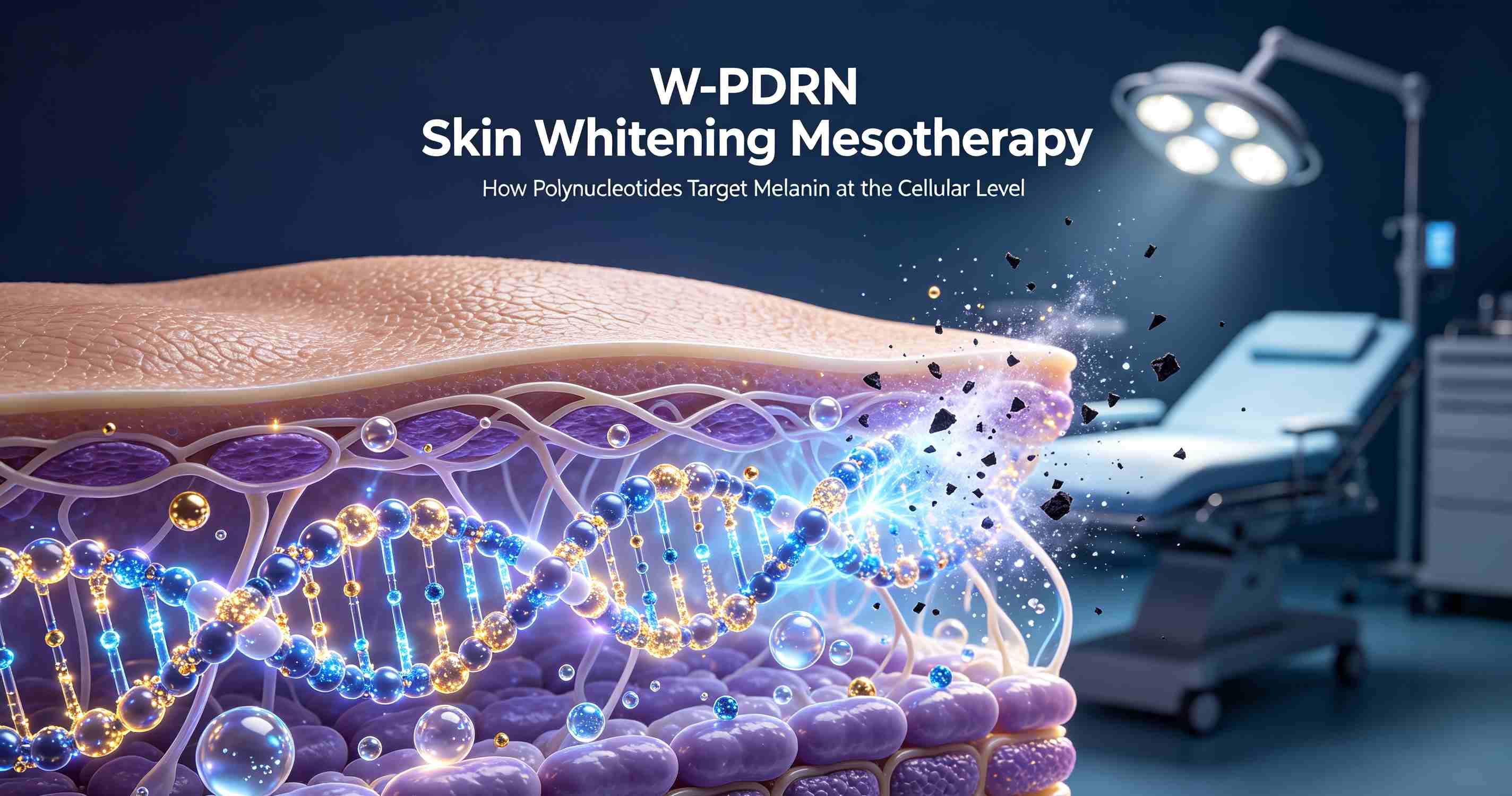
Why are traditional whitening methods not so effective sometimes?
Melanin is not dangerous itself but it is an important protective mechanism of the skin against ultraviolet (UV) radiation. When skin is exposed to sunlight , inflammation , or other external irritants , the melanocytes are stimulated to produce more melanin to protect the tissue .
Traditional skin whitening products and melanin-reducing injections are mainly aimed at reducing melanin production, such as by inhibiting tyrosinase activity or increasing the turnover of existing pigment. These methods do work for uneven skin tone and are still a mainstay of many skin lightening regimens today.
However, increasing evidence suggests that melanocytes are constantly affected by surrounding tissue. If the inflammation is still present, the skin barrier is still damaged or tissue repair is still ongoing, melanocytes may still be receiving signals to produce melanin. Thus, in patients prone to postinflammatory hyperpigmentation (PIH), the reduction of melanin content alone may not result in a long-term stable outcome.
In other words, modern strategies for managing pigmentation aim to reduce melanin and improve the skin microenvironment that drives its ongoing formation.
PDRN is the reason for the new research field?
PDRN (Polydeoxyribonucleotide, polydeoxyribonucleotide) was not originally introduced as a whitening ingredient in the field of medical beauty. Instead it was known for its work on tissue repair and skin regeneration.
PDRN is currently believed to be able to interact with the A2A adenosine receptor related pathways to help regulate inflammation and support the repair of damaged tissues. With gradual subsidence of the skin inflammation and recovery of the repair ability, continued stimulation of melanocytes may decrease. This is one of the important reasons that research in recent years has started to look at the relationship between PDRN and pigment management.
It’s worth noting that PDRN doesn’t directly block melanin creation like conventional brightening components do. Instead, it indirectly aids pigment management through skin microenvironment improvement. Therefore, it is generally not used alone as a whitening solution but is used in combination with other brightening active ingredients for application.
This ‘repair + brightening’ idea is also an important reason for the slow attention of polynucleotide whitening treatment in recent years.
Why does W-PDRN use a combination formula?
After knowing the effect of PDRN, many people are curious: since PDRN can improve the microenvironment of the skin, why does it need to be combined with other brightening ingredients?
The reason is simple: pigmentation results from a combination of interacting factors. Final skin tone is determined by melanin production, inflammatory responses, oxidative stress and the repair capacity of the skin. That’s why you see more and more mesotherapy brightening products moving towards combination products, using the unique strengths of various ingredients together, rather than relying on a single component to do all the work.
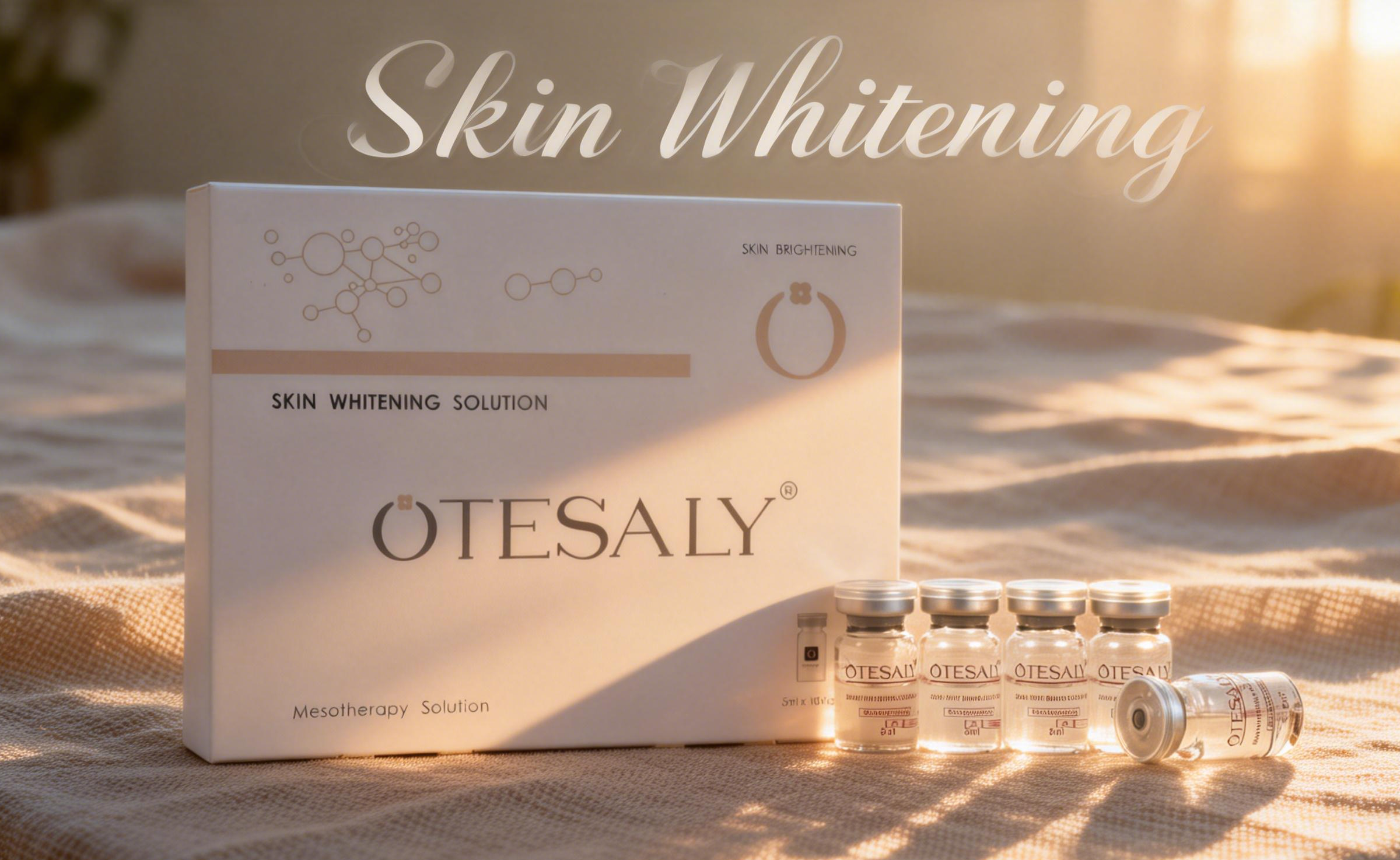
For instance, Take OTESALY Whitening Solution, which adopts the "repair-plus-brighten" design concept, and integrates PDRN with a variety of classic brightening active ingredients to create a more comprehensive skin-brightening meso serum.
|
Key ingredients |
Role in the formulation |
|
PDRN |
Supports skin repair and improves the inflammatory microenvironment. |
|
Tranexamic acid |
Reduces melanogenic signals and helps improve pigmentation. |
|
Glutathione |
Provides antioxidant protection and reduces oxidative stress. |
|
Kojic acid |
Inhibit tyrosinase activity and reduce melanin production. |
|
Vitamin C |
Enhance antioxidant capacity and help brighten the complexion. |
This formulation strategy does not depend on one ingredient to perform all functions, but instead uses different active agents to target specific stages of pigment formation. For instance, PDRN targets skin repair and modulation of inflammation, while components like tranexamic acid and kojic acid act directly on melanogenesis; glutathione and Vitamin C, on the other hand, are involved in reducing oxidative stress. Combined, they offer a complete approach to pigment management.
Many practitioners now combine these products with microneedling whitening treatments or mesotherapy, in an attempt to improve the absorption of active ingredients and also improve the skin tone and overall skin condition.
What is the most recent research supporting the use of PDRN in pigmentation control?
In recent years, PDRN research has expanded beyond tissue repair to include skin rejuvenation and pigment control.
A clinical study published in “Aesthetic Medicine” evaluated the efficacy of PDRN combined with microneedling for the treatment of facial pigmentation. The study used the Skin Hyperpigmentation Index (SHI) to evaluate the changes before and after the treatment. The results showed that subjects demonstrated varied levels of improvement in intensity of pigmentation and overall skin texture after completing the treatment regimen. Importantly, no significant adverse effects were reported during the treatment period.
In addition to clinical observations, basic research has demonstrated that PDRN is involved in processes such as inflammation regulation, tissue repair, and cellular turnover. It may also contribute indirectly to the management of pigmentation by modulating signalling pathways involved in melanogenesis. These findings support the growing research interest in the potential of PDRN to improve skin tone.
Of course the body of research on relevant topics keeps growing. More evidence from randomised controlled trials is needed to fully elucidate the effects on different types of pigmentation, different treatment protocols and long term outcomes. So, a more accurate view is that PDRN is not a “whitening agent” in the traditional meaning but a functional agent that helps skin repair, improves the skin microenvironment and works synergistically with established skin-whitening agents.

Conclusion:
With the ever-deepening research into skin biology, so is the concept of pigment management. Nowadays, more and more treatment plans do not only focus on melanin itself, but also consider inflammatory responses, skin repair, cellular microenvironment and other factors, in the hope of improving skin tone, and also assisting the skin in maintaining a healthier and more stable state.
This is also one of the important reasons that the PDRN skin whitening mesotherapy has attracted attention gradually. It does not replace traditional brightening ingredients but it brings new ideas to comprehensive pigment management thanks to its synergistic effect with active substances such as tranexamic acid and glutathione.
For professional institutions that want to do mesotherapy for middle-layer whitening, W-PDRN whitening injection with multi-mechanism compound design can meet the comprehensive management needs of different skin types and different pigment types. Among the representative products, OTESALY whitening solution combines PDRN and multiple classic brightening ingredients in the same formula, offering a professional medical beauty institution a repair and brightening solution.
As more clinical research is carried out in the future, the mechanism and application scenarios of polynucleotide skin depigmentation will be further confirmed. The comprehensive treatment concept of repair, brightening and improvement of skin quality is expected to continue to promote the development of the skin brightening injectable wholesale market and bring more innovative treatment options for medical beauty institutions.
FQA
1. Can PDRN really whiten the skin?
PDRN is not a whitening ingredient in the traditional sense; it does not directly inhibit melanin production like kojic acid or tranexamic acid. Current research suggests that PDRN aids in pigment management indirectly by supporting skin repair, regulating inflammatory responses, and improving the skin's microenvironment. Consequently, in PDRN skin whitening mesotherapy, PDRN is often combined with classic brightening ingredients—such as tranexamic acid and glutathione—to achieve more comprehensive improvements in skin tone.
2. How does W-PDRN whitening injection differ from standard whitening injections?
Traditional melanin-reducing injections focus primarily on inhibiting melanin production, whereas W-PDRN whitening injections emphasize a holistic "repair-plus-brighten" approach. In addition to classic brightening ingredients, they incorporate PDRN to support skin repair and optimize the skin's microenvironment while improving skin tone. Therefore, these formulations are better suited as part of a comprehensive pigment management plan rather than merely for short-term brightening effects.
3. Can W-PDRN be used with microneedling or mesotherapy?
Yes. Clinically, microneedling, mesotherapy, and other minimally invasive delivery methods are common ways to administer PDRN products. Different treatment methods suit different skin types and goals; specific treatment plans should be assessed and formulated by medical professionals based on the patient's individual condition.
4. Who is a suitable candidate for PDRN skin whitening mesotherapy?
PDRN skin whitening mesotherapy is generally suitable for individuals looking to address dullness, uneven skin tone, sun-induced pigmentation, or post-inflammatory hyperpigmentation (PIH). For complex pigmentation issues like melasma, it is recommended to consult a professional physician to develop a comprehensive management plan that combines the treatment with sun protection, skincare, and other therapeutic modalities for optimal results.
5. Why are more clinics choosing combination skin whitening meso serums?
In recent years, research has increasingly shown that pigmentation is not solely linked to melanin production but is also influenced by factors such as inflammation, oxidative stress, and the skin's repair capacity. Consequently, more professional clinics are opting for skin whitening meso serums designed with multi-mechanism approaches. For instance, the OTESALY whitening solution combines PDRN with various active ingredients—such as tranexamic acid and glutathione—aiming to address pigmentation management through a multifaceted approach involving repair, skin brightening, and antioxidant action.

