Clinics boost loyalty with regenerative injectables (PLLA-HA/PDRN) that require multiple sessions, turning one-time visitors into repeat, high-value clients.
In a 2025 industry survey, nearly half of all healthcare service providers said they lost long-term clients, with about 60% of those losses entirely unexpected by the clinics – clients who had been considered loyal and unlikely to depart. For most aesthetic clinics, the most disturbing thing to lose money on is actually the one thing they never learned to master – client retention.
A substantial shift is underway though. The growth of regenerative aesthetics is rewriting the rules of patient loyalty, providing clinics with a scientifically feasible path to transform first-time visitors into lifelong customers.

How Regenerative Aesthetics is Transforming Customer Retention
The limitation of traditional aesthetic treatments in regard to client retention is the predictable timeline, specifically with conventional fillers. In general, patients only return once the effects of their previous treatment have worn off. This passive cycle leaves clinics always chasing the next appointment, rather than building real, long-term relationships.
Regenerative injectables have changed the equation in a dramatic way. Rather than just filling wrinkles temporarily, they work with the body’s biological processes to start collagen regeneration treatments, gradually improving skin quality over a period of months. The result is not only more effectiveness but also a very different patient mindset – from transactional repair to an ongoing partnership.
The transformation is based on long-acting injectable therapies. “The NewBeauty ‘Summer 2025 Beauty Landscape Report’ says that nearly 86% of aesthetic patients are interested in treatments that work with the body, not against it. Top of the list were collagen stimulators, which represented 65% of consumer interest. This is a huge opportunity for clinics to make one-time visitors into long-term clients by providing real non-surgical facial rejuvenation.
Business Logic of Regenerative Therapy
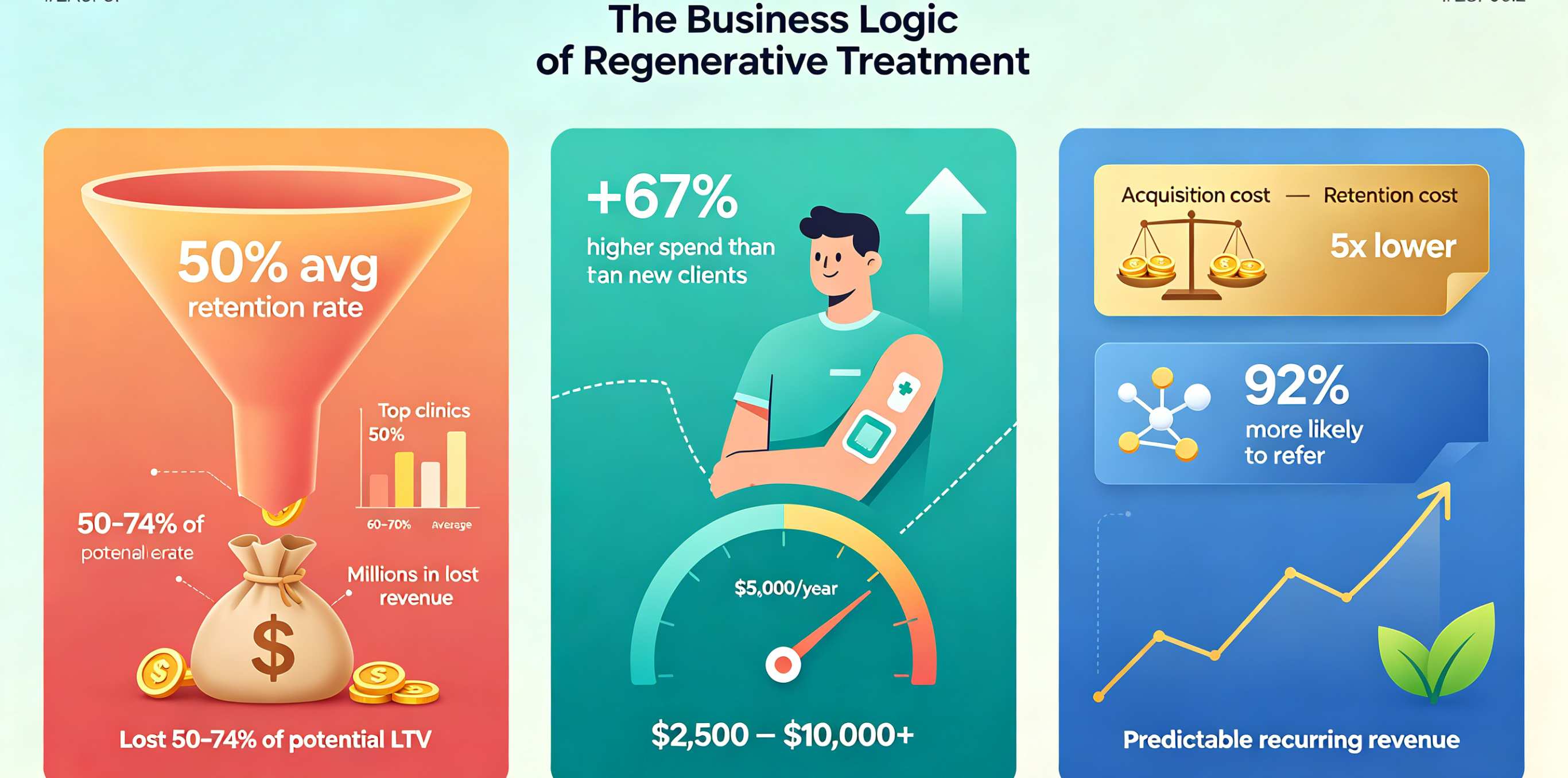
The economic case for moving to regenerative solutions is starkly clear. The #1 reason is this: regenerative injectables and collagen regeneration therapies are long-lasting treatments and by their nature require patients to return multiple times to receive a full course of treatment, converting one-time consumers into repeat customers. The data shows time and again that returning customers spend 67% more than new customers. Yet, the average customer retention rate across the industry is only about 50%. In aesthetic clinics, early adopters of PLLA-HA fillers and PDRN skin boosters were top performers, reporting retention rates of 60% to 70%. This delta between industry average and the performance of these leading institutions represents a loss of millions of dollars.
Let’s go back to the Customer Lifetime Value equation. In the U.S. aesthetics industry, the Customer Lifetime Value is typically about $2,500, but it can go as high as $10,000. “A patient coming back quarterly for non-surgical facial rejuvenation treatments spends about $5,000 a year. If those patients never come back for a second or third visit, that’s a loss of 50% to 75% of that patient’s lifetime value to the clinic. Treatment protocols for regenerative injectables involve multiple office visits, with PDRN requiring an initial series of 3 to 4 sessions, while PLLA-HA fillers require 2 to 3 sessions for cumulative stimulation. These protocols are designed to guide patients through multiple visits, significantly reducing early attrition rates.
Furthermore, it costs five times less to retain existing clients than to acquire new ones. Each loyal client you keep saves money on acquisition costs and provides a steady, reliable revenue stream that will likely lead to high-quality referrals. 92% of your loyal clients will recommend your clinic to others. This is precisely the added value that Aesthetic Clinic Solutions provides with “Regenerative Aesthetics”: instead of passively waiting for clients, a proactive approach based on scientifically designed treatment protocols is used.
Key Regenerative Therapies for Driving Repeat Business
The development of regenerative aesthetics, through the constant updating and expansion of products and technologies, provides clinics with many options for building long-term relationships with repeat clients. Among them, PLLA-HA fillers and PDRN skin boosters are two of the most representative long-lasting injectable treatments.
PLLA-HA fillers are one of the most important developments in this area. Poly-L-lactic acid with hyaluronic acid, a true collagen regeneration treatment, with an immediate correction of volume and biostimulation in the long term. Unlike traditional fillers that merely take up space, PLLA-HA fillers rejuvenate dermal thickness and skin architecture over a period of three to six months by stimulating the activity of the body’s own fibroblasts. Results can last 18 to 24 months or more, but patients naturally come back for touch-ups and maintenance treatments—not because the product within their bodies has dissolved, but because they want to continue their journey of collagen stimulation.
PDRN skin boosters are also gaining a lot of attention across Europe, the Middle East, Asia and more and more in the U.S. market. The active molecules in PDRN formulations are polynucleotides that boost cellular activity, promote fibroblast production, and aid in internal tissue repair. Clinics that have added PDRN-based mesotherapy protocols to their service offerings have found high levels of patient satisfaction and repeat business, as the treatment provides progressive improvements in skin quality that patients can actually see and feel after each session.
Market data backs up this trend. MMR Statistics projects that the global skin boosters market, encompassing PLLA, PDRN, and HA, will expand from $1.36 billion in 2024 to $3.26 billion by 2032, reflecting a compound annual growth rate (CAGR) of 11.58%. Within this segment, PLLA/PDLLA, being the leading active ingredients for collagen stimulation, are expected to reach a market value of $609.83 million by 2032, while PDRN is projected to reach $325.49 million over the same period. These findings are indicative of a broader industry transition from traditional, purely hydrating injectables to scientifically driven, bioactive formulations.
Real-World Success Story: How a Clinic Converts First-Time Patients into Long-Term Clients
A Miami clinic has teamed up with OTESALY® to offer a complete non-surgical facial rejuvenation program based on PllaHAfill LD and PDRN skin boosters. A new patient in her early 40s desired a “subtle refresh” but was worried the results would look “overdone.” She received targeted PllaHAfill LD injections for early signs of volume loss in the mid face and PDRN skin booster mesotherapy in 2 sessions 4 weeks apart.
Her response was a turning point not only in terms of her physical appearance but also her interaction with the clinic. The gradual collagen stimulation kept her involved in monitoring her progress, and she returned for follow-up evaluations. She referred three friends in six months and booked her maintenance treatments for the entire next year. Her lifetime value as a client was over $8,500 over 24 months, well above the average of $3,200 for the clinic.
So what made the difference? Usually traditional dermal fillers need one touch-up at 12 months and won’t likely generate any patient referrals. On the other hand, regenerative treatments offer the patient positive touchpoints and small incremental improvements that she can actively monitor, keeping her engaged and excited about her ongoing treatment journey. This is a case study of the client retention model made possible by *Aesthetic Clinic Solutions* through the power of regenerative aesthetics.
The Change Beneath the Figures
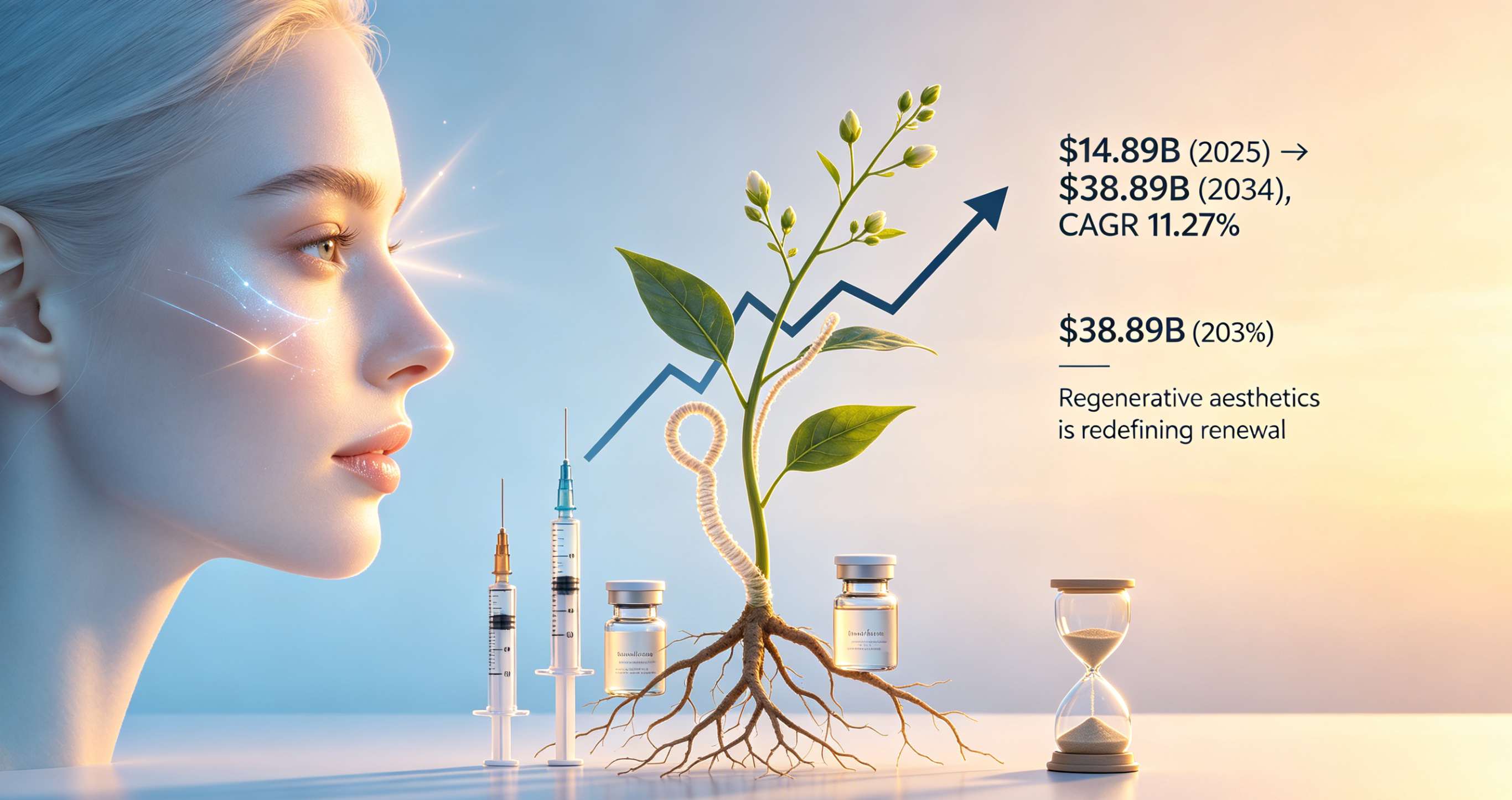
The global trend to regenerative aesthetics is not a fad. According to the data from The Insight Partners, the regenerative aesthetics market is expected to grow from $14.89 billion in 2025 to $38.89 billion in 2034 at a compound annual growth rate (CAGR) of 11.27%. An ageing but active population, rising disposable incomes and, crucially, a growing consumer demand for natural and long-lasting results are fuelling this growth. What these numbers tell us is that regenerative aesthetics no longer is a niche market but is becoming the mainstream standard for non-surgical facial rejuvenation.
There’s a window opening for clinics that are still heavily reliant on traditional fillers, but it won’t be open forever. Early adopters of regenerative solutions are already capturing the most valuable patient population: those looking for long-term partnerships instead of one-off fixes. “Regenerative aesthetics is redefining the meaning of looking ‘refreshed,’” said one industry observer.
What Does This Mean for Beauty Clinics?
If you’re a clinic looking to improve client retention and build sustainable revenue growth, here’s how to incorporate regenerative injectables into your strategy:
● Audit your current service offering. Do you have a percentage of your revenue that is from “one-off” treatments versus protocols that are designed to encourage ongoing collagen regeneration? If most of your revenue is generated from treatments that clients only return for once the effects have worn off then you’re leaving a lot of potential client lifetime value on the table.
● Begin providing entry-level regenerative treatments. Introduce the PDRN skin boosters as a starter treatment. They are a lower price point, minimal downtime, and they show visible improvements in skin quality. They are an excellent “gateway” service, building trust and demonstrating your clinic’s expertise before you introduce higher-value treatments such as PLLA + HA fillers.
● Design integrated treatment pathways not isolated services. Create a 12- to 24-month treatment plan for each patient. A typical pathway might be: an initial PLLA + HA filler session to establish the foundation, a series of maintenance sessions with PDRN skin boosters to maintain the results, and periodic skin assessments to monitor progress. This organised approach breeds repeat business naturally.”
● Teach your team about the science of regeneration.Patients have a lot of questions. Be ready to talk about the differences between collagen regeneration treatments and traditional fillers, why results take time to show up, and how maintenance protocols can help extend the effects. Clinics that can explain the science behind what they do create a lot more trust and loyalty than those that can’t.
● Use patient education as a retention tool. Share treatment journals, before-and-after photos, and educational content to keep patients engaged between visits. When patients understand the biology behind their transformation, they become invested partners in their treatment journey, resulting in higher retention rates and a greater willingness to offer referrals.
OTESALY Advantages
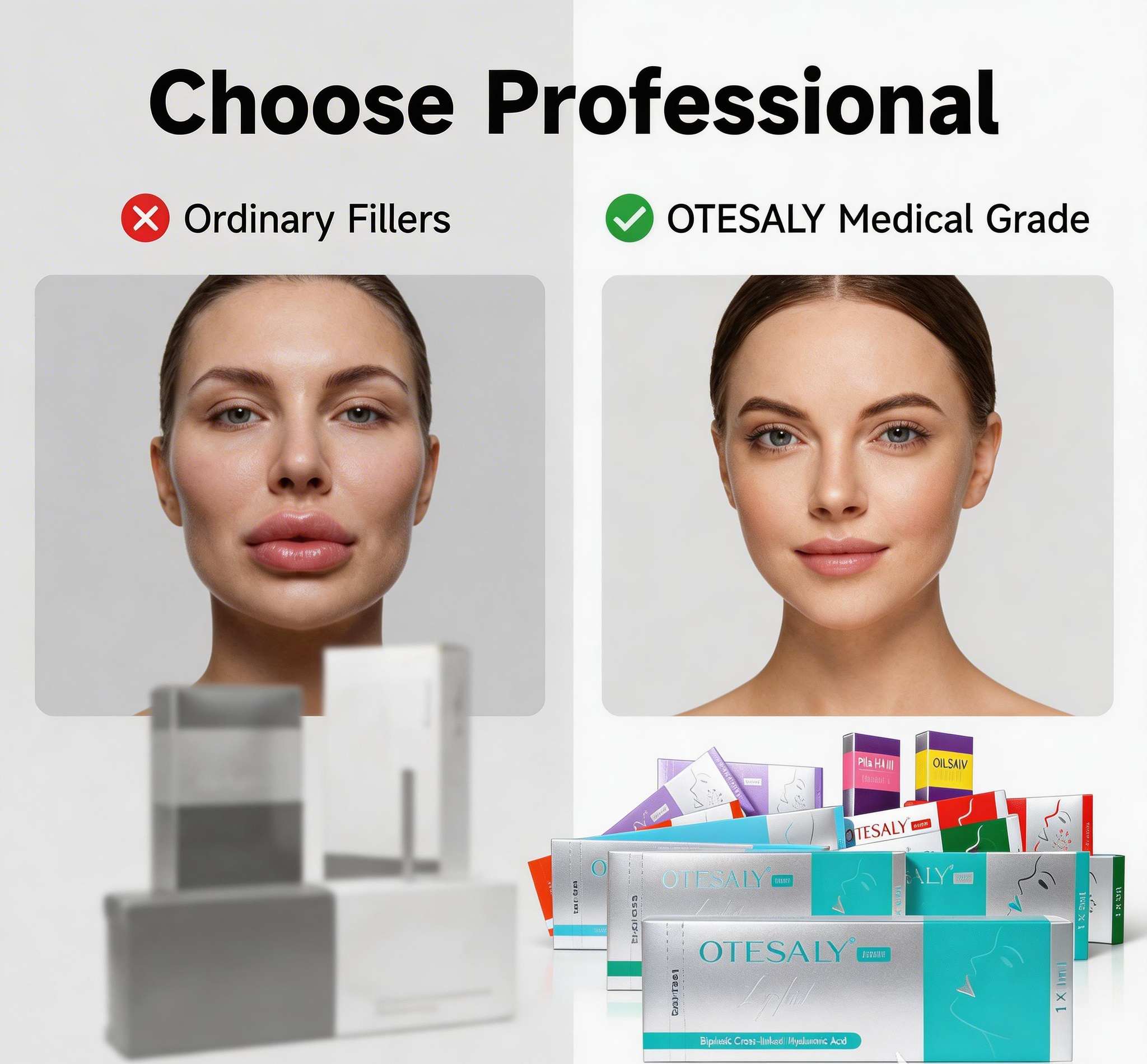
OTESALY® is the reliable and clinically validated aesthetic solution for clinics, specialised in the global aesthetic medicine trade for more than 20 years. Aesthetic clinics in markets around the world rely on our long-lasting injectable treatments, including CE-certified PLLA-HA filler formulations and PDRN skin boosters.
What makes OTESALY® unique is not only the quality of our products but the strength of our partnerships.
When clinics choose OTESALY®, they receive:
● Full product training to help your practitioners master regenerative injection techniques
● Support with clinical protocols to smoothly integrate regenerative treatments into your existing workflows
● Regulatory expertise in various markets including CE certification for distribution within Europe
● Over 20 years of extensive experience working with clinics, distributors and partners
We don’t just sell products, we set clinics up for success with sustainable, profitable recurring revenue streams of regenerative aesthetics.
Summary: Prepared to revolutionise your clinic’s client retention strategy?
The evidence is clear: regenerative aesthetics is today the most powerful weapon to increase customer retention and build patient loyalty. By transitioning from temporary solutions to actual collagen regeneration treatments, your clinic will enjoy higher customer life time value, lower patient acquisition costs and patient relationships that generate steady predictable revenue.
Discover the full line of regenerative injectables available at OTESALY® including PLLA-HA fillers and PDRN skin boosters today. We are ready to partner with you to develop the protocols, training and product supply that will help you lead the regenerative aesthetics revolution in your market.
FAQ:
Q1: What is the difference between PLLA HA filler and traditional HA filler?
A: Traditional HA filler adds instant volume, while PLLA HA filler stimulates your own collagen for gradual, longer-lasting results.
Q2: How many sessions of PDRN skin boosters are needed to see results?
A: Most patients need 2-3 sessions (once in 2 weeks) to see noticeable improvements in skin quality.
Q3: How to promote regenerative treatments to existing clients without hurting traditional business?
A: Position regenerative options as an add-on or upgrade, not a replacement — for example, offer PDRN as a maintenance package for filler patients.


