Hyaluronic Acid Basics
Before diving into BDDE, it’s important to have a solid understanding of hyaluronic acid itself. Hyaluronic acid (HA) is a naturally occurring molecule in the human body, primarily in the skin, joints, and eyes. It has an extraordinary ability to retain water, able to absorb up to 1,000 times its weight in water. This property makes it an excellent humectant, attracting moisture to keep skin plump, hydrated, and youthful. In skincare and aesthetic medicine, hyaluronic acid is commonly used in two forms: non-cross-linked and cross-linked.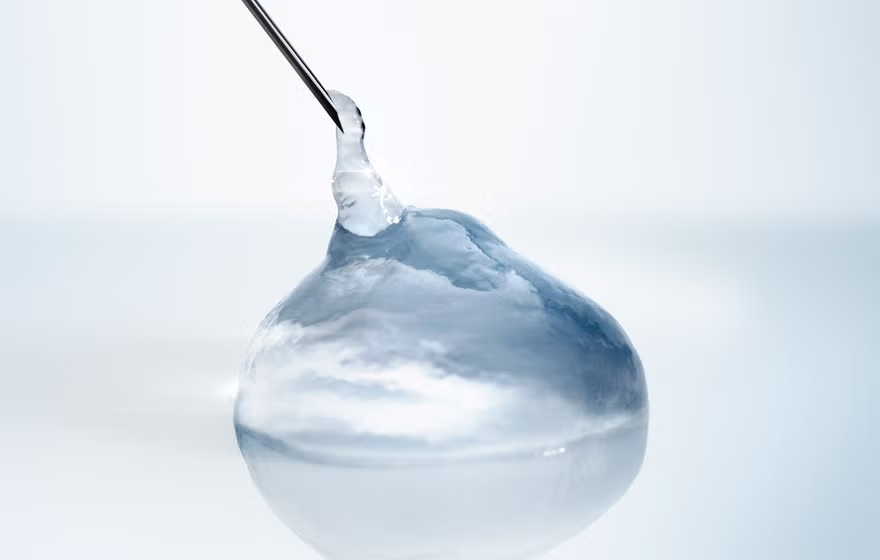
The Crosslinking Process:
Modification of HA – BDDE reacts with the hydroxyl groups on HA molecules, forming bridges that strengthen the gel structure.
Gel Formation – The crosslinked HA becomes a cohesive, viscoelastic gel that resists rapid degradation.
Purification – Any unreacted BDDE is removed to ensure biocompatibility and safety.
What is BDDE?
BDDE (1,4-Butanediol diglycidyl ether) is a cross-linking agent used to modify hyaluronic acid, a process that links individual hyaluronic acid molecules together to form a more stable, longer-lasting gel structure. Without cross-linking, hyaluronic acid breaks down quickly in the body, limiting its effectiveness as a dermal filler.
When hyaluronic acid molecules are cross-linked with BDDE, the resulting gel is more resistant to degradation by enzymes in the body, such as hyaluronidase, which naturally break down hyaluronic acid. This means that dermal fillers containing BDDE-cross-linked hyaluronic acid are able to maintain their volume and shape longer, providing longer-lasting results in cosmetic treatments.
Why BDDE in HA Fillers?
Hyaluronic acid is a popular skincare ingredient for its superior moisturizing and plumping properties. However, in its natural form, it degrades quickly, making it unsuitable for long-term cosmetic use. This is where BDDE cross-linking technology comes in handy:
Extended shelf life: BDDE stabilizes HA, allowing fillers to retain their shape and volume for up to 6-18 months.
Improved elasticity: Cross-linked HA has greater structural integrity, resulting in natural lifting and contouring effects.
Ensure safety: High-quality BDDE is purified to remove any residual chemicals, making it biocompatible.
Is BDDE Safe?
Yes, when properly purified, BDDE is considered safe for use in hyaluronic acid fillers. Reputable manufacturers ensure that:
✔ Only trace amounts of BDDE remain in the final product.
✔ The crosslinking process follows strict medical-grade standards.
✔ The filler undergoes rigorous testing for biocompatibility.
Is BDDE the Only Crosslinker Used in HA Fillers?
While BDDE is the most common, some fillers use alternative agents like:
DVS (Divinyl Sulfone) – Another crosslinker, though less frequently used today.
Naturally derived crosslinking – Emerging technologies are exploring enzyme-based methods for a more "natural" HA gel.
However, BDDE remains the gold standard due to its proven safety and effectiveness.
Final Thoughts
BDDE is a key ingredient that makes modern hyaluronic acid fillers effective, long-lasting, and safe. Thanks to advancements in crosslinking technology, we now have customizable solutions for everything from subtle lip enhancement to deep wrinkle correction.


