While many perceive aesthetic treatments as simply adding volume, true artistry in aesthetic management lies in the ability to precisely correct. This principle underscores the importance of hyaluronidase. In simple terms, hyaluronidase is an enzyme that breaks down hyaluronic acid (HA). It serves as the only specific "antidote" for HA dermal fillers, making it an indispensable tool for ensuring safety, addressing complications, and refining aesthetic results.
What is Hyaluronidase?
Hyaluronidase is a specialized enzyme that hydrolyzes cross-linked Hyaluronic Acid (HA). By temporarily increasing tissue permeability, it "unlocks" the filler’s structure, allowing it to be rapidly absorbed and metabolized. It's like a targeted "eraser" for HA Fillers.
It is applicable for correcting overcorrection, lumps, asymmetry and the Tyndall effect caused by misplaced fillers; it also provides symptomatic relief for chronic swelling, filler migration and persistent foreign body sensations.
It only dissolves HA-based dermal fillers. It will not affect other biostimulatory or collagen-based fillers.
Why to Choose Hyaluronidase?
Hyaluronidase serves as a critical safety mechanism in aesthetic practice for three primary reasons:
- Error Correction:It is one of the very few treatments in minimally invasive aesthetics with a genuine "undo" function. This capability provides crucial psychological security for both practitioners and patients, allowing for correction of undesirable aesthetic outcomes.
- Emergency Rescue:It is the first-line emergency treatment for the most severe complication: vascular occlusion. If HA filler is accidentally injected into a blood vessel, hyaluronidase is the primary, and often the only, immediate intervention to dissolve the obstructing material, potentially preventing catastrophic outcomes like tissue necrosis.
- Managing Late-term Reactions:It addresses specific long-term issues, such as "delayed-onset hypersensitivity" (persistent late swelling) or granuloma formation related to certain HA fillers that show poor long-term degradation in rare individual cases.
When is it Time to Press "Undo"?
The decision to use hyaluronidase is guided by specific scenarios, categorized by their primary impact:
- Case 1: The Aesthetic Issue
Overcorrection:Resulting in an unnatural, overfilled appearance ("pillow face," overly prominent forehead).
Misplacement: Filler placed incorrectly, such as in the tear trough leading to the "Tyndall effect" (a bluish tint under the skin).
- Case 2: The Functional Issue
Restricted Movement:Filler causing stiffness, an obvious "foreign body" sensation, or limiting natural facial expressions.
Physical Impingement: Filler pressing on nerves or impeding local blood circulation, causing discomfort.
- Case 3: The Medical Emergency
Vascular Compromise:Severe, sudden pain, skin discoloration (blanching or a dusky, mottled pattern) occurring immediately or shortly after injection. This is a critical emergency.
Myths and Truths About Hyaluronidase
- Myth 1: Will hyaluronidase dissolve my body's own natural hyaluronic acid?
Truth1: Yes, the enzyme degrades HA at the injection site, including the body's own HA. However, the body's natural HA is replenished rapidly (within 24-48 hours), so this effect is short-lived.
- Myth 2: Can I get filler re-injected immediately after dissolution?
Truth2: It is recommended to wait 1-2 weeks. This allows the swelling to subside and the enzyme's activity to diminish. Re-injecting HA too soon may lead to the new filler being partially or fully dissolved.
- Myth 3:Is a skin test for hyaluronidase unnecessary?
Truth3: Yes, a skin test is strongly required. Most hyaluronidase is animal-derived (e.g., bovine or ovine), carrying a potential, albeit low, risk of allergic reaction. Because the allergenic potential can vary between batches, a skin test before each elective treatment is a critical safety step.
- Myth 4:Will I have to wait weeks to see the "Undo" effect?
Truth4: It begins breaking down HA almost immediately. Visible effects, such as reduction in volume or softening of lumps, are typically noticeable within 24 to 48 hours.
Why Dermal Filler Choice Matters
On the aesthetic journey, a sense of control is just as vital as the final result. This is why a growing number of experienced practitioners and discerning clients choose the OTESALY® Hyaluronic Acid series, including our Lipfill and Facefill:
- High Satisfaction, Minimized Regret:Powered by a unique Biphasic Gel Technology, OTESALY® Lipfill and Facefill delivers natural-looking volume with remarkably low post-treatment swelling. Most clients achieve their desired contour immediately, significantly reducing the need for correction.
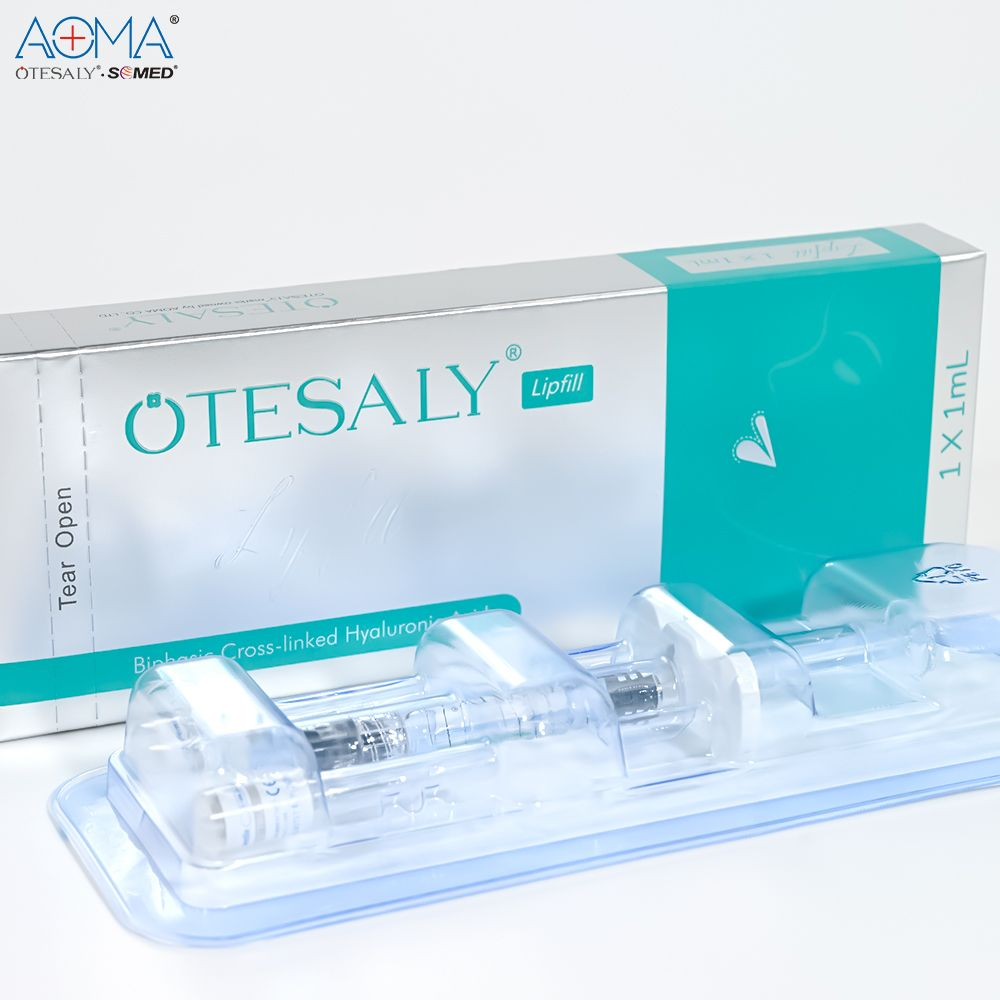
- Safety Through Reversibility:We understand that aesthetic preferences can evolve. OTESALY® dermal fillers are crafted from highly purified, cross-linked hyaluronic acid, ensuring excellent compatibility with hyaluronidase. If you wish to adjust your look in the future, our biphasic formulation allows for more predictable and precise dissolution compared to many monophasic gels, offering you the ultimate flexibility and peace of mind.


