
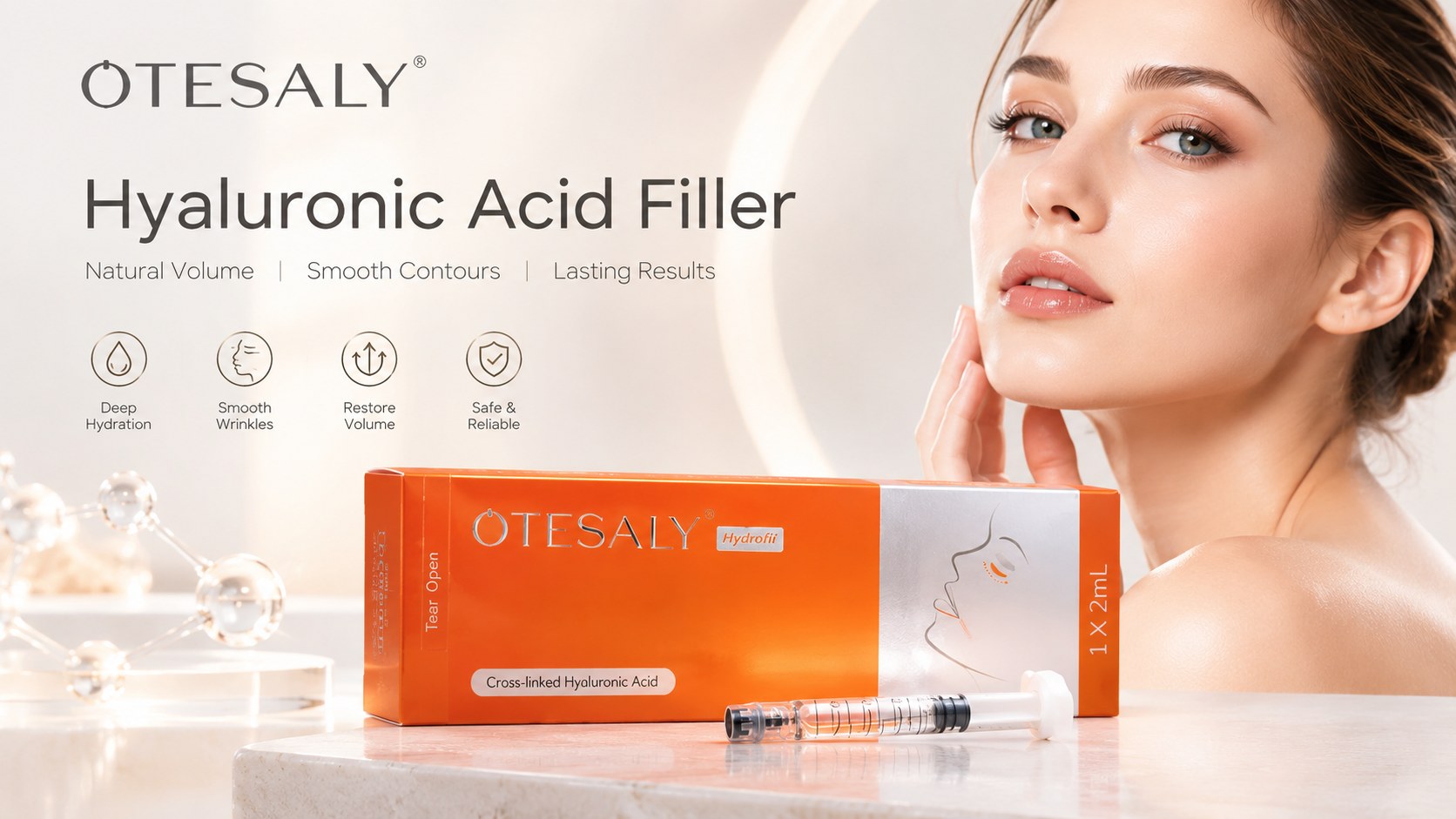
For clinics looking for an effective approach to facial volume loss and mild-to-moderate skin laxity, OTESALY® Vital 2ml filler, also known as Hydrofill is designed to support facial contouring and lifting-focused treatment plans. As patients increasingly request non-surgical aesthetic options, clinics need products that can be incorporated into individualized treatment protocols rather than simply marketed as a one-size-fits-all solution. OTESALY® Vital 2ml is a hyaluronic acid-based dermal filler developed for professional aesthetic applications, with a 2ml volume format that can be practical for broader treatment areas or multi-point facial protocols. Understanding how this type of filler works, which concerns it may address, and when it is appropriate can help clinic owners and distributors make more informed product decisions.
What Is OTESALY® Vital 2ml and Why It Happens?
Facial aging is influenced by several biological processes rather than a single cause. Over time, the skin gradually loses elasticity, collagen production decreases, soft tissues change position, and facial fat compartments may lose volume or redistribute. These changes can contribute to visible lines, reduced definition, and a less lifted appearance.
Hyaluronic acid is a naturally occurring polysaccharide found in the human body, particularly in skin and connective tissues. One of its important characteristics is its ability to bind water. As the skin ages, changes in HA, collagen, elastin, and tissue structure can contribute to reduced hydration and altered skin support.
For aesthetic clinics, this means that treating facial laxity is not simply about adding volume. The treatment plan should consider the patient's facial anatomy, degree of tissue laxity, volume distribution, and desired outcome.
This is where a lifting-oriented filler can have a specific role. The vital lifting dermal filler concept focuses on using HA-based filler as part of a structured facial rejuvenation approach, where product placement and treatment planning are as important as the filler itself.
It is also important to distinguish between a filler intended primarily for volumization and a filler selected for a lifting-focused protocol. The appropriate choice depends on the treatment area, tissue characteristics, injection depth, product rheology, and the clinician's assessment.
How Dermal Fillers Address Facial Laxity
Dermal fillers can address some visible effects of facial aging by restoring volume and providing structural support in selected areas. HA fillers are particularly useful because HA is biocompatible and can be formulated with different physical and rheological properties for different aesthetic applications.
The OTESALY® Vital 2ml format provides 2ml of product in a single treatment unit, which may be useful when a treatment plan involves several facial areas rather than a highly localized correction.
A professional skin lifting filler injection should not be viewed as simply "filling wrinkles". Depending on the clinical protocol, HA filler may be placed at specific anatomical levels to support areas where volume deficiency or structural changes contribute to an aged appearance.
Several factors influence how a filler performs:
-
HA Concentration: The amount of HA can influence the gel's overall characteristics and clinical application.
-
Cross-linked Technology: Crosslinking helps determine the stability and physical properties of an HA gel.
-
G' or Elastic Modulus: This describes the gel's resistance to deformation and is one factor clinicians may consider when selecting a filler.
-
Viscoelasticity: The balance between elasticity and viscosity affects how the material behaves under mechanical stress.
-
Particle Structure and Gel Homogeneity: These characteristics can influence handling and integration within tissue.
-
Injection Plane: The same filler may have different clinical applications depending on where and how it is injected.
For clinics, product selection should therefore be based on the complete product specification and intended indication rather than volume alone.
The 2ml format can be particularly relevant for clinics managing treatment plans that involve multiple facial zones. Rather than using a small-volume syringe for every area, a larger format may provide greater flexibility when the clinician determines that more product is appropriate for the planned protocol.
However, more product does not automatically mean a better result. The amount used should always be determined by the treating medical professional according to patient anatomy, treatment goals, product instructions, and applicable regulations.
Clinics evaluating an OEM lifting HA filler should also look beyond the formulation itself. Manufacturing standards, documentation, packaging options, product consistency, regulatory support, and supply capability can all influence whether a product is suitable for long-term professional use.
For distributors, these considerations are equally important because reliable product specifications and consistent supply can make a significant difference when building a professional aesthetic product portfolio.
Treatment Methods: How is professional treatment administered?
The use of a skin laxity filler treatment should be based on professional assessment rather than a standardized injection plan. The exact technique, injection depth, product amount, and treatment areas should be determined by a qualified healthcare professional.
A typical clinical workflow may include the following steps:
1. Patient Assessment
The clinician first evaluates facial structure, skin quality, tissue laxity, volume distribution, symmetry, and the patient's aesthetic objectives.
Rather than treating "aging" as one condition, the practitioner should identify the specific factors contributing to the patient's concern. For example, reduced midface volume, changes around the jawline, or loss of structural support may require different treatment strategies.
2. Treatment Planning
After assessment, the clinician determines whether HA filler is appropriate and identifies the areas that may benefit from treatment.
A non-surgical face lift filler approach may involve strategic treatment of selected facial areas rather than simply injecting directly into visible lines. The objective is to create a balanced treatment plan that considers the relationship between different facial structures.
3. Product Selection
The clinician selects a filler according to the treatment area and desired tissue-support characteristics.
For clinics considering OTESALY® Vital 2ml, the product's 2ml format can be considered when the planned protocol requires treatment across broader or multiple areas.
Before clinical use, practitioners should review the manufacturer's product information, instructions for use, contraindications, warnings, storage requirements, and local regulatory requirements.
4. Professional Injection
The product should only be administered by an appropriately qualified and trained healthcare professional.
Injection technique is a critical part of treatment. Anatomy, vascular structures, tissue depth, needle or cannula selection, injection volume, and product placement all need to be considered.
Dermal filler procedures also carry potential risks, including swelling, bruising, infection, inflammatory reactions, and, rarely, serious vascular complications. Appropriate training and patient selection are therefore essential.
5. Post-Treatment Monitoring
After treatment, the clinician should provide appropriate aftercare instructions and monitor the patient according to the clinic's normal protocol.
Patients may experience temporary swelling, tenderness, redness, or bruising following filler treatment. These effects vary depending on the treatment area, technique, and individual patient factors.
Clinics should also maintain appropriate treatment records, including product information, batch details, treatment areas, and other relevant clinical documentation.
For distributors and clinic procurement teams, a dependable facial lifting filler wholesale supplier should be able to provide consistent product information and professional support rather than focusing solely on price.
6. Follow-Up and Evaluation
A follow-up appointment allows the clinician to assess the treatment response and determine whether any additional treatment is appropriate.
The objective should be controlled, individualized treatment rather than maximizing product usage. This approach can support more consistent clinical decision-making and responsible product management.
For clinics building a broader HA portfolio, OTESALY's collection can also provide options for different treatment requirements and professional applications.
Conclusion
OTESALY® Vital 2ml (Hydrofill) is designed for professional aesthetic applications where a 2ml HA filler format can support facial contouring and lifting-focused treatment strategies. For clinics, the key consideration is not simply how much filler a syringe contains, but whether the product's characteristics, intended application, quality standards, and supply capability fit the clinic's treatment protocols.
For distributors and brand owners, product consistency and flexible supply are equally important when developing a long-term medical aesthetic portfolio. OTESALY® provides professional dermal filler solutions for B2B customers looking for reliable product and OEM cooperation.
For wholesale, OEM, or professional clinic supply inquiries, contact OTESALY® to discuss product specifications, customization options, and your market requirements.
FAQ:
1. What is OTESALY® Vital 2ml?
OTESALY® Vital 2ml is a cross-linked hyaluronic acid filler designed for clinics looking for a balance between hydration, skin quality improvement and gentle lifting. It contains 20 mg/ml cross-linked sodium hyaluronate gel and uses NASHA technology. Rather than focusing only on adding obvious volume, Hydrofill is positioned for skin firmness, elasticity, fine lines and overall facial rejuvenation.
2. What is OTESALY® Vital Lifting (Hydrofill) used for?
Hydrofill can be considered for aesthetic treatments where the goal is to improve skin quality, hydration, fine lines and mild loss of firmness rather than create significant facial volume. It may be suitable for areas where a softer, more natural-looking improvement is preferred, depending on the product's intended use and professional treatment plan.
3. Is OTESALY® Vital Lifting a filler or a skin booster?
Vital Lifting (Hydrofill) is a cross-linked HA injectable, but its positioning is different from a conventional high-support volumizing filler. It is designed with a greater focus on hydration, skin quality, fine lines and gentle lifting rather than obvious volume enhancement.
4. Is OTESALY® Vital Lifting good for fine lines and dry skin?
Hydrofill may be considered when the treatment goal is to improve the appearance of fine lines while supporting skin hydration and overall skin quality. Its positioning makes it different from fillers primarily selected for deep structural correction or major volume enhancement.
5. When should clinics choose OTESALY® Vital Lifting (Hydrofill) instead of Lipfill or Facefill?
Clinics may consider Hydrofill when clients want improved hydration, skin quality, fine lines or subtle rejuvenation without a strong volumizing effect.
For more obvious lip augmentation and contouring, Lipfill may be more appropriate. For deeper lines, structural correction or facial contouring, Facefill may be considered depending on the treatment plan.

