
Hair thinning can be challenging for clinics and aesthetic practitioners because the underlying causes vary widely, while clients increasingly seek non-surgical approaches to improve scalp and hair appearance. H-PDRN has attracted attention as a PDRN-based approach for scalp-focused aesthetic treatments, particularly in professional mesotherapy programs. By providing polynucleotide-derived ingredients to the scalp, these formulations are designed to support a favorable environment for skin and follicle care. For clinics, understanding the mechanism, treatment positioning, and available evidence is essential before adding a hair-focused injectable or mesotherapy solution to a professional portfolio. This article explains what H-PDRN is, how PDRN may support hair-related treatment strategies, and what clinics and distributors should consider when sourcing professional products.
What Is H-PDRN and Why It Happens?
H-PDRN refers to a hair-focused formulation based on PDRN, or polydeoxyribonucleotide, a mixture of DNA-derived nucleotide fragments used in regenerative and aesthetic applications. In hair-focused products, the objective is not simply to coat the hair shaft. Instead, the formulation is positioned around scalp and follicle support.
Hair growth itself is a biological cycle involving three major stages: anagen, the active growth phase; catagen, a transitional phase; and telogen, the resting phase. Disruption of this cycle can contribute to increased shedding or reduced hair density. Hair loss may result from hereditary factors, hormonal changes, nutritional deficiencies, inflammatory conditions, certain medications, illness, or mechanical stress. The American Academy of Dermatology emphasizes that identifying the underlying cause is an important first step because different forms of hair loss require different approaches. AAD guidance on hair loss diagnosis and treatmen provides further clinical background.
PDRN has been investigated for its potential role in tissue repair and regeneration. Proposed mechanisms include interaction with adenosine-related pathways, support of cellular activity, modulation of inflammatory processes, and promotion of angiogenesis. These mechanisms are relevant to aesthetic medicine because a healthy scalp environment and adequate microcirculation are important considerations when developing hair-support protocols.
Recent research has increased interest in polynucleotides for androgenetic alopecia. For example, a 2025 prospective study evaluated 28 patients receiving four polynucleotide injection sessions at four-week intervals and assessed changes in hair diameter and density. A 2026 review also noted promising findings from earlier PDRN research but emphasized that the available evidence remains limited and requires further validation.
For this reason, PDRN should be positioned as part of a professional hair-support strategy rather than as a universal solution for every type of hair loss.
How Dermal Fillers Address It
Strictly speaking, H-PDRN hair treatments are not traditional dermal fillers. Dermal fillers are primarily designed to restore or add volume in specific anatomical areas, whereas H-PDRN and other hair-focused mesotherapy solutions are formulated for scalp and hair-support applications. For clinics building a medical aesthetic portfolio, keeping these categories separate helps ensure appropriate product selection and communication.
A professional H-PDRN hair growth serum can be positioned as a scalp-focused solution within a broader mesotherapy portfolio. The concept is based on delivering a PDRN-containing formulation to the target scalp area rather than simply applying a conventional topical cosmetic product.
Potential areas of interest include:
-
Scalp environment support: PDRN-based formulations are researched for their role in tissue repair and cellular signaling.
-
Microcirculation-related mechanisms: Angiogenesis is one of the biological mechanisms discussed in the literature surrounding PDRN and polynucleotides.
-
Hair follicle support: By improving the local tissue environment, PDRN-based approaches may complement professional hair-management protocols.
-
Combination treatment strategies: Depending on the diagnosis and practitioner protocol, a PDRN-based approach may be incorporated alongside established hair-loss management strategies.
The distinction between supportive treatment and guaranteed regrowth is important. Current research suggests potential for polynucleotide-based interventions, but the evidence base is still developing. A 2026 review specifically identified small study populations and the need for additional controlled research before PDRN can be considered an established treatment for female pattern hair loss.
This evidence-based positioning is particularly important for B2B clinics and distributors. Instead of presenting H-PDRN as a replacement for diagnosis or established medical treatments, it can be introduced as a professional aesthetic option for appropriately selected clients.
For clinics interested in injectable applications, an OTESALY H-PDRN injection can be considered within a practitioner-led scalp treatment program. Similarly, clinics developing a PDRN hair regrowth treatment portfolio can evaluate how PDRN-based products fit their existing treatment protocols.
Treatment Approach / What to Expect
A professional H-PDRN or PDRN-based scalp program should begin with assessment rather than immediate treatment. A practical clinic workflow can include the following steps.
1. Assess the Hair and Scalp
The practitioner first reviews the client's hair-loss history, pattern of thinning, scalp condition, medications, lifestyle factors, and previous treatments. Depending on the presentation, additional clinical assessment may be appropriate.
This step is particularly important because hereditary hair loss, alopecia areata, nutritional deficiencies, hormonal factors, inflammation, and traction can require different management strategies. The AAD notes that accurate diagnosis can involve scalp examination and, where appropriate, blood testing or biopsy.
2. Define the Treatment Objective
Once the underlying situation has been assessed, the practitioner can determine whether a PDRN-based scalp protocol is appropriate. The goal may be to support scalp condition, complement an existing hair-management plan, or provide a professional regenerative aesthetic option.
A polynucleotide scalp injection can be considered as one type of professional approach, depending on local regulations, practitioner training, and the product's intended use.
3. Select the Appropriate Product
Product selection should take into account formulation, intended application, documentation, packaging, quality-control standards, and market requirements.
For clinics and distributors, a hair follicle stimulation injection may be evaluated as part of a wider hair-focused mesotherapy portfolio.
4. Follow the Professional Protocol
Treatment parameters should follow the manufacturer's intended use and the qualified practitioner's established protocol. Injection depth, treatment area, session frequency, and follow-up should not be generalized across all products because formulations and regulatory classifications can differ.
Practitioners should also provide appropriate aftercare guidance and monitor the scalp throughout the treatment program.
5. Monitor Progress Over Time
Hair biology operates on a relatively slow cycle. Immediate visual changes should not be used as the primary measure of success. Clinics can establish consistent documentation using standardized scalp photographs, hair-density assessments, or other appropriate evaluation methods.
The AAD notes that many hair-loss treatments require months before meaningful changes become visible, reinforcing the importance of realistic treatment timelines.
For distributors, this also means educational materials should focus on treatment protocols, product quality, documentation, and realistic positioning rather than short-term promotional claims.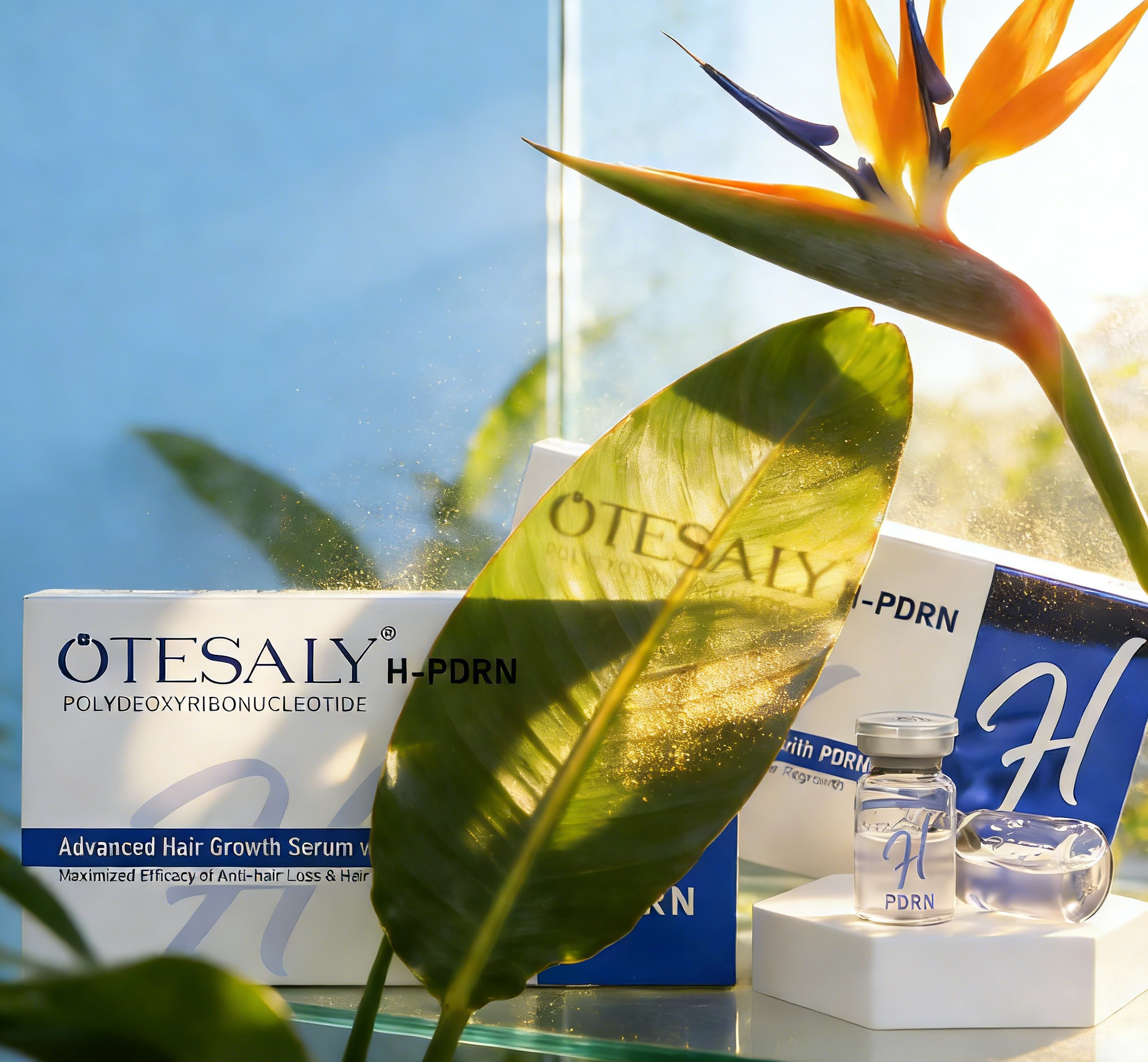
Conclusion
H-PDRN represents an emerging category within professional hair and scalp mesotherapy, with PDRN-based formulations attracting interest for their potential regenerative and tissue-support mechanisms. Current research provides encouraging signals, but the evidence remains developing, and treatment should be selected according to the underlying cause of hair loss rather than marketed as a universal solution. For clinics and distributors, product quality, professional application, regulatory compliance, and realistic communication are essential when evaluating a PDRN hair-growth portfolio.
OTESALY provides professional medical aesthetic and mesotherapy solutions for B2B markets. If you are looking for hair growth injectable wholesale, private-label development, or an OEM hair growth meso serum, contact OTESALY to discuss product specifications, packaging, and wholesale/OEM requirements.
Frequently Asked Questions
What is an H-PDRN hair growth serum?
An H-PDRN hair growth serum is a hair-focused formulation containing PDRN or related regenerative ingredients for professional scalp applications. Its intended role is to support the scalp environment and complement hair-management protocols rather than guarantee hair regrowth. Clinics should evaluate the specific formulation, intended use, regulatory status, and professional instructions before incorporating it into treatment services.
How does an OTESALY H-PDRN injection support hair treatment?
An OTESALY H-PDRN injection is designed for professional hair-focused applications using a PDRN-based formulation. PDRN has been investigated for biological mechanisms associated with tissue repair, cellular signaling, inflammation modulation, and angiogenesis. However, evidence for hair-loss applications remains an evolving area of research, so practitioners should select patients appropriately and avoid presenting the treatment as a guaranteed solution.
Is PDRN hair regrowth treatment suitable for every type of hair loss?
No. A PDRN hair regrowth treatment should not be considered suitable for every cause of hair loss. Hair thinning can result from hereditary factors, hormonal changes, nutritional deficiencies, immune-related conditions, medications, illness, or traction. Professional assessment is therefore important before treatment. PDRN-based solutions may be considered as part of a broader treatment strategy when appropriate, but they should not replace diagnosis or established medical management.
What is a polynucleotide scalp injection used for?
A polynucleotide scalp injection is a professional treatment approach that delivers a polynucleotide-based formulation to targeted scalp areas. PDRN and related polynucleotides have attracted interest because of proposed regenerative and tissue-support mechanisms. Current clinical research is promising but still limited, so treatment expectations should remain evidence-based. Practitioners should also follow applicable local regulations and the specific instructions for the product being used.
Can clinics source hair growth injectables wholesale?
Yes. Clinics and distributors can evaluate hair growth injectable wholesale options according to their market requirements. When sourcing, B2B buyers should consider formulation details, manufacturing standards, quality documentation, packaging, minimum order quantities, regulatory requirements, and technical support. A reliable supplier should also provide clear product information so practitioners can determine whether the solution fits their professional treatment protocols.
What is an OEM hair growth meso serum?
An OEM hair growth meso serum is a professional hair-focused mesotherapy formulation that can be developed or supplied for businesses seeking customized product solutions. OEM evaluation typically includes formulation requirements, packaging and labeling, documentation, production capacity, and target-market regulations. For brand owners and distributors, discussing these specifications with the manufacturer early can help establish a practical product-development pathway.

