
As skin rejuvenation treatments become increasingly popular, skin booster vs mesotherapy have emerged as two of the most frequently discussed concepts in the medical aesthetics industry. Many consumers—and even some clinic procurement staff new to aesthetic products—often ask the same question: Are Skin Boosters and Mesotherapy the same type of treatment?
The answer is: Not exactly.
In brief, mesotherapy is an injection technique of the active ingredients directly into the superficial layers of the skin, while “skin boosters” are a category of treatment products, mostly based on active ingredients such as hyaluronic acid (HA), that are mainly used to hydrate deeply and improve skin texture. The applications of mesotherapy are far wider than skin boosters, many hyaluronic acid skin boosters are delivered via mesotherapy. Mesotherapy applications can include a range of solutions using serums containing PDRN, collagen, skin lightening or hair growth agents.
Skin booster vs mesotherapy difference is a topic of frequent discussion and an area of interest for clinics, distributors and procurement professionals as they are interdependent, yet different in the nature. Knowing the differences between the two allows for the development of tailored treatment regimens for patients, as well as the selection of product portfolios for aesthetic clinics that match market demand.
This article reviews the differences between skin boosters and mesotherapy in terms of product positioning, mechanisms of action, indications, and commercial applications, and provides a guide for choosing the right skin rejuvenation injection products to suit needs.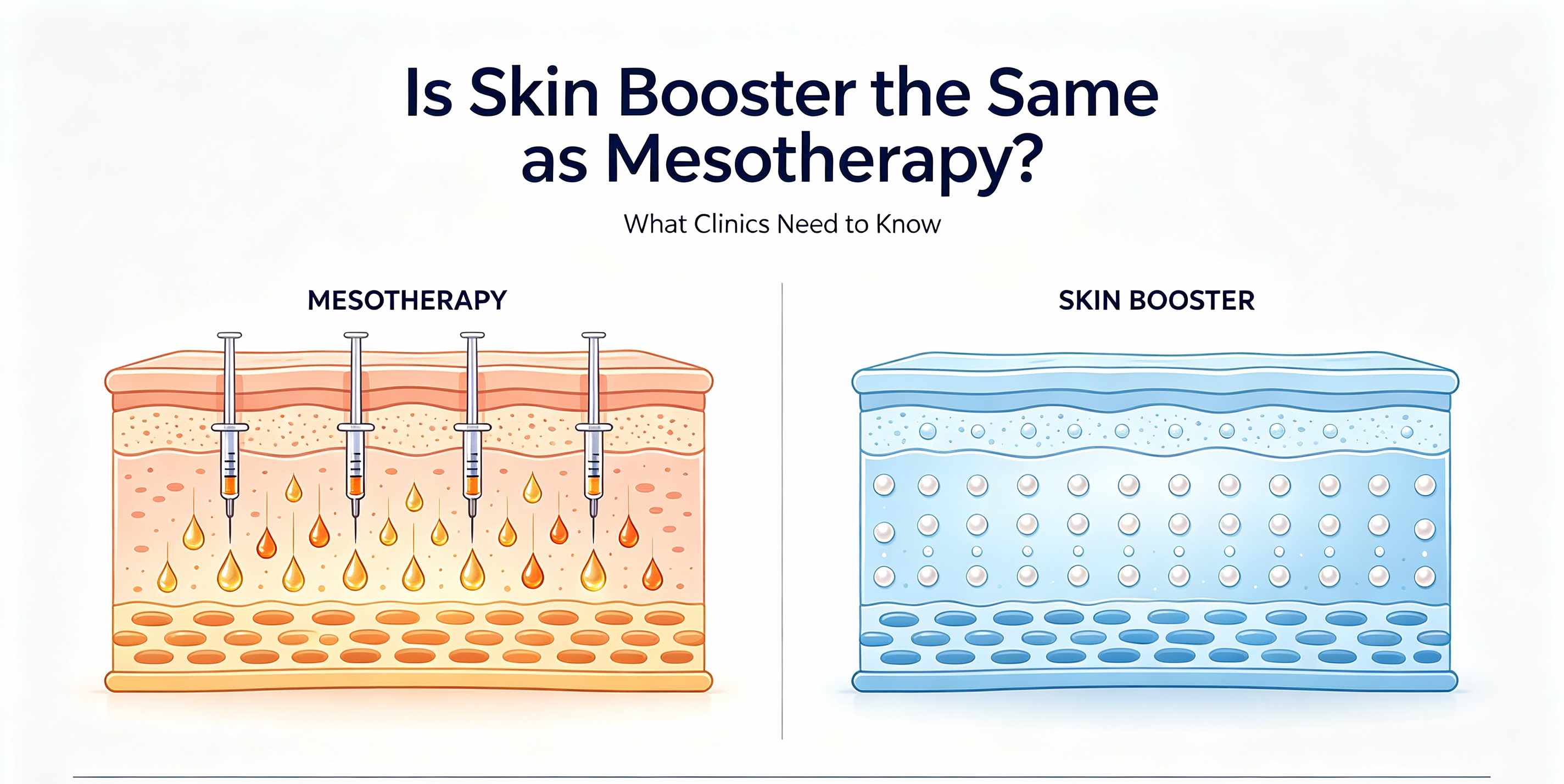
Definitions: First Know the Relationship Between Skin Boosters and Mesotherapy
To fully understand the difference between skin boosters and mesotherapy, it is necessary to clarify something: they are not the same concept, they work on different levels.
Essentially, mesotherapy is a treatment method while a skin booster is more of a treatment product or treatment plan.
What is mesotherapy?
Mesotherapy is a treatment technique that consists of injecting small quantities of active ingredients precisely in the superficial layers of the skin (the dermis). Depending on the exact treatment goals, practitioners can choose from different formulations for injection, including hyaluronic acid, PDRN, PN, vitamins, amino acids, peptides and other mesotherapy serum anti-aging serums.
So mesotherapy is more about how the active ingredients are delivered to the areas of the skin that need them rather than any one specific product.
What is a skin booster?
Skin boosters are a type of injectable product specifically for improving skin hydration and texture. The most common are hyaluronic acid based skin boosters. Often made with non-crosslinked or lightly crosslinked hyaluronic acid, these products help to restore moisture within the dermis and improve the skin microenvironment. This translates to deep hydration, improved radiance, reduction of fine lines and enhanced skin elasticity – hence they are often called skin boosters for facial hydration.
So what exactly is their relationship?
In practice, most skin boosters are injected using the mesotherapy technique.
Put simply, mesotherapy is an injection technique and skin boosters are the most popular type of product used in this technique. Mesotherapy however, is used for many other treatments such as collagen lifting, PDRN therapy, whitening, hair growth stimulation and fat dissolution and so cannot be equated directly with these two words.
|
Contrast |
Mesotherapy |
Skin Booster |
|
Nature |
An injection technique |
A class of injectable products/treatment regimens |
|
Questions answered |
How do I administer the injection? |
What is being injected? |
|
Common ingredients |
HA, PDRN, PN, peptides, vitamins, etc. |
Primarily hyaluronic acid (HA) |
|
Primary objective |
Address various skin concerns based on the formula. |
Deeply hydrates, improves skin texture, and enhances elasticity. |
|
Applications |
Anti-aging, whitening, hair growth, repair, fat dissolution, etc. |
Facial hydration, fine lines, and skin texture improvement |
Clinical Application: How Do Skin Boosters and Mesotherapy Differ in Treatment Goals?
Skin boosters are typically administered with mesotherapy techniques but have a different clinical emphasis than traditional mesotherapy.
"Mesotherapy" is more like a "treatment platform". Depending on the patient’s skin problem, practitioners choose specific active ingredients, such as hyaluronic acid (HA), PDRN, PN, peptides, vitamins, or amino acids, to develop personalized protocols for anti-aging, skin brightening, repair, or hair restoration. So there is no one fixed recipe but the approach is geared toward choosing the right ingredients for the right treatment aims.
Skin Boosters, in contrast, are more targeted and designed to improve skin hydration and texture. Most hyaluronic acid-based Skin Boosters use HA as the main ingredient to replenish moisture in the dermis on an ongoing basis and help with problems such as dryness, fine lines, dullness, and loss of elasticity. This has made them a popular solution for facial moisturization.
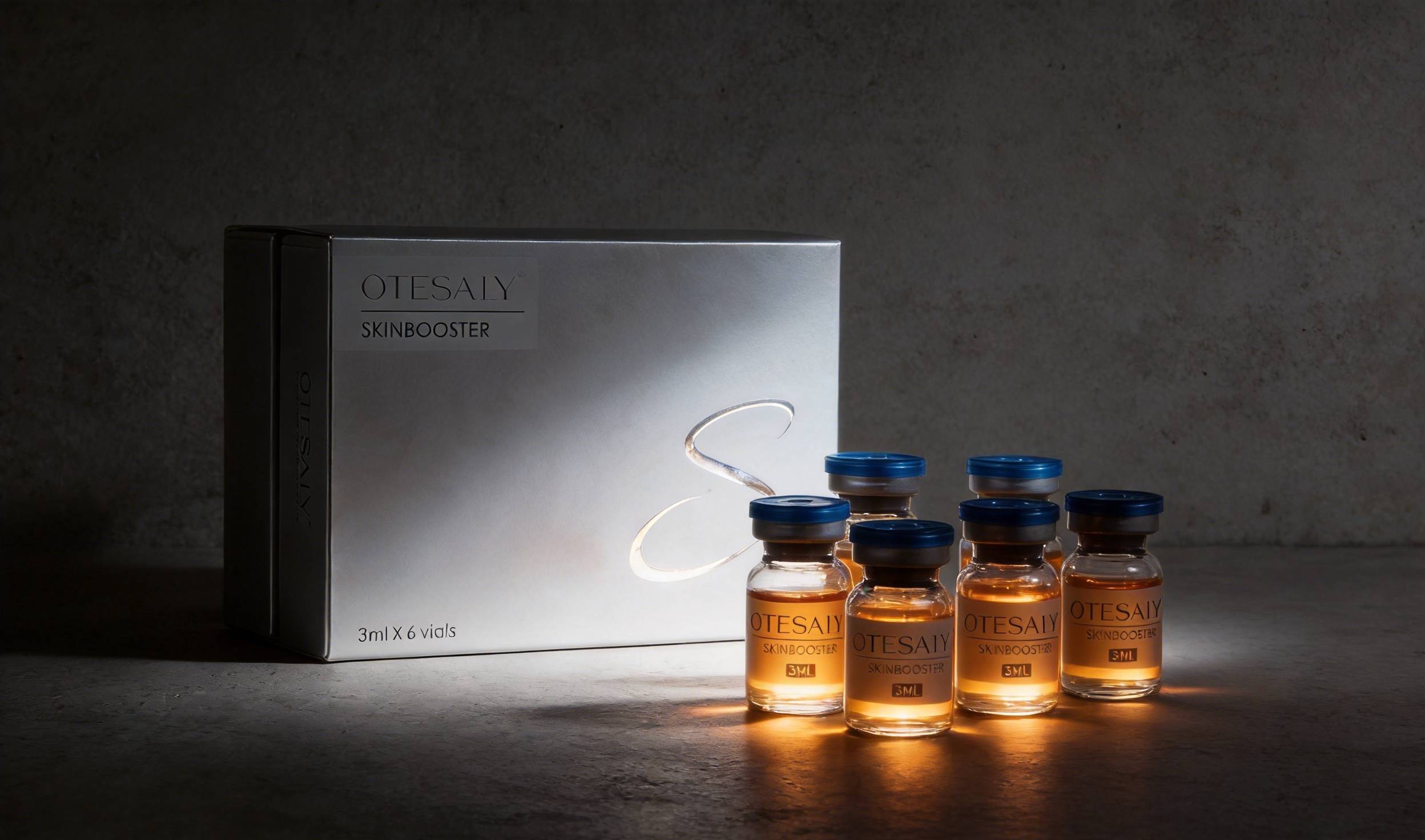
Let's take OTESALY® Skinbooster Injection for example, it has a formulation of 20 mg/mL of micro-crosslinked hyaluronic acid. The micro-crosslinked structure increases the product residence time in the skin compared to standard non-crosslinked HA. It is a great choice for regular skin maintenance and rejuvenation treatments as it provides sustained hydration, improving elasticity and reducing fine lines.
The current clinical studies suggest that Hyaluronic Acid Skin Boosters are not traditional fillers. Instead, they support natural rejuvenation by improving the microenvironment of the skin, increasing hydration levels and improving the overall quality of the skin.
How Do You Decide the Right Treatment Plan for the Patient?
After knowing the differences between skin boosters and mesotherapy, it is important to know when to choose which treatment option.
Generally, skin boosters that use hyaluronic acid are better suited if a patient’s chief concern is to correct dryness, fine lines, dullness and lack of radiance in the skin. The treatments hydrate the skin and improve the overall texture, resulting in a smoother, more luminous complexion.
If the patient has more complex needs, such as skin repair, photoaging or pigmentation treatment, skin barrier restoration, or hair care, doctors will generally develop a customized treatment plan using mesotherapy products containing specific active ingredients (such as PDRN, PN, or peptides) according to the therapeutic objectives.
However, these two treatments are not mutually exclusive in clinical practice, but are often combined. For example, a doctor may apply a deep hydration treatment with OTESALY® skin boosters and combine it with mesotherapy products such as PDRN to treat hydration, repair and rejuvenation at the same time, further improving the overall result of the treatment.
Why are More and More Clinics Offering Skin Boosters and Mesotherapy?
Skin Boosters and Mesotherapy are not alternatives to each other for medical aesthetic clinics but complementary products.
To cater for the differing treatment requirements of their patients, the number of clinics holding stock of both kinds of product is increasing:
● Skin Boosters focus on adding hydration and texture to the skin;
● Mesotherapy addresses specific concerns such as anti-aging, skin repair, brightening and hair regrowth;
● Facilitates more personalized rejuvenation schemes through combined protocols.
The combination of products expands the range of treatments while helping to boost patient satisfaction and return rates, making it a treatment model adopted by a growing number of professional clinics.
Case Study: Skin Boosters and Mesotherapy Combined Treatment Approach
A long established partner clinic in the UK has reported a shift from standard single modality mesotherapy treatments to more personalised skin management plans since the introduction of OTESALY Skinbooster injections.
Practitioners often recommend Skin Boosters first for patients whose primary concerns are dehydration, rough skin texture and dryness as they improve overall skin quality and hydration. Meanwhile, patients with issues like photoaging, a need for skin repair, or uneven skin tone will have tailored combination therapies – using products such as PDRN together with mesotherapy treatments – devised by clinicians based on individual needs.
“This flexible, patient-centric approach has the added benefit of giving practitioners a wider array of treatment options and helping patients better understand the differences between the different procedures, which improves the overall treatment experience and increases willingness to return for long-term follow-ups, the clinic said.
They said: “The consistency of quality of OTESALY® Skinbooster is remarkable. We have noticed much shorter recovery times and dramatic overall skin quality improvements. It’s become our go-to product for patients who want a ‘dewy, hydrated glow’ without the ‘overfilled’ look. Many patients talk about the ‘glass skin’ effect and it has been a great boost for our clinic’s reputation.
Choose What’s Best for Your Business
For medical aesthetic clinics, this means not simply choosing between skin boosters or mesotherapy, but knowing the specific role of each and creating treatment regimens tailored to each patient’s needs. For patients who are primarily concerned with dryness, fine lines, rough texture or lack of radiance, skin boosters based on hyaluronic acid can often be used to provide targeted hydration and texture improvement. But for those who desire anti-aging, skin repair, skin brightening or other holistic treatments, the clinics can prepare customized treatment regimens by combining various mesotherapy serums. When selecting products, clinics and distributors should consider not only the product formulation, but also the quality management system, product stability and supply reliability. High quality products allow practitioners to develop standardized treatment protocols and to provide a consistent and reproducible experience for patients.
Conclusion
So are Skin Boosters and Mesotherapy the same treatment? No. Mesotherapy is a technique and Skin Boosters are a family of products aimed at improving skin hydration and texture. Instead of fighting against each other they are complementary parts of modern skin rejuvenation therapies. In light of consumer demand for natural looking rejuvenation and long term skin care, more and more clinics are now combining skin boosters (for facial hydration) with other Mesotherapy treatments. Thus, they can provide personalized skin rejuvenation injection schedules for patients of all ages and skin types. OTESALY® is a professional medical aesthetics brand, committed to delivering consistent and high-quality skin rejuvenation products to clinics and partners worldwide. If you are looking for trusted wholesale solutions for injectable skin hydration, we invite you to explore the OTESALY® Skinbooster range and our vast Mesotherapy range, allowing you to offer science-based, professional skin care experiences to your patients. Unsure of what products are best for your clinic? Get product information, OEM/ODM solutions and professional recommendations from the OTESALY team. We can assist you in building an optimized product portfolio that corresponds to your target market and client needs.
FAQ:
1. Are Skin Boosters and Mesotherapy the Same?
No, they are not the same. Mesotherapy is an injection technique, whereas "Skin Boosters" (often referred to as "water-glow injections") are a category of injectable products designed to improve skin hydration and texture. While many Skin Boosters are administered using the mesotherapy technique, mesotherapy can also be used to deliver a wide range of other active ingredients—such as PDRN, PN, collagen, vitamins, and peptides—so the two terms cannot simply be equated.
2. Which Is Better: Skin Booster or Mesotherapy?
Neither option is inherently superior to the other; the choice depends primarily on the treatment goals.
Skin boosters are generally more targeted if the main objective is to address dryness, fine lines, dullness, and overall skin texture. Conversely, if the goal is to improve skin repair, anti-aging, skin brightening, pigmentation, or hair-related issues, mesotherapy offers more personalized treatment plans tailored to specific active ingredients. A physician will recommend the appropriate treatment based on the patient's skin condition and specific needs.
3. How Long Do Skin Booster Results Last?
The duration of results from Skin Booster treatments varies depending on the product formulation, the treatment area, individual metabolism, and the specific treatment regimen. Typically, practitioners recommend completing an initial course of treatment followed by regular maintenance sessions tailored to the skin's condition, helping to sustain improvements in skin hydration and overall texture.
4. Can Skin Boosters Be Combined with Mesotherapy?
Yes. In clinical practice, Skin Boosters are often used in combination with other mesotherapy products to address diverse skin needs. For instance, they can be paired with PDRN, PN, or other active ingredients—tailored to the patient's specific condition—to simultaneously enhance skin hydration, repair, and rejuvenation. The specific treatment plan should be formulated by a qualified medical professional based on the patient's individual circumstances.
5. Who Is a Good Candidate for Skin Booster Treatment?
Skin boosters are suitable for individuals looking to address issues such as dryness, fine lines, rough texture, dullness, and reduced skin elasticity. They are also frequently used as part of skin rejuvenation treatments for those experiencing skin dehydration due to aging, environmental factors, or lifestyle choices. A professional physician should assess whether the treatment is appropriate for you.

