
In recent years, glutathione whitening injections have been on a continuous boom in popularity in the global aesthetic medicine market. Whether it is the big beauty salons, the hospitals for cosmetic surgery or the product distributors, they all are working towards providing safe and effective skin whitening solutions to their clients. However, with the dazzling array of “whitening injection” products available on the market today, and the variety of ways to administer them (intravenous infusion vs. mesotherapy), many people are still unclear about the details: How does glutathione whiten skin? What is it that makes a product high quality? And what are the things to look for as institutional buyers?
The article interprets the whitening mechanism of glutathione, the unique advantages of mesotherapy compared with intravenous injection and the characteristics of an ideal skin whitening mesotherapy product in terms of product education. This article provides a clear framework for evaluation, whether you are a clinical practitioner or a procurement decision-maker.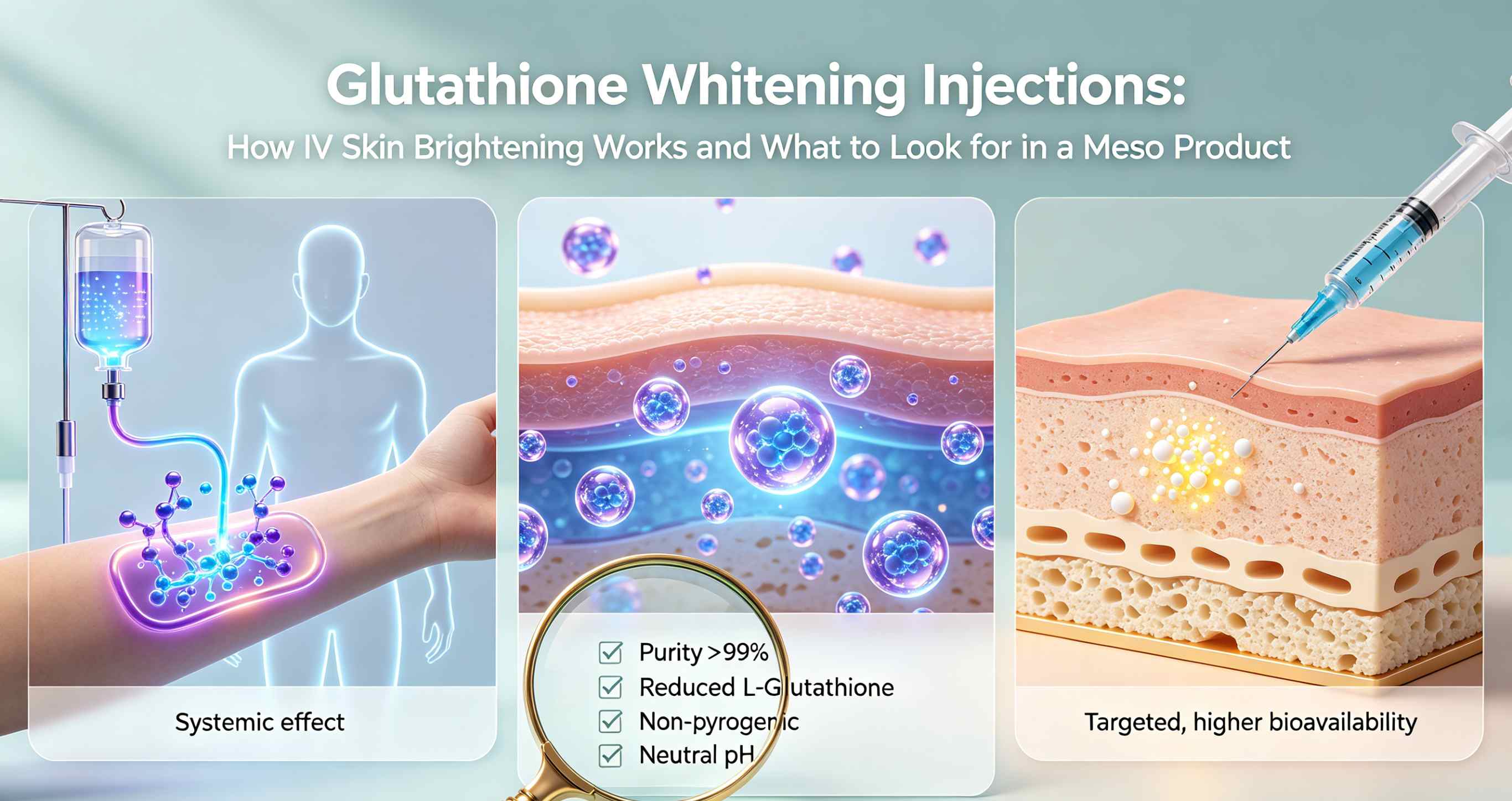
What is glutathione? How does it make skin white?
Glutathione is a tripeptide (three amino acids) that includes glutamic acid, cysteine and glycine. It is found in all cells of the human body and is one of the most important endogenous antioxidants. The skin whitening effect is mainly through the following three pathways:
1. Tyrosinase inhibition : The first step of melanin production is catalyzed by the enzyme tyrosinase. Glutathione has the ability to bind directly to the active site of this enzyme, thereby reducing its activity and as a result melanin production. This is the heart of how it works.
2. Melanin Type Shift: When glutathione exerts its effect, the melanocytes tend to produce more of the lighter-colored pheomelanin instead of the darker eumelanin. This causes the overall skin color to lighten.
3. Antioxidant & Anti-inflammatory :Effects Large amounts of free radicals are produced by external stimuli, including ultraviolet (UV) radiation and environmental pollution, which activate the melanocytes. Glutathione mops up these free radicals and thus effectively blocks the “trigger signals” for pigmentation at source.
Put simply, glutathione does not “bleach” the skin, but acts by controlling the skin’s own processes of pigment metabolism, returning the color to one of uniformity and luminosity. It is therefore often used to treat conditions such as melasma, sun spots, post-inflammatory hyperpigmentation and overall dullness of the skin.
Advanced Whitening Products: Analysis of Meso Brightening Ampoule and Anti-melanin Injection
After knowing the basic ingredients, we should move to two specific types of products that are key to professional mesotherapy whitening treatments: mesotherapy brightening ampoules and anti-melanin injectables.
First of all, the Meso brightening ampoule is a high concentration active solution for intradermal injection. Meso brightening ampoules are usually presented as sterile ready to use ampoules. A Meso brightening ampoule has to meet 3 strict criteria unlike the traditional brightening serums:
-
The molecular weight of the active ingredients must be low enough to allow for diffusion of the active ingredients uniformly through the interstitial spaces of the dermis;
-
The formula should contain no cheap fillers or preservatives that might cause irritation under the skin;
-
It must be terminally sterilized or aseptically filled to meet the safety standards required for injection.
A quality Meso brightening ampoule usually includes a combination of glutathione, kojic acid, arbutin, tranexamic acid, and Vitamin C that complement each other to form a “multi-pathway melanin-blocking” effect. Some premium ampoules also contain hyaluronic acid to enhance the skin’s hydration environment post-injection, easing the absorption and use of the active ingredients. The prerequisite of the reproducibility of clinical results is the use of GMP-certified meso brightening ampoules for beauty salons and clinics with the clearly labeled ingredient concentrations.
Secondly, the “anti-melanin injection” is a more specific idea. It does more than 'brighten the skin', it works at the very root of melanin production: the biochemical pathways that occur within the melanocytes themselves. Anti-melanin injections generally have 2 main mechanisms:
-
They are potent tyrosinase inhibitors (such as high-concentration glutathione or kojic acid derivatives) that bind and deactivate the active copper ions in the tyrosinase enzyme directly.
-
They are melanin transfer blockers (such as tranexamic acid or niacinamide) that prevent the transfer of already-formed melanosomes from the melanocytes to the surrounding keratinocytes, so that the pigment does not appear on the surface of the skin. Recent breakthroughs in anti-melanin injections have been the inclusion of PDRN (polydeoxyribonucleotide), popularly known as “Salmon DNA”. Although PDRN does not directly inhibit melanin production, it effectively repairs DNA damage and chronic inflammation caused by ultraviolet radiation, which breaks the vicious cycle of “damage→inflammation→hyperpigmentation." Therefore, the anti-melanin PDRN injections are very suitable for stubborn melasma and also recurrent post-inflammatory hyperpigmentation.
IV Infusion vs Mesotherapy for Skin Whitening – What’s Best?
Many people think of “whitening injections” as intravenous (IV) drips, but in reality, the method of how glutathione is administered plays a huge role in end results and safety.
1. Intravenous (IV) Glutathione Infusion : A large dose of glutathione (typically 600-1200 mg) is infused directly into the bloodstream via an IV drip. The advantage is systemic distribution but the disadvantages are great:
● The majority of the drug is "diluted" throughout the body tissues, resulting in a very low effective concentration to the melanocytes of the skin;
● The treatment duration is relatively long (30–60 minutes);
● The possibility of systemic side effects (such as nausea, headaches and, although rare, serious allergic reactions);
● IV glutathione is not approved for cosmetic use in some countries and regions.
2.Mesotherapy: Injection of a highly concentrated whitening solution in a tiny dose into the dermis layer of the skin with an ultra-fine needle. This technique allows for the precise delivery of active ingredients to the exact location where melanocytes are present, achieving “targeted whitening.” Mesotherapy has the following separate advantages over these:
● High Local Bioavailability: A small dose can achieve an effective concentration and result in a faster onset of action.
● Excellent safety profile: Virtually no systemic side effects occur. Only mild redness or swelling may occur at the injection site and usually resolves within 24-48 hours.
● Short Treatment Time: A single facial treatment takes only 15-20 minutes.
● Suitable for Combination Therapy: Combining different active ingredients can target particular skin concerns.
Thus, mesotherapy is increasingly being used in mainstream international protocols of skin brightening injections instead of intravenous infusion. And this is precisely why we need to pay attention to products like “skin brightening injections” – those produced specifically for intradermal use.
How to Choose Reliable Suppliers From a Product View?
As a purchaser for a beauty salon, cosmetic surgery clinic or distributor, you cannot "test" every single product yourself, but you can rapidly judge the product quality by evaluating the following five objective criteria:
Certifications and Production Standards
High quality mesotherapy whitening solutions have to be manufactured in a cleanroom environment (ISO 7 or higher, GMP Grade 100 or better) and use a strong sterilization process. Suppliers will provide:
● ISO 13485 (Quality Management Systems for Medical Devices) or GMP certification
● CE certificate (medical devices) or the particular registration documentation required by the destination market
● A Certificate of Analysis (COA) for each lot with data on ingredient content, sterility, endotoxin levels, etc.
Product Stability & Packaging
Glutathione and vitamin C are very easily oxidized. The following measures are used for high quality products:
● Amber vials or light shielding packaging to prevent oxidation.
● Nitrogen-filled or vacuum-sealed technologies
● Single-use sterile packaging to prevent contamination caused by multiple needle punctures
● Clearly marked expiration dates (high quality products typically have a shelf life of 2 to 3 years)
Ingredient Transparency and Concentration Labeling
All ingredients and their concentrations should be clearly listed on the outer packaging for legitimate products (e.g. Glutathione 600mg/5ml). Beware of products that say they have “natural plant extracts” but don’t tell you what they really have in them.
Support for Compliance and Documentation
In different countries mesotherapy products are classified differently. Responsible suppliers should be able to deliver:
● Export documentation from the country of origin
● Free Sale Certificates (FSCs)
● MSDS - Product Safety Data Sheets
● Reports of stability studies
After Sales and Supply Chain Capabilities
For distributors and chain organizations, the most important things are supply stability and rapid response. Opt for a supplier who can ship orders within 24 hours, respond to after-sales inquiries within 48 hours, and support OEM private labeling. This will help you reduce operational risks to a large extent.
Real World Feedback: How Useful is it for Organizations?
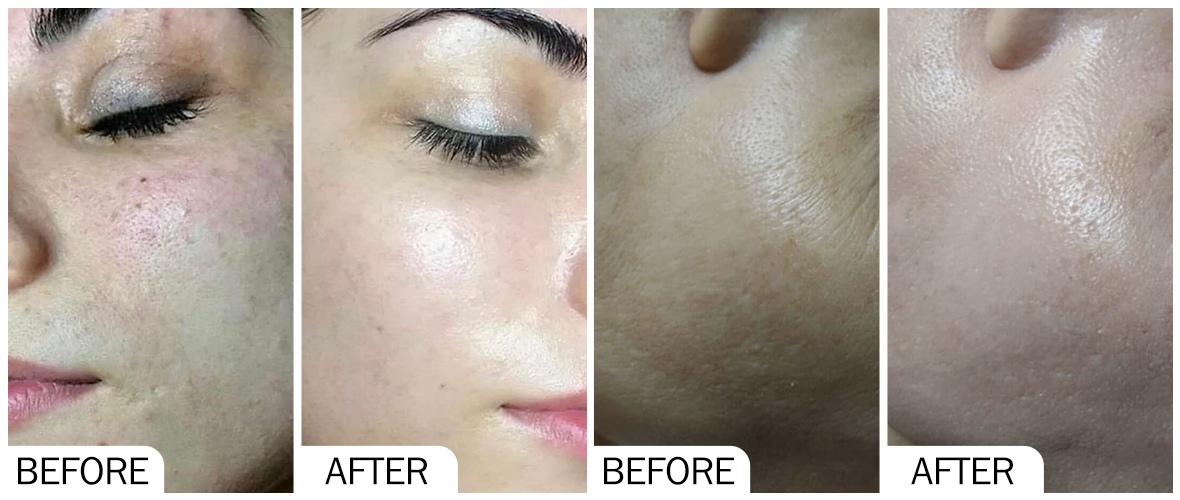
The popularization of science requires not only theory but also the real experience of practice. With over 20 years of experience in the international medical aesthetics trade, we serve customers in over 120 countries. Presented here are some typical results reported by beauty salons and clinics that have purchased our products (all data has been anonymized):
● A Southeast Asian beauty salon chain :integrated “Skin Tone Correction Meso” into their “Post-Sun Repair Package” and saw a significant increase in customer satisfaction. Combined with microneedling or mesotherapy gun, practitioners noted a visible brightening of skin tone after just two sessions, with virtually no downtime required.
● A Dermatology Clinic in Eastern Europe: They used a “Anti-Melanin Injection” with PDRN, to treat difficult cases of melasma, in courses of 3 sessions. Doctors said the PDRN combination protocol was better than their usual practice of glutathione alone in preventing pigment from coming back.
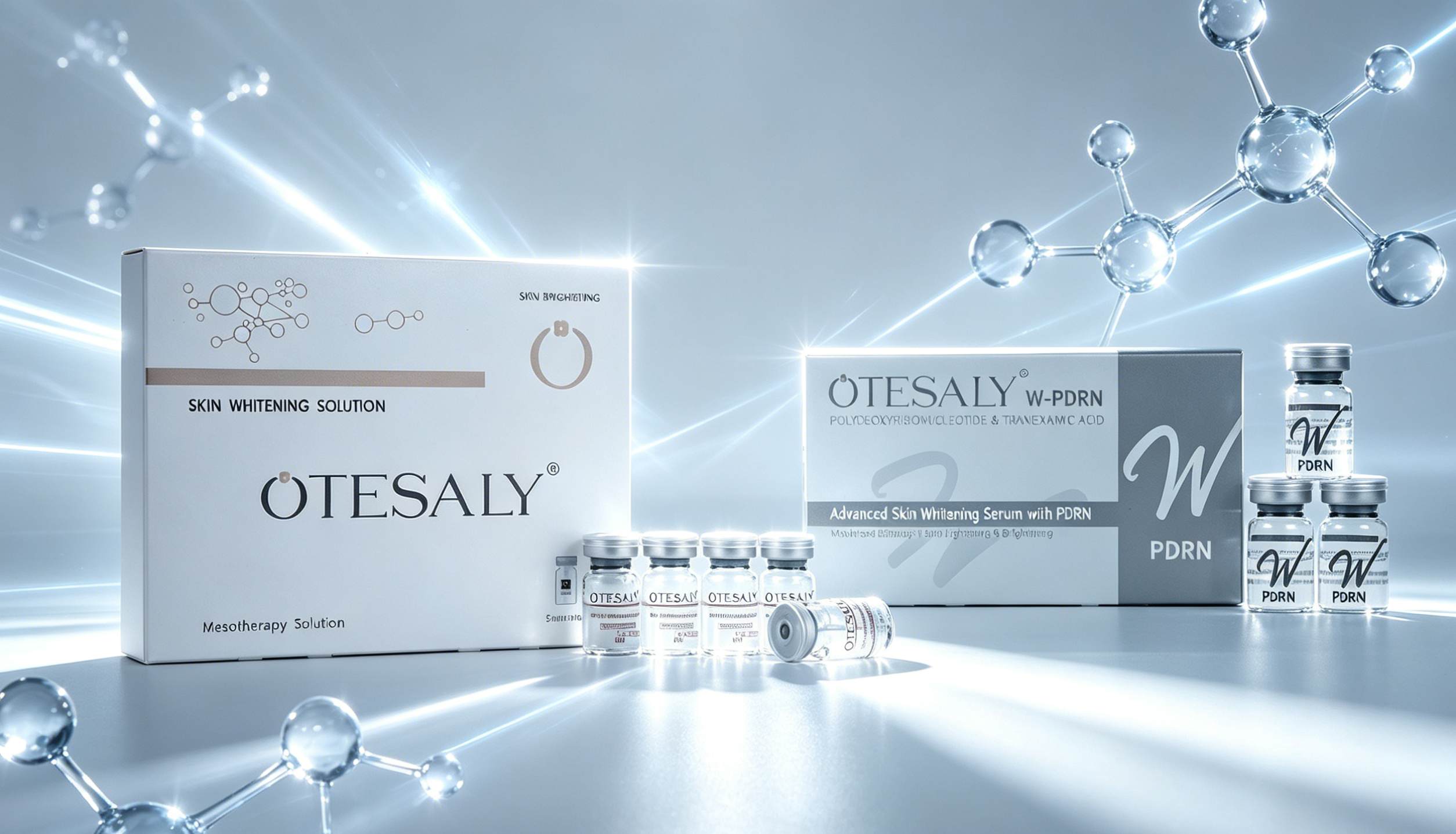
● Middle East Aesthetic Product Distributor: The “OTESALY Whitening Solution” is a product that has been launched to its downstream customers and has sustained a high repurchase rate. The distributor said that the product had very little batch-to-batch variation and was very stable. In fact, they reported no complaints of degradation, even during summer transit.
These real testimonials are proof that a mesotherapy whitening product, with a scientific formulation, strict manufacturing standards and consistent quality, can help your end-clients (beauty salons and clinics) achieve satisfactory clinical outcomes, thus bringing sustainable commercial returns for your business.
Conclusion:
The scientific basis for glutathione-based skin whitening therapies is well-founded: they are safe and effective for skin brightening through the inhibition of tyrosinase, shifting melanin production to lighter types and antioxidant effects. Among them, mesotherapy has been the most used method in the top medical aesthetic institutions in foreign countries because of its advantages of targeted delivery, high efficacy and low risk.
While price is a factor, the process of choosing a good dermal whitening treatment product for B2B buyers is an extensive one involving an evaluation of manufacturing standards, formulation of ingredients, stability of the product, regulatory compliance documentation and the supplier’s experience in the industry. For the past 20 years, OTESALY® has been supplying mesotherapy products to professional institutions in 54 countries, meeting the stringent CE and FDA standards, and offering OEM customization services and expedited logistics support.
FAQ:
Q1. What are the side effects of Glutathione Whitening Injection?
A: When mesotherapy techniques are used for intradermal injection, the low dosage and localized effect mean that the most common reactions are just temporary red spots or a slight swelling where the injection was given, and these generally clear up on their own within 24 to 48 hours. The risk of systemic side effects is very low, compared with intravenous infusion. However, the treatment is contraindicated in patients with known allergies and is not recommended to pregnant women, nursing mothers and patients with active skin infections.
Q2: How soon can I expect to see whitening results? Number of treatments?
A: Usually, the skin tone starts to get lighter 2 to 3 weeks after the first treatment session. The results are most evident after a full course of treatment (consisting of 4 to 6 sessions, given once every 1 to 2 weeks). Additional sessions may be required for significant hyperpigmentation. Note: There is no scientific basis for any product that claims to “whiten instantly” in one session.
Q3. Will my skin darken again post stopping treatment?
A. The effects of glutathione are reversible. Your skin tone will generally not revert to its original darker color. But if you stop sun protection after you stop the treatment and continue to expose your skin to strong ultraviolet (UV) radiation, melanin production will start again. Thus, as professional clinics, we should be alerting our clients to the necessity of protecting themselves from the sun every day.

