
For clinics deciding between a collagen peptide injection and PDRN mesotherapy, the challenge is not simply choosing which product is “better.” The two approaches are designed around different biological concepts and may fit different patient concerns, treatment protocols, and product portfolios. Collagen peptide-based formulations are generally positioned around supporting skin structure and collagen-related rejuvenation, while PDRN mesotherapy focuses on skin recovery and tissue-support pathways. Understanding PDRN vs collagen peptide is therefore important for clinics that want to build rational treatment programs rather than rely on broad anti-aging claims. For distributors, understanding these differences also helps determine which product formats and positioning strategies best match the needs of professional aesthetic practices.
What Is a Collagen Peptide Injection and Why It Happens?
Collagen is one of the major structural proteins in the skin. It contributes to dermal organization, firmness, elasticity, and overall tissue integrity. As people age, the balance between collagen production and collagen degradation changes. Extrinsic factors such as ultraviolet exposure, oxidative stress, and lifestyle factors can further influence the condition of the extracellular matrix.
A collagen peptide-based injectable takes a different approach from a traditional hyaluronic acid dermal filler. Rather than primarily relying on physical gel volume to immediately alter facial contours, collagen-oriented formulations are designed around skin-quality and collagen-support concepts.
Collagen peptides are smaller fragments derived from collagen proteins. Research into oral and topical collagen peptides has investigated their potential relationship with skin hydration, elasticity, and dermal matrix metabolism. For aesthetic professionals, however, it is important to distinguish the scientific evidence surrounding collagen peptides as a broader category from the specific clinical performance of an injectable formulation.
This distinction is particularly relevant when discussing collagen peptide skin rejuvenation with professional buyers. Product composition, concentration, administration technique, manufacturing quality, intended indication, and regulatory status all influence how a formulation should be positioned.
The concept is also different from simply injecting collagen itself. Modern aesthetic formulations may use peptides or other active ingredients intended to support the skin environment rather than functioning as permanent structural implants.
For clinics, this creates an opportunity to position collagen peptide treatments as part of a broader skin-quality strategy. They may be considered alongside other professional aesthetic treatments depending on the patient's skin condition and the practitioner's treatment plan.
How Dermal Fillers Address It: Collagen Peptides vs. PDRN
Traditional hyaluronic acid fillers primarily create volume through gel formation to enhance facial contours, whereas collagen peptide and PDRN products are positioned more towards improving skin quality, rejuvenation, and providing tissue support.
Collagen Peptide Injection
A collagen peptide formulation is generally centered on collagen-related skin support. The underlying rationale is associated with the dermal extracellular matrix, where collagen is a key structural component.
For clinics, a collagen peptide treatment may therefore be incorporated into protocols focused on:
-
Skin firmness and elasticity
-
Age-related changes in skin quality
-
Fine lines and texture concerns
-
Preventive or maintenance-oriented aesthetic programs
-
Comprehensive facial rejuvenation strategies
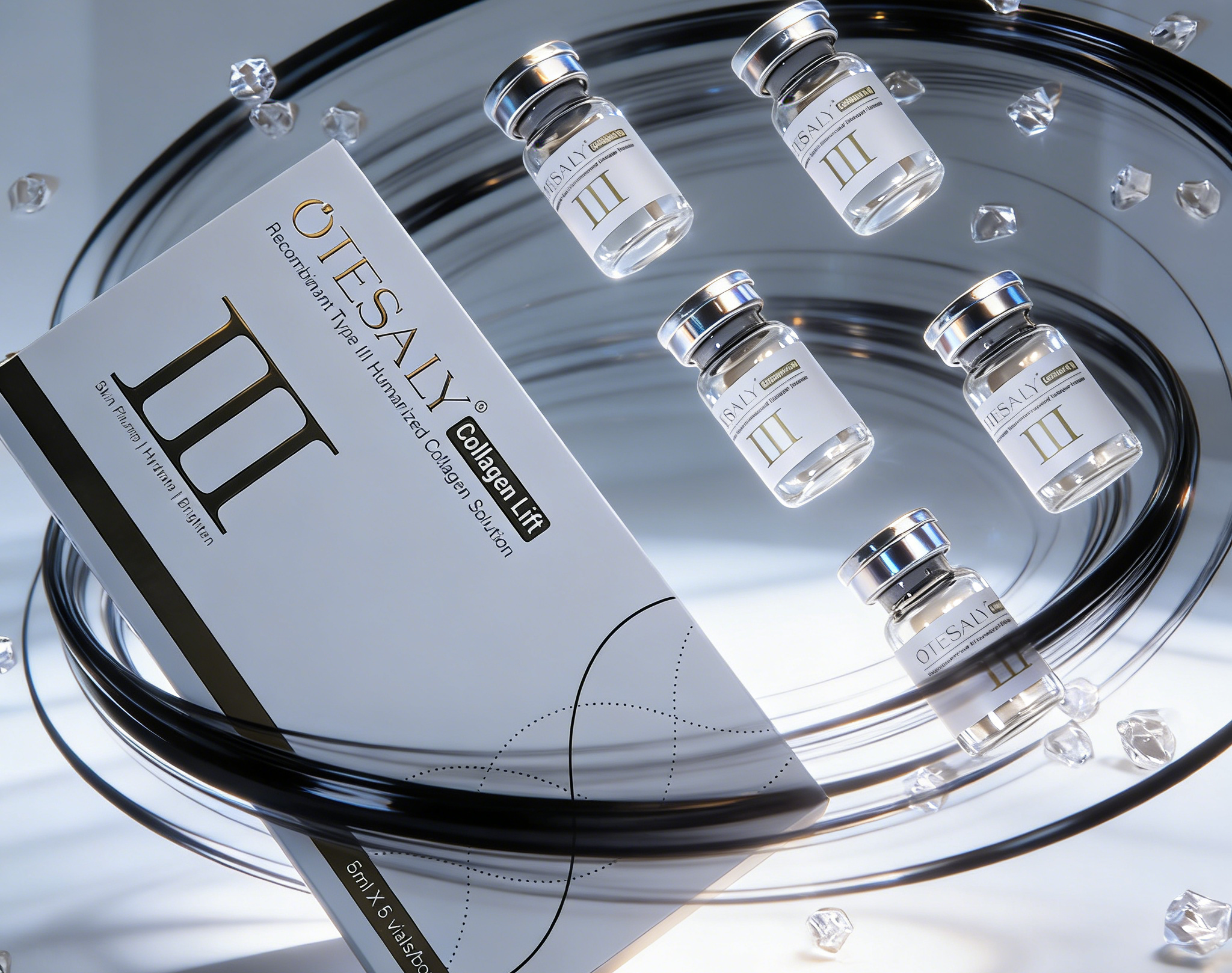
The OTESALY® collagen lift injection is positioned within this type of collagen-focused professional product category.
PDRN Mesotherapy
PDRN, or polydeoxyribonucleotide, represents a different biological approach. PDRN has been investigated in regenerative medicine and tissue-repair contexts, with proposed mechanisms involving adenosine A2A receptor-related pathways and support for cellular and vascular processes.
In aesthetic medicine, PDRN mesotherapy is commonly positioned around skin recovery, hydration, texture, and overall skin condition rather than direct volumization.
Clinics can therefore view the comparison as:
|
Treatment concept |
Collagen peptide injection |
PDRN mesotherapy |
|
Primary positioning |
Collagen/skin-structure support |
Skin repair and recovery support |
|
Main treatment concept |
Skin firmness and rejuvenation |
Skin quality and tissue-support pathways |
|
Typical protocol role |
Collagen-focused rejuvenation |
Regenerative/skin-recovery programs |
|
Volumizing function |
Not primarily a volumizer |
Not primarily a volumizer |
|
Product strategy |
Collagen-centered portfolio |
PDRN-centered mesotherapy portfolio |
The choice between the two should be based on the intended treatment objective rather than assuming that one active ingredient is universally superior.
For clinics evaluating a broader PDRN vs collagen peptide product portfolio, this distinction can also help sales teams explain why different formulations may coexist within the same aesthetic practice.
Another category worth distinguishing is the collagen stimulator injectable. Collagen-stimulating products may have a different composition, mechanism, administration approach, and clinical positioning from collagen peptide formulations. These categories should therefore not be treated as interchangeable.
Scientific literature has explored the relationship between collagen peptides and skin parameters such as hydration and elasticity. A useful review for background reading is available through the National Center for Biotechnology Information: collagen peptide skin rejuvenation research.

Treatment Approach: What to Expect?
For professional clinics, treatment selection should begin with the desired clinical objective rather than the product name.
Step 1: Define the Treatment Objective
The practitioner first assesses the patient's skin condition, age-related changes, skin texture, elasticity, hydration, and overall treatment goals.
If the primary objective involves collagen-oriented skin rejuvenation, a collagen peptide formulation may be considered. If the treatment strategy emphasizes skin recovery and tissue-support mechanisms, PDRN may be incorporated.
Step 2:Choose the Right Product Category
Once treatment goals are clearly defined, the clinic needs to select product categories that align with the treatment plan.
If the focus is on supporting skin firmness, elasticity, and collagen-related improvements in skin quality, professional collagen peptide injections may be considered; if the focus is on skin repair, hydration, and overall skin rejuvenation, PDRN mesotherapy can be incorporated into the treatment regimen.
OTESALY® offers both collagen and PDRN product lines—including professional collagen injection products and various PDRN formulations such as R-PDRN and W-PDRN—enabling clinics to curate product combinations based on specific treatment goals and client needs.
Before officially introducing the products, it is also essential to evaluate their ingredients, concentration, sterility in manufacturing, packaging, shelf life, intended use, and relevant documentation, while confirming compliance with the applicable requirements of the target market.
Step 3: Establish a Professional Treatment Protocol
Administration should always follow the manufacturer's instructions and applicable local regulations. Injection depth, treatment areas, product quantity, treatment intervals, and contraindications should be determined by appropriately trained healthcare professionals.
Neither collagen peptide injections nor PDRN mesotherapy should be presented as a universal replacement for dermal fillers. Their role is better understood as part of a broader aesthetic treatment strategy.
Step 4: Monitor Skin Response
Follow-up allows the practitioner to assess changes in skin quality and determine whether additional sessions or complementary treatments are appropriate.
A structured follow-up process is also valuable for clinics because it helps standardize treatment protocols and document patient feedback.
Step 5:Build a complementary product portfolio
For distributors, agents, and clinic chains, collagen peptides and PDRN are not necessarily competing products. Establishing a complementary product portfolio based on diverse treatment goals enables clinics to address a wider range of skin rejuvenation needs.
A comprehensive medical aesthetics product lineup can encompass collagen-based products, PDRN mesotherapy products, other mesotherapy solutions, and traditional HA dermal fillers, allowing professionals to select the right product based on specific skin conditions and treatment objectives.
For clinics and distributors seeking skin-repairing collagen injections or aiming to build a more comprehensive anti-aging collagen mesotherapy portfolio, key considerations—beyond product positioning—include product quality, supply stability, and the supplier's capacity for long-term support.
Conclusion
Collagen peptide injections and PDRN mesotherapy represent two distinct yet complementary approaches to skin rejuvenation. Collagen peptide products primarily focus on collagen-related structural support and enhancing skin quality, whereas PDRN is more closely associated with tissue repair, skin recovery, and microenvironment support. Understanding these differences in positioning enables clinics to design more effective treatment portfolios tailored to specific goals, while helping distributors refine their product mixes and market positioning strategies.
When selecting products, B2B buyers should look beyond trending ingredients and instead evaluate factors such as formulation, product quality, therapeutic focus, target market requirements, supply stability, and OEM/private label capabilities.
OTESALY® supplies collagen peptide products and PDRN mesotherapy solutions to medical aesthetic clinics, distributors, and brands, empowering professional clients to expand their skin rejuvenation service offerings. If you are seeking reliable collagen peptide products, private label solutions, or a long-term supply partnership, please contact OTESALY® to discuss wholesale and OEM opportunities.
FAQ:
1. Is collagen peptide injection the same as PDRN mesotherapy?
No. Collagen peptide injection and PDRN mesotherapy use different active ingredients and are positioned for different skin rejuvenation needs.
Collagen peptide products focus more on collagen-related skin support, firmness and skin quality, while PDRN products are commonly positioned around skin repair and recovery support. They can therefore be used as different or complementary options in a clinic’s treatment portfolio.
2. Which is better for skin rejuvenation: collagen peptide or PDRN?
Neither is universally better. The choice depends on the treatment goal.
Clinics focusing on skin firmness, elasticity and collagen-related skin quality may consider collagen peptide products, while clinics looking to expand skin repair and rejuvenation treatments may consider PDRN mesotherapy.
The specific formulation and intended use should always be checked before treatment.
3. How long does a collagen peptide injection treatment last?
The expected duration depends on the specific product formulation, treatment plan and individual patient factors. Therefore, there is no single duration that applies to all collagen peptide injection products.
4. Can clinics use collagen peptide and PDRN in the same treatment portfolio?
Yes. Collagen peptide and PDRN can be positioned as complementary products rather than competing products.
For example, a clinic may offer collagen-related treatments for clients focusing on firmness and skin quality, while using PDRN-based treatments for clients seeking skin repair and rejuvenation support. Whether they should be combined or used in separate treatment plans depends on the specific products and professional assessment.
5. Where can I buy collagen injection wholesale?
Clinics, distributors and aesthetic brands looking for collagen injectable wholesale supply can contact OTESALY directly via WhatsApp, email, or message us here.
We can provide information about product specifications, MOQ, wholesale pricing, OEM Private Label options and available cooperation solutions based on your requirements.

